As an Amazon Associate I earn from qualifying purchases. These links may earn this site a commission when you buy, at no extra cost to you.
Answering your search: these 24V solar panels are selected for boat lifts and marine applications, prioritizing reliability, waterproofing, and efficient energy capture. The top picks cover a range from high-capacity panels for heavy-duty lift systems to compact kits for smaller setups. Best for frequent boating trips, RVs, or cabins, these panels balance durability with practical performance. The following summaries help you compare suitability at a glance.
| Product | Best For | Key Benefit | Estimated Output |
|---|---|---|---|
| BougeRV 24V N-Type 16BB 200W | Large boat lifts, RVs | High efficiency N-type, bifacial design | 200W |
| SUNER POWER 24V 30W | Small to medium systems, trickle charging | Ultra-Smart MPPT, robust protections | 30W |
| Voltset 50W 24V Kit | Mid-range needs, steady maintainer | Higher wattage, MPPT controller | 50W |
| Newpowa 35W 24V | Off-grid setups, RV/boat hybrids | 10BB cells, compact design | 35W |
| SOLPERK 30W 24V Kit | Rugged outdoor use, marine gear | IP67, durable frame | 30W |
BougeRV 24V N-Type 16BB 200W Panel

Best for: boats with larger lifting systems or RVs that require sustained power. Why selected: N-type technology with industrial tunnel oxide contact delivers higher voltage and efficiency, while a bifacial design can harvest light from multiple angles to boost output by about 30%. The 16BB cell arrangement increases current collection, supporting longer lift operation between charges.
Caution: Bifacial gains depend on reflective surfaces and installation angle; real-world gains may vary in typical marina conditions.
SUNER POWER 24V 20W Solar Battery Charger Maintainer
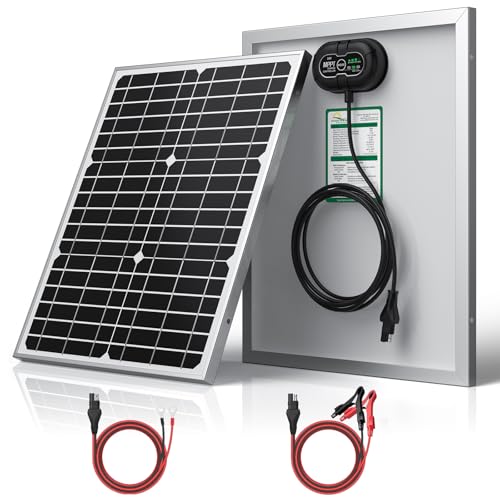
Best for: small 24V battery systems or trickle charging on compact boats. Why selected: Ultra-smart MPPT provides high tracking efficiency (up to 99%) and a strong three-stage charging routine, ensuring safe, efficient maintenance in marine environments. It includes comprehensive safety protections and waterproof design.
Caution: 20W is modest; suitable for maintaining rather than fully powering a lift motor during heavy use.
SUNER POWER 24V 30W Solar Battery Charger Maintainer

Best for: mid-range 24V systems that need reliable charging with compact footprint. Why selected: Same Ultra-Smart MPPT technology with a 3-stage charging algorithm, robust safety features, and waterproofing—ideal for boats where space is at a premium but consistent maintenance charging is needed.
Caution: While efficient, 30W may require longer sun exposure to top up larger banked batteries, particularly on overcast days.
Voltset 50W 24V Solar Panel Kit

Best for: installations needing higher output in a single panel. Why selected: A 50W monocrystalline panel with a durable frame and MPPT controller helps charge 24V batteries efficiently, and the kit design aids quick mounting on boats or cabins. Note the 25-year glass lifespan supports long marine use.
Caution: Heavier panel may require sturdier mounting and wind load considerations on exposed vessels.
Newpowa 35W 24V Panel

Best for: off-grid marine setups that require a compact, durable 24V option. Why selected: 10BB cells and a 24V design offer a reliable balance of size and output for boats with limited roof space. The panel’s dimensions are compact, aiding installation in tight areas.
Caution: Lower wattage compared to larger marine kits; best paired with a capable MPPT controller for optimal charging.
SOLPERK 30W 24V Kit
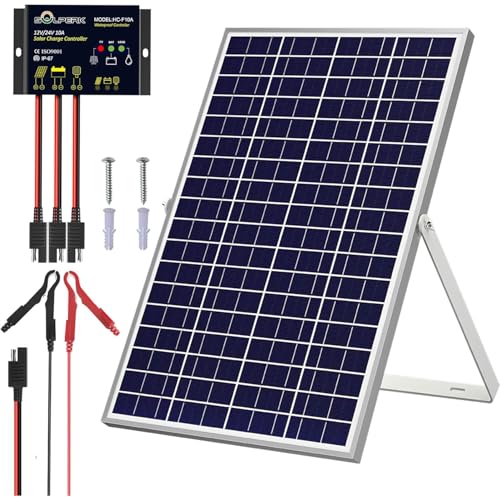
Best for: boats needing rugged, weatherproof solar charging with simple setup. Why selected: IP67 waterproofing and a durable aluminum frame plus a toughened glass coating provide resilience in marine environments. The 10A PWM controller supports steady charging for 24V systems.
Caution: PWM controllers are typically less efficient than MPPT at converting available sunlight in variable conditions; expect slightly slower charging under low sun.
Buying Guide: 24V Marine Solar Panel Considerations
What size panel should I choose for a boat lift?
- Match panel wattage to the lift’s power draw and the expected daily sun exposure. Larger lifts benefit from higher wattage panels (e.g., 50W–200W) to shorten charging times.
- Consider a kit with an MPPT controller for higher efficiency, especially in cooler mornings or when sun angles are low.
How do I mount a 24V panel on a boat or dock?
- Pick panels with robust mounting frames and corrosion resistance. Ensure mounting locations allow for optimal sun exposure and are securely fastened to withstand marine wind loads.
- Angle and polarity protection help maximize output and protect equipment in spray zones.
What are the trade-offs between 30W, 50W, and 200W panels?
- 30W panels are compact and affordable for trickle charging or small systems; they’re easy to install but slower to recharge large battery banks.
- 50W panels offer a balance of size and output, suitable for mid-range systems and consistent maintenance charging.
- 200W panels provide the highest output for lifting systems or high-demand devices but require sturdier mounting and space.
Frequently Asked Questions
- What is the advantage of a bifacial solar panel for marine use? Answer: Bifacial panels capture light from both sides, increasing output in sunny marinas when reflected light is present.
- Do I need MPPT or PWM controllers for boat lifts? Answer: MPPT controllers are generally more efficient, especially with variable sun conditions, but PWM controllers can work well for smaller setups.
- Can I use a 24V panel with a 12V battery system? Answer: Not directly; a step-up/down converter or proper matching is required to avoid damage and ensure safe charging.
- Will these panels withstand salt spray? Answer: Look for corrosion-resistant frames and waterproof ratings; marine-grade products usually offer better resistance.
- How do I estimate charging time for a boat lift? Answer: Divide the battery capacity (Ah) by the panel’s current (A) under typical sunlight, adjusting for efficiency losses.
- Is bifacial gain guaranteed? Answer: Gains depend on installation and environment; manufacturers cite typical gains under optimal conditions, but results vary.


