
Answering the question, these 12V lithium batteries are designed to power trolling motors with longer life, safer chemistry, and easier monitoring than traditional lead-acid options. They are best for boaters, RVers, and off-grid enthusiasts seeking reliable, maintenance-free power for trolling motors, lighting, and auxiliary systems. Below are five models that balance capacity, cycle life, safety features, and user-friendly integrations. A quick buying table follows to compare core specs side by side.
| Product | Brand | Type | Cycle Life (approx.) | Best For |
|---|---|---|---|---|
| 12V 100Ah LiFePO4 Battery (Group 24) | SUPER EMPOWER | LiFePO4 Deep Cycle | ~5000–15000 | RV, trolling motors, solar back-ups |
| Litime 12V 100Ah (Group 31) | Litime | LiFePO4 Deep Cycle with Bluetooth | Up to 15000 | Marine, boats, RVs with remote monitoring |
| DC HOUSE 12V 100Ah (Group 24) | DC HOUSE | LiFePO4 with Bluetooth | Up to 15000 | Harsh environments, trolling motors |
| Litime 2-Pack 12V 100Ah | Litime | LiFePO4 Deep Cycle (Group 31) | Up to 15000 | Two-battery systems for extended runtime |
| 12V 100Ah LiFePO4 (Group 31) | SUPER EMPOWER | LiFePO4 Deep Cycle | ~5000–15000 | RV, marine, solar, trolling motors |
12V 100Ah LiFePO4 Battery, Group 24 — SUPER EMPOWER

Best for: RV owners and boaters needing a true drop-in replacement for lead-acid with long cycle life. This battery uses Grade A+ LiFePO4 cells and a built-in BMS for overcharge, over-discharge, and temperature protection, supporting steady daily performance.
Why selected: It offers a high cycle count (up to 15000 cycles at 60% DOD) and a 10-year lifespan, with 1280Wh of usable energy and standard BCI Group 24 sizing for easy box compatibility.
Caution: Designed for energy storage; not suitable for engine starting or cranking applications. Weight is about 21.6 lb, which is heavier than some compact chemistries but provides longer life and safety margins.
Litime 12V 100Ah (Group 31) — Bluetooth and Low-Temp

Best for: Marine and RV users who want remote battery monitoring via smartphone. Bluetooth connectivity supports status checks, discharge control, and system diagnostics.
Why selected: It includes low-temperature protection, 100A BMS, and safety protections (drop-in compatibility with common marine systems) for reliable cold-weather operation.
Caution: Bluetooth range is limited to close proximity; ensure you have line-of-sight to your device when tuning settings in remote locations.
DC HOUSE 12V 100Ah LiFePO4 — Bluetooth & Low Temp

Best for: Users needing robust low-temperature protection and extensive cycle life in harsh environments. Bluetooth monitoring adds convenience for on-the-go checks.
Why selected: The battery advertises up to 15000 cycles and 10-year life in Class A LiFePO4 chemistry with multiple protections and moisture resistance for marine and outdoor use.
Caution: Charging is disabled below 32°F by BMS, so plan charging schedules accordingly in very cold climates.
Litime 2-Pack 12V 100Ah — Bluetooth, Deep Cycle

Best for: Users who require extended runtime with a two-battery setup, ideal for trolling motors on larger boats or dual-supply RV setups.
Why selected: Dual units provide higher total capacity, Bluetooth monitoring, and solid low-temp protections for reliable winter or shoulder-season use.
Caution: Ensure proper wiring and balance when pairing two batteries; mismatch can affect performance and safety.
12V 100Ah LiFePO4, Group 31 — SUPER EMPOWER
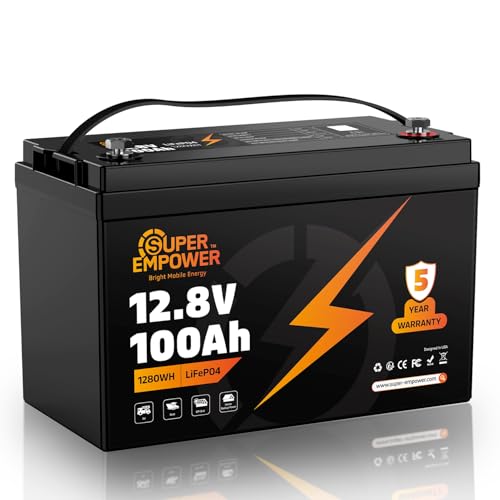
Best for: RV and marine setups requiring reliable, long-life energy storage with strong cycle durability and compatibility with solar charging systems.
Why selected: It delivers a claimed long cycle life with up to 15000 cycles at 60% DOD, designed as a safe, energy-storage battery with comprehensive BMS protection.
Caution: As with all LiFePO4 packs, use a compatible lithium charger and temperature-aware charging practices to maximize life.
Buying Guide: Key Considerations For 12V LiFePO4 Trolling-Motor Batteries
What capacity do I need? Measure your trolling motor runtime and essential accessories. A 100Ah pack offers substantial running time for typical 12V trolling motors, especially when paired with solar or alternator charging.
What about cycle life and safety? Look for Grade A+ LiFePO4 cells, a robust BMS, and protections for overcharge, over-discharge, temperature, and short circuits. A higher cycle count generally translates to longer life in regular use.
Bluetooth or app monitoring: Do you want remote status checks? Bluetooth-enabled models let you monitor SOC, voltage, current, and health from a phone, which helps manage charging on the go.
Low-temperature performance: If you fish or boat in cold climates, low-temp cut-off and protection help prevent charging in unsafe conditions and extend battery life.
Physical fit and wiring: Ensure the battery fits your battery box (Group size) and matches your existing wiring and terminal type. Some models use M8 terminals and standard BCIs; others may require adapters.
Charging compatibility: Use a charger suited for LiFePO4 chemistry (typically 14.4–14.6V). Confirm compatibility with solar controllers (MPPT/PWM) and any generator charging setups.
Two-battery configurations: If you need more runtime, consider dual or multi-pack setups. Balance battery management and wiring to avoid voltage imbalances.
FAQ
- Q: Are 12V LiFePO4 batteries safe for trolling motors? A: Yes. They feature robust BMS protection and stable chemistry that reduces the risk of overheating, overcharging, and short circuits compared with lead-acid options.
- Q: Do these batteries work with standard trolling motor chargers? A: Most work with lithium-specific chargers or lithium-mode settings on solar controllers. Always use a charger rated for LiFePO4 chemistry.
- Q: Can I use multiple batteries for longer run time? A: Yes. Parallel or series configurations are common for increasing capacity or voltage, but follow manufacturer guidance and proper balancing.
- Q: How important is low-temperature protection? A: Very important in cold climates. Low-temp cut-off prevents charging or discharging when temperatures are unsafe, protecting the pack and extending life.
- Q: What is the typical cycle life of these batteries? A: Expect thousands of cycles; many models claim 5000–15000 cycles at varying depths of discharge, depending on usage patterns and temperature.
- Q: Are these batteries suitable for engine starting? A: No. These are deep-cycle storage batteries intended for auxiliary power, trolling motors, and house power, not engine cranking.