As an Amazon Associate I earn from qualifying purchases. These links may earn this site a commission when you buy, at no extra cost to you.
When choosing a 15 hp electric start outboard motor, the goal is reliable starting, solid fuel efficiency, and a good balance of weight and power for small-to-mid-sized boats. This guide highlights five practical options that align with 15 hp performance or upgrade paths to electric starting features. Each option suits different boat types—from inflatable dinghies to lightweight fishing craft—and explains who benefits most, plus any notable limitations. A quick summary table is provided below to compare core aspects at a glance.
Summary of top selections
| Product | Horsepower | Key Strengths | Best For |
|---|---|---|---|
| KEARIXM 15HP Outboard Motor | 15 HP | 4-stroke efficiency, 180° steering, fuel savings | Fishing and leisure on small lakes |
| DUIBAII 18 HP HangKai Outboard | 18 HP | 2-stroke speed, CDI ignition, water cooling | Speed and maneuverability on larger inflatables |
| Cbhfmljd 18HP Outboard Motor | 18 HP | Water cooling, 360° steering, durable build | Versatile small craft with tight maneuvering |
| BJTDLLX Short Shaft 12HP | 12 HP | Lightweight aluminum, 3-speed forward/neutral/reverse | Ultra-light rigs and compact boats |
| Outboard Motor Change To Electric Start Kit | Upgrades to Electric Start | Complete conversion kit, corrosion-resistant | Repairs or upgrades for electric-start capability |
KEARIXM 15HP Outboard Motor

The KEARIXM 15HP outboard offers a 3600 rpm 15 hp four-stroke engine designed to push small boats with efficient fuel use. It emphasizes fuel savings versus two-stroke models and provides a wide steering range for simple docking and maneuvering. This model is best for anglers and leisure boaters who want reliable starts and longer cruising with modest fuel consumption. A noted limitation is that it lists as a 15 hp 4-stroke with a manual start in some listings, so buyers who specifically need electric start should consider upgrade options or alternate models.
- Strong 15HP performance for lakes and calm coastal waters
- 4-stroke efficiency reduces fuel stops
- 180-degree steering range supports tight docking
- Manual start—consider electric-start upgrade if required
DUIBAII 2 Stroke 18 HP HangKai

This 18 hp HangKai variant fits buyers seeking extra bite beyond a 15 hp range. It’s a 2-stroke design with CDI ignition and a water cooling system, delivering up to 5500 rpm for strong acceleration and top speed on small to mid-sized craft. The external fuel tank and efficient carburetor help manage operating costs. Best for boaters who want speed and quicker planing, though heavier loads can slow acceleration—so use this where light-to-medium loads are typical.
- Fast response with 18 hp output
- CDI ignition and water cooling for reliability
- External 6.34-gallon fuel tank supports longer trips
- 2-stroke design may require more mixing and maintenance
Cbhfmljd 18HP Outboard Motor

The Cbhfmljd 18HP model emphasizes 360° steering rotation and a solid water-cooling system, which helps with smooth operation and durability in varied weather and water conditions. It supports quick maneuvers around docks and in bays. This option is ideal for small boats that require precise handling and reliable cold starts. A potential limitation is that 18 hp exceeds the strict 15 hp label, but it remains a practical choice for those who want a compact but a bit more power with advanced steering features.
- 360° steering for easy maneuvering
- Water cooling promotes consistent performance
- Durable aluminum construction
- Higher horsepower than a strict 15 hp limit
BJTDLLX Short Shaft 12HP

The BJTDLLX 12HP model provides a lightweight solution with a short shaft, ideal for compact boats and dinghies. It uses a 2-stroke design with CDI ignition and water cooling, delivering 661-1763 pounds of thrust and 8-30 km/h. This is best for ultra-light craft where weight is critical. A notable limitation is that it is under 15 hp, which may mean it lacks the extra power some river passages or heavier loads require.
- Very light and compact for small boats
- Three-speed forward/neutral/reverse
- Water cooling supports longer operation
- Lower horsepower may require slower planing and lighter loads
Outboard Motor Change To Electric Start Kit
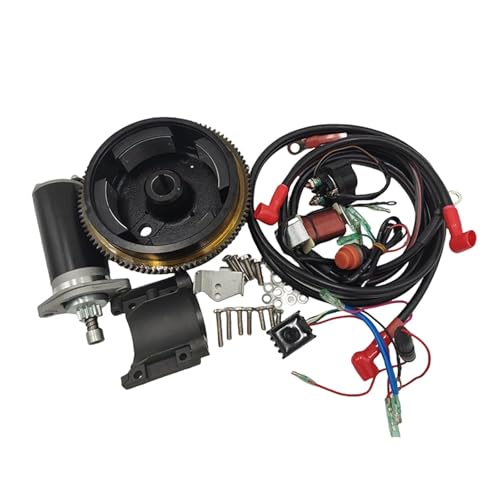
This kit is a practical upgrade path for owners who want to convert an existing outboard to electric start. It includes a starter motor, flywheel, and all necessary parts. The structure is marine-resistant and designed to withstand fresh and salt water environments. It’s best for boaters who already own a compatible engine and want modern starting reliability without replacing the entire motor. A limitation is that installation requires compatibility checks and some mechanical skill.
- Comprehensive conversion kit for electric start
- Marine-resistant and corrosion-protected
- Cost-effective upgrade versus full motor replacement
- Compatibility must be verified with current engine model
Buying Guide: Key Purchase Considerations
What engine type best fits small boats?
For small to mid-sized boats, a 15 hp four-stroke option offers fuel efficiency and smooth operation, while two-stroke variants provide higher acceleration. Consider the typical load, cruising speed, and fuel availability when choosing between these options.
Is electric start essential?
Electric start improves reliability and ease of use, especially for beginners or rough water conditions. If the motor you choose is manual-start, a separate electric-start conversion kit can be an economical upgrade path, as shown in the kit option above.
What about steering and maneuverability?
Look for models with wide steering ranges, 360° capability, or three-speed control to ensure you can dock and maneuver in tight spaces. Short shafts suit smaller transoms; long shafts better support deeper transoms and heavier boats.
Durability and maintenance considerations
Aluminum construction with corrosion resistance helps in both saltwater and freshwater environments. Water-cooling systems promote consistent performance. Be mindful of fuel type and maintenance intervals for 2-stroke versus 4-stroke engines.
Weight, balance, and installation
Weight and shaft length affect handling and trailer load. Ensure proper mounting height and transom compatibility. Some models are explicitly designed for compact boats, dinghies, or inflatable crafts.
Frequently Asked Questions
- What horsepower should I choose for a small dinghy?
- Do I need electric start if I have a manual start motor?
- What maintenance is common for 2-stroke vs 4-stroke outboards?
- Can I install an electric-start kit myself?
- What maintenance helps extend durability in saltwater?
- Are there safety considerations when upgrading to electric start?
About 12–15 HP is typical for compact dinghies requiring easy planing and fuel efficiency. If you need faster planing with heavier loads, consider 18 HP models with appropriate handling.
Not necessarily, but electric start improves reliability in choppy water and cold starts. Upgrading with an electric-start kit is a viable option to avoid full motor replacement.
2-stroke engines require fuel-oil mixing and more frequent maintenance of carburetors. 4-stroke engines generally offer cleaner operation and better fuel efficiency but may have heavier weight.
Yes, if you have mechanical skills and follow the kit instructions. Verify compatibility with your engine and seek professional help if unsure.
Rinse with fresh water after salt exposure, inspect anode wear, keep cooling passages clear, and perform regular lubrication as prescribed by the manufacturer.
Ensure all wiring is correctly insulated, connections are secure, and you follow electrical safety practices to prevent shorts or fires.


