As an Amazon Associate I earn from qualifying purchases. These links may earn this site a commission when you buy, at no extra cost to you.
Answering the common buyer question: which 4-stroke outboard oil should you choose for reliable protection and smoother operation? This guide highlights five top options suited to different boaters, from casual weekend cruisers to frequent, high-RPM racing use. Each product is evaluated for wear protection, rust defense, and marine-specific performance. The buyer types best matched by each oil are noted to help you pick with confidence. Below is a quick summary of the featured products.
| Product | Brand | Best For | Notes |
|---|---|---|---|
| Quicksilver 10W-30 Marine Engine Oil | Quicksilver | Casual and moderate-use outboards | Marine-grade oil designed for 4-stroke engines |
| Valvoline 4-Stroke Marine Full Synthetic Engine Oil 1 Gallon | Valvoline Store | High-demand, hot environments | Up to 8x rust defense, strong wear protection |
| Valvoline 4-Stroke Marine Full Synthetic Engine Oil 1 Quart | Valvoline Store | Smaller engines or limited storage | Same marine formulation in quart size |
| Castrol Power1 4T 10W-40 Full Synthetic Motorcycle Oil | Castrol Store | High-temperature, mixed-use engines (not marine-specific) | Designed for 3 zones; note it’s motorcycle oil |
| Yamaha New OEM Yamalube 4M 10W30 4-Stroke Outboard Marine Oil | Yamaha Motor Store | Traditional mineral-based OEM option | Conventional mineral-based with corrosion protection |
Quicksilver 10W-30 Marine Engine Oil

Quicksilver 10W-30 Marine Engine Oil is designed for 4-stroke engines typical in many smaller to mid-size boats. This option is best for casual boaters who need reliable protection without specialty high-RPM demands. It provides standard wear and rust defense suitable for everyday usage. A noted limitation is availability of specific marine certifications across all engine models, so verify compatibility with your outboard before use.
Valvoline 4-Stroke Marine Full Synthetic 1 Gallon

Valvoline’s 4-Stroke Marine Full Synthetic Engine Oil in a 1-gallon jug emphasizes strong wear protection for extreme heat and higher RPM demands. It also touts rust defense, protecting marine engines from moisture exposure during running or storage. Choose this when you operate in hot climates or push engines hard. A potential limitation is the larger initial cost and volume, which may be less practical for very small outboard engines or limited storage.
Valvoline 4-Stroke Marine Full Synthetic 1 Quart

The quart-size Valvoline option mirrors the gallon formula with the same 50% stronger wear protection and rust defense. This size is ideal for smaller engines, boats with limited storage, or for seasonal use where refills are not needed monthly. It remains best for boaters who require marine-specific protection without committing to a large volume at once. A caveat is the same formulation as the gallon, so plan for maintenance schedules accordingly.
Castrol Power1 4T 10W-40 Oil

Castrol Power1 4T 10W-40 is a full synthetic oil designed for motorcycles and may appeal to boaters using multi-use engines or seeking high-temperature performance. It provides Trizone tech for engine, clutch, and gearbox protection, and is suited for high-temperature, performance-oriented scenarios. However, it is not marine-specific, so consider potential compatibility gaps with some outboard designs and OEM recommendations before choosing this option.
Yamaha Yamalube 4M 10W30
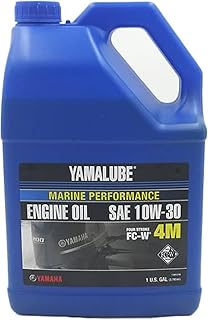
Yamalube 4M 10W30 is a conventional, mineral-based oil from Yamaha designed for 4-stroke outboards. It offers high shear stability and corrosion and wear protection. This option is best for owners seeking OEM-recommended, traditional mineral oil. A limitation is that mineral oils may require more frequent top-offs or changes in extreme conditions compared to full synthetic options.
Buying Guide
Key considerations when selecting 4-stroke outboard oil:
- Engine type and horsepower: Verify compatibility with your specific outboard model and RPM range.
- Viscosity: 10W-30 or 10W-40 are common; confirm what your manufacturer recommends for temperature and load.
- Oil type: Full synthetic vs mineral-based. Full synthetic offers better protection and stability in extreme conditions; mineral oils may be suitable for older engines.
- Rust and moisture protection: Marine environments expose engines to moisture; prioritize rust defense features.
- Storage and quantity: Choose gallon or quart sizes based on engine size and maintenance schedule.
- OEM recommendations: When possible, prefer oils that align with the engine maker’s guidelines to ensure warranty compatibility.
FAQ
- Q: Is 10W-30 suitable for all 4-stroke outboards?
A: It is a common recommendation, but always check your owner’s manual for the exact viscosity requirement. - Q: Should I use synthetic or mineral oil for a newer 4-stroke outboard?
A: Synthetic oil generally provides better wear protection and stability, especially in hot climates or high RPMs. - Q: Can I mix brands if I run out of my usual oil?
A: It’s best to avoid mixing oils to preserve optimal protection and engine performance. - Q: How often should I change marine oil?
A: Follow manufacturer guidelines, typically based on hours of operation and storage conditions. Check the manual for intervals. - Q: Does OEM oil guarantee compatibility with my engine?
A: OEM oils are designed for their engines and can help support warranty and performance expectations. - Q: What should I do if I operate in extreme heat?
A: Choose a high-temperature-rated full synthetic oil with strong wear and rust protection.


