
Searching for the best am fm radio for boat use? This guide highlights five marine headunits and antennas that deliver solid AM/FM performance, Bluetooth streaming, and weather-resistant design. It helps boaters choose the right setup for harbor days, coastal trips, or extended offshore runs. The top picks are suited for different buyers: casual weekend boaters, serious anglers, and those who want robust Bluetooth integration or built-in speakers. Below, you’ll find clear comparisons, who each product is best for, and practical buying tips to avoid common pitfalls.
Product Comparisons at a Glance
| Product | Best For | Key Benefit | Limitation |
|---|---|---|---|
| Pyle PLMRB29B | All-around boaters | 12V marine radio with 300W peak and built-in mic | Requires proper mounting and wiring |
| Panasonic RF-2400D | Portable, off-grid use | Battery-powered with AC option and easy-to-see dial | Analog tuning only |
| Pyle PLRMR23BTW | Built-in Bluetooth lovers | Remote control and multiple media options | Professional installation recommended |
| GUZARE GR304 | Rugged, weather-prone boats | IP66 gauge, 180W peak, USB/MP3 compatibility | AM/FM without CD |
| JSZAAHZ Antenna | Improved reception on boats | Waterproof 15.75″ antenna with base kit | Antenna performance varies with hull |
Pyle Marine Bluetooth Stereo Radio PLMRB29B

The Pyle PLMRB29B is a 12V in-dash marine radio with 300W peak power (75W x 4) and a built-in microphone for hands-free calls. It includes Bluetooth streaming from cell devices and supports MP3/USB playback and RCA connections for external speakers. This model is best for boaters who want solid sound with straightforward wireless streaming and on-water telephony.
Who it’s best for: boaters needing a compact, all-in-one head unit with Bluetooth, a vivid LCD, and easy control from a remote or the unit itself. Why selected: strong power output and practical media options for small to mid-size boats. Limitation: professional installation is often recommended to ensure proper 12V wiring and waterproof mounting.
Panasonic RF-2400D Portable AM/FM Radio

This Panasonic model is a compact, battery-operated AM/FM radio with AC power option, designed for camping, power outages, or portability on the boat. It features an oversized, easy-to-read dial with a fluorescent pointer for visibility in low light and headphone compatibility for private listening.
Who it’s best for: boaters needing a portable, battery-powered radio for quick deployments, dockside or on-inflatable runs. Why selected: simple operation and robust visibility make it a reliable backup or companion to a larger onboard system. Limitation: not a dedicated marine head unit; lacks integrated Bluetooth and a built-in speaker for main audio on larger boats.
Pyle PLRMR23BTW Bluetooth Marine Receiver

This Pyle 12V in-dash receiver combines 300W peak power with Bluetooth streaming, a digital LCD, and a hands-free calling mic. It supports XBass, and is compatible with iOS and Android apps for enhanced control. A professional installation note is included in the features to ensure optimal performance.
Who it’s best for: boaters who want robust Bluetooth-enabled audio with additional app compatibility and USB/SD options. Why selected: clear, high-output sound and the option to integrate with a larger cockpit audio system. Limitation: installation is recommended to guarantee secure mounting and weatherproofing.
GUZARE GR304 Boat Marine Stereo Receiver
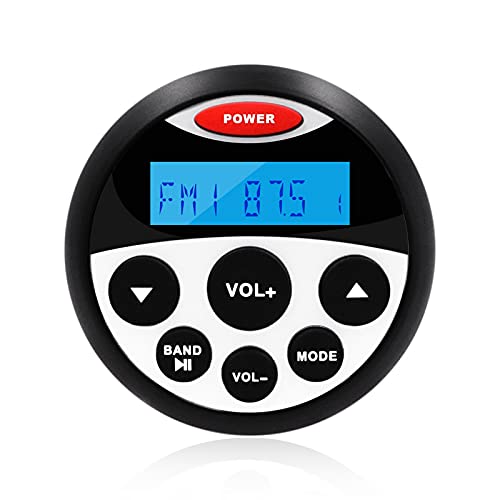
The GUZARE GR304 is a 45W x 4-powered marine stereo with an IP66 water-resistance rating. It supports USB/MP3/WMA playback and AM/FM radio, with a built-in EQ for balance, bass, treble, and fader controls. This model emphasizes weather resilience and straightforward media playback for harsh marine environments.
Who it’s best for: budget-minded boaters seeking a rugged receiver with USB/MP3 playback and reliable AM/FM listening. Why selected: robust water resistance and straightforward controls. Limitation: no CD player, and output power is lower than larger head units, which may affect loudness on bigger boats.
JSZAAHZ Waterproof Marine Antenna

This marine antenna is designed to improve AM/FM reception on boats and golf carts. It features a waterproof construction and a flexible mast with mounting options for different surfaces. It’s a practical add-on when the radio’s internal antenna struggles to pick up signals in choppy environments.
Who it’s best for: buyers needing better reception in coastal or marina environments. Why selected: simple upgrade that can noticeably improve signal strength. Limitation: antenna performance depends on mounting and hull interference; not a standalone radio solution.
Pyle PLMRKT46BK Marine Headunit Kit

The PLMRKT46BK package combines a marine headunit with two 5.25″ waterproof speakers and a remote. It offers AM/FM radio, USB/SD readers, Bluetooth with a microphone, and in-dash control. This kit is ideal for boaters who want a complete, water-ready audio upgrade in one purchase.
Who it’s best for: boat owners looking for an integrated solution with built-in Bluetooth and speakers. Why selected: all-in-one option reduces installation complexity. Limitation: higher upfront cost and potential space requirements on smaller boats.
Dual Electronics MXP152B Marine Stereo Bundle

The Dual MXP152B package includes a marine stereo with two 6.5″ marine speakers and an antenna. It features Bluetooth streaming, USB playback with fast charging, and a sun-readable LCD display. This bundle emphasizes durability and ease of use outdoors, with a focus on a strong audio setup for larger boats.
Who it’s best for: boaters who want a complete sound system with powerful playback and outdoor durability. Why selected: strong all-around performance and weather resistance tailored for saltwater use. Limitation: complex setup may require professional installation for best results.
Buying Guide: How To Choose The Right AM/FM Radio For Your Boat
What should you prioritize when selecting a marine AM/FM radio? Start with power output and weather resistance. For larger boats or high-volume listening, look for 75W x 4 or higher, with an IP rating or at least water resistance. If you prioritize wireless streaming, Bluetooth compatibility and app support are essential. For dockside use, a portable unit may suffice, but for in-dash installations, ensure a clean wiring setup and proper mounting.
Assess compatibility with your current speakers or plan to upgrade. A complete kit with speakers and an antenna offers a simpler installation, while adding an external antenna can improve reception in obstruction-heavy marinas. Consider display readability in sunlight and a capacious control layout for glove-friendly operation on a rolling deck.
Maintenance considerations include corrosion-resistant hardware, sealed wiring harnesses, and easy access for battery or power checks. If you are replacing an older unit, verify the mounting footprint and adapter compatibility to avoid expensive rework.
Practical checklist:
– Power: 75W x 4 or more for ample cabin or cockpit volume
– Audio inputs: Bluetooth, USB/SD, RCA outputs
– Weather resistance: IP rating, splash protection, sealed chassis
– Display: readable in sunlight, clear LCD or LED readout
– Installation: cabinetry space, wiring, and antenna placement
FAQ
- What’s the difference between a marine radio and a standard car radio? Marine units are designed to withstand moisture, temperature swings, and salt exposure, with corrosion-resistant components and often waterproof controls.
- Do I need professional installation for a boat radio? Not always, but for in-dash installations with full wiring and antenna upgrades, professional installation is recommended to ensure optimal performance and safety.
- Is Bluetooth needed for marine radios? Bluetooth is optional but highly convenient for streaming music and hands-free calling from mobile devices on the water.
- Can I use car antennas on boats? Some antennas are universal, but marine-specific or weatherproof antennas tend to perform better in maritime environments.
- How can I improve AM/FM reception on a boat? Upgrading to a higher-gain or waterproof antenna, ensuring proper mounting, and reducing hull interference can improve reception.
- Should I choose an all-in-one kit or a standalone radio? An all-in-one kit is easier for beginners; standalone radios offer flexibility for upgrading specific components later.