
If you’re powering a 24V trolling motor, you need a robust, long-lasting battery that can handle frequent discharges and cold starts. This guide compares five top 24V LiFePO4 battery options, highlighting who they’re best for, their strengths, and any limitations. Ideal buyers include serious anglers, RV campers, and offshore enthusiasts who demand dependable performance, compact size, and easy maintenance. The summary table below helps you quickly match your setup to the right option.
| Product | Best For | Key Benefit |
|---|---|---|
| XZNY Compact 24V 100Ah | Compact setups; small boats; installation flexibility | Smallest form factor with strong BMS protection |
| LiTime 24V 100Ah Group 31 | High-demand motors; Bluetooth monitoring | Real-time SOC and status via app |
| Elefast 100Ah 24V LiFePO4 | Long cycle life; steady power | High cycle endurance and bulk capacity |
| Cymoye 24V 100Ah LiFePO4 | Flexible system sizing; expanded configurations | High energy with scalable options |
| LGECOLFP 24V 100Ah | Lightweight installations; space savings | Low weight with solid protection |
XZNY Compact 24V 100Ah LiFePO4 Battery

Best for: Small to midsize boats needing a compact 24V power solution. The built-in 100A BMS includes precise low-temperature protection, cutting charging at 32°F and discharging at -8°F, which helps protect the pack in cool climates and on early-season launches. Its 30% smaller footprint compared to standard 24V 100Ah batteries makes it ideal where space is at a premium.
Why selected: Combines compact size with strong protection and a multi-year warranty approach. This battery’s protection features help prevent common trolling motor start-ups and charging issues in variable weather.
Caution: Check clearance and enclosure space before upgrading, as mounting and venting considerations vary by boat layout.
LiTime 24V 100Ah Group 31 Bluetooth Battery
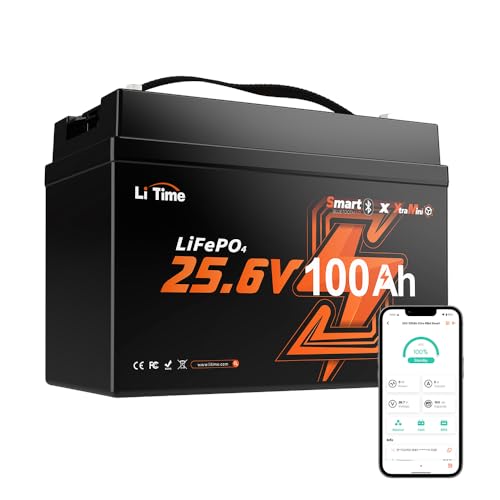
Best for: Anglers and boaters who want real-time battery monitoring. It uses a Group 31 form factor and supports Bluetooth 5.0 for live SOC, voltage, current, and status updates via the LiTime App, aiding confident on-water power management.
Why selected: The app-based visibility helps optimize charging cycles and motor operation, reducing the risk of unexpected power loss during long trips.
Caution: Height may exceed some standard Group 31 trays; verify fit before purchase.
Elefast 100Ah 24V LiFePO4 Battery

Best for: Trolling motors and RV setups needing high cycle life and balanced performance. It emphasizes A+ grade cells and a 100A BMS, capable of handling startup surges and maintaining system stability.
Why selected: Its emphasis on higher-grade cells and durable cycle life supports long-term use with less degradation over time.
Caution: Charging efficiency depends on the charger; ensure compatible 29.2V charging equipment is used for optimal results.
LGECOLFP 24V 100Ah LiFePO4 Battery

Best for: Users seeking a lightweight, compact option with strong protection. The 100A BMS protects against overcharge and short circuits, and the battery weighs about 36.4 lbs, significantly lighter than lead-acid alternatives.
Why selected: Combines a long lifespan (up to 10 years) with a compact footprint, making it easy to integrate into tighter installations.
Caution: Ensure compatible battery boxes and mounting space, as height and tray fit vary between configurations.
Cymoye 24V 100Ah LiFePO4 Battery

Best for: Those who want a scalable energy system with high energy capacity. With 4000–15000 deep cycles and a built-in 100A BMS, this battery supports extended use and multiple configurations in marine and off-grid setups.
Why selected: Its scalable design supports expansion to higher voltages and capacities if your system grows.
Caution: Confirm boat and storage space for the longer footprint when used with larger multi-battery arrays.
Buying Guide: Key Purchase Considerations
- Cycle life and durability: For frequent trolling motor use, prioritize batteries rated for thousands of deep cycles and stable performance in varied temperatures.
- Protection features: Built-in BMS protection (overcharge, over-discharge, short-circuit, and temperature) is essential for longevity and safety.
- Physical fit: Check weight, dimensions, and compatibility with your boat’s battery box or mounting space. Group 31 compatibility may be a factor for some trays.
- Temperature performance: Low-temperature charging protection is important in colder climates to prevent charging at unsafe temperatures.
- Monitoring and usability: Bluetooth or app-based state-of-charge monitoring helps optimize charge cycles and on-water reliability.
- Weight and space: LiFePO4 batteries are lighter and more compact than lead-acid, which can improve handling and installation in smaller vessels.
- System compatibility: Ensure your charger, solar setup, and trolling motor are compatible with a 24V LiFePO4 solution to maximize efficiency.
FAQ
- Q: Do 24V trolling motor batteries last longer than 12V equivalents? A: 24V systems can deliver higher power with efficient balance, but longevity depends on chemistry, usage, and charging practices.
- Q: Is LiFePO4 safer than traditional lead-acid for marine use? A: Yes, LiFePO4 typically offers better thermal stability, deeper cycle life, and built-in protection; however, proper cooling and charging are still important.
- Q: Can I mix different 24V batteries in a single trolling motor system? A: Mixing chemistry or mismatched capacity can cause imbalance and reduce performance; use matched packs when possible.
- Q: What maintenance do 24V LiFePO4 batteries require? A: Minimal maintenance beyond regular inspection of cables and connectors; monitor for corrosion and ensure the BMS is functioning properly.
- Q: How do I know if a battery fits my boat’s battery box? A: Check exact dimensions (L x W x H) and compare with your box dimensions; verify any height restrictions for lid clearance.
- Q: Is a higher Ah rating always better? A: Higher Ah means more stored energy, but weight, size, and charging rate also matter for your boat’s electrical needs.