As an Amazon Associate I earn from qualifying purchases. These links may earn this site a commission when you buy, at no extra cost to you.
When choosing a battery test switch panel, prioritize clarity, reliability, and compatibility with your 12V or 24V electrical system. This guide highlights five top options ideal for marine, automotive, and RV applications. Each product helps test and monitor battery voltage while isolating power to prevent drain. Best for boaters, DIY enthusiasts, and vehicle owners needing a simple, rugged switch with an integrated voltmeter.
Buyer profiles:
– Boat owners needing marine-grade panels with LED indicators for two batteries.
– RV or truck users seeking compact, panel-mounted switches with voltmeter functionality.
– DIYers who want pre-wired panels for quick installation and clear voltage readouts.
The table below summarizes the five panels and how they fit common needs.
| Product | Main Use | ||
|---|---|---|---|
| Acouto 4P ON-OFF-ON | Dual battery test panel | Boats and marine electronics | LED indicators show Battery 1 or Battery 2 status |
| Qiilu Rocker Switch Panel | LED dual-battery tester | Marine and automotive projects | 3-position switch with rubber seal |
| Akozon Marine Panel | Dual battery test panel | Marine cockpits and RVs | Pre-wired 12V system with voltmeter |
| Nilight 90015A Battery Switch | Heavy-duty disconnect switch | Cars, boats, and RVs needing isolation | High current ratings and robust housing |
| Ampper Panel Mounted Battery Switch | Panel-mounted 12V-48V switch | Vehicles and marine installations | Solid panel mount with multiple bolt options |
Acouto 4P Battery Test Panel
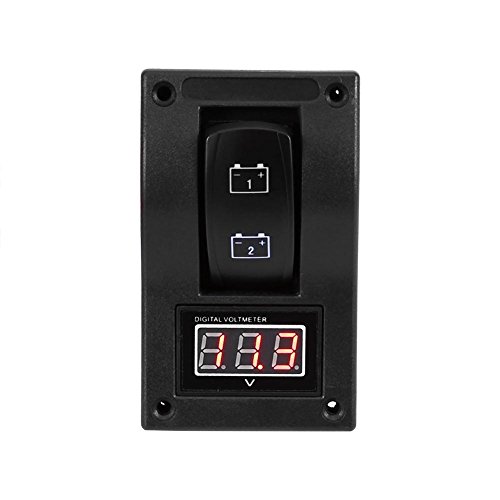
The Acouto panel uses a three-position LED-illuminated rocker switch (Battery 1 / Off / Battery 2) with two green indicators showing which battery is active. It includes an LED voltmeter to test and monitor voltage. Best for boaters who need quick visual confirmation of which battery is supplying power and easy voltage checks. A potential limitation is that the panel relies on a dedicated indicator layout, so installation should align with the two-battery arrangement.
Qiilu Dual Battery Test Panel

The Qiilu unit is designed for marine and automotive use and features a 3-position LED-illuminated rocker switch with a rubber seal. Green LEDs indicate Battery 1 or Battery 2, depending on selection. It is suitable for marine cockpits, trucks, 4x4s, and RVs. Best for users who want a sturdy, water-resistant panel with clear battery status indicators. A caution: ensure the panel mounting area provides adequate sealing to preserve this water-resistant intent.
Akozon Marine Panel with Voltmeter
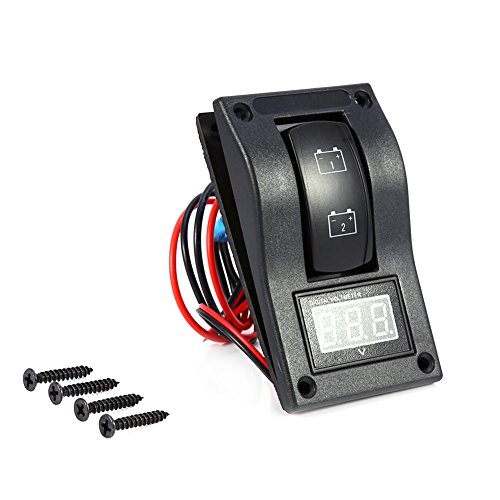
Akozon’s panel is pre-wired for 12V systems and includes an LED voltmeter for ongoing battery voltage monitoring. It uses the same Battery 1 / Off / Battery 2 concept with green LEDs indicating the active battery. Best for users who want an easy, plug-in solution with built-in monitoring. Limitations may include reliance on proper pre-wiring and the need to confirm compatibility with larger electrical systems or additional accessories.
Nilight 90015A Heavy-Duty Battery Switch

Nilight’s battery switch offers a rugged ABS plastic housing with a rear insulating cover and four bolt sets. It provides 275 A continuous at 12V, with high intermittent and momentary capacities. Best for those needing robust isolation in DC 12-48V systems for cars, RVs, and marine applications. A limitation is that very high current scenarios may require additional cooling or mounting considerations in tight panels.
Ampper Panel Mounted Battery Switch

Ampper provides a panel-mounted battery switch suitable for 12V to 48V systems. It features a robust ABS housing and four bolt sets, aligning with standard panel installation practices. Best for owners who want a straightforward, high-amp disconnect option for boats, vehicles, or RVs. Limitation: the device is a switch only, without built-in voltmeter; plan to add a separate monitoring solution if voltage monitoring is required.
Buying Guide: Key Considerations for Battery Test Panel Purchases
- Voltage compatibility: Ensure the panel supports 12V or 24V systems used in your boat, RV, or vehicle.
- Number of batteries: If you need to manage two batteries, choose a 3-position Battery 1 / Off / Battery 2 design with clear indicators.
- Indicator clarity: LED indicators should be easy to interpret in outdoor or low-light conditions.
- Water and dust resistance: For marine or outdoor use, IP-rated or sealed designs improve longevity.
- Electrical ratings: Check continuous and intermittent current ratings to prevent overheating in high-load scenarios.
- Pre-wiring and installation: Panels pre-wired for 12V systems save time, but verify compatibility with your wiring harness and panel cutouts.
- Mounting hardware and seals: Rubber seals and robust housings reduce moisture ingress and corrosion.
- Voltmeter integration: A built-in voltmeter helps real-time monitoring; otherwise plan for an external tester.
Frequently Asked Questions
- What is a battery test panel best used for?
– It allows testing and monitoring two battery banks, with clear indicators indicating which battery is active or in use. - Do these panels work with both 12V and 24V systems?
– Many models target 12V or 12-48V ranges; check the product specifications for exact compatibility. - Is a built-in voltmeter essential?
– It helps monitor battery health at a glance, but you can use a separate voltmeter if preferred. - Can I install these panels on a boat or RV?
– Yes, most are designed for marine and automotive environments; choose models with rubber seals and protective housings for moisture exposure. - What should I consider when choosing between a switch and a voltmeter panel?
– If you want simplified control, prioritize a panel with a clear LED switch; if you need ongoing voltage data, choose a panel with a voltmeter or plan for a separate monitor. - Are there safety concerns with high current panels?
– Use panels within their current rating and ensure proper mounting, wiring, and insulation to prevent shorts or overheating.


