As an Amazon Associate I earn from qualifying purchases. These links may earn this site a commission when you buy, at no extra cost to you.
Answering the common search need for a reliable boat air conditioning solution, these 5 units are selected for different boat sizes, power setups, and off-grid capabilities. They are ideal for boat owners seeking quiet operation, steady cooling, and battery-powered flexibility. Best for compact cabins, mid-sized sailboats, or motor yachts that run on battery power when docked or underway.
| Product | Best For | |
|---|---|---|
| OutEquip 10,000 BTU Rooftop A/C | Compact cabin boats requiring fast cool-down | 10,000 BTU, 12V battery-powered, UV-resistant housing |
| VEVOR 12V 10,000 BTU Mini Split | Cabins with access to inverter power and longer off-grid runs | 400 m³/h airflow, inverter-based, quiet |
| Sokaiso 10,000 BTU DC A/C | Versatile cargo or living spaces on trucks or campers | DC-powered, broad vehicle compatibility, low energy |
| Treeligo 12,000 BTU DC A/C (White) | Mid-to-large spaces needing faster cooling | 12000 BTU, DC powered, fast cooling |
| Bailigo 12V Under Dash A/C 12,000 BTU | Under-dash installation for trucks and small RVs | Under-dash kit, inverter cooling, energy efficient |
Below are five carefully chosen products. Each section provides who it is best for, why it was selected, and a practical note on limitations to help you compare quickly.
OutEquip 10,000 BTU Rooftop A/C for Boats

Best for small to medium boats needing rapid cooling and off-grid capability. This 10,000 BTU unit cools a cabin quickly, with a stated 15-minute start to comfortable temperatures. It runs off the boat’s battery, offering 8 hours of cooling on a 12V 480Ah setup and about 10 hours on a 12V 600Ah battery when parked. It features UV-resistant ABS housing, a zinc-coated condenser, and EPDM foam gasket for solid sealing against heat and weather.
Caution: Battery capacity is critical for sustained operation; extended cooling requires sufficient storage capacity and power management. Best for daytime use or short trips between recharges.
VEVOR 12V 10,000 BTU Truck A/C
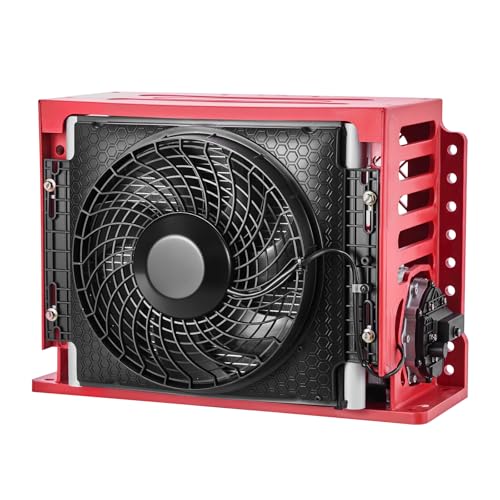
Best for vehicles where a strong, fast cooling response is needed and inverter efficiency matters. The unit delivers 10,000 BTU with a 400 m³/h airflow, capable of cooling from high heat quickly. It uses automotive-grade inverter technology and a smart variable-frequency scroll compressor to reduce power use. It can run 6–8 hours on a 12V battery and operates quietly at around 65 dB.
Limitation: Noise is present at higher fan speeds; consider deployment where cabin noise will not be disruptive to sleeping areas or nearby vessels.
Sokaiso 12V DC RV A/C Unit

Best for multi-vehicle fleets or diverse RV setups that require a durable, battery-powered cooling solution. This 10,000 BTU DC-powered system is designed for parking and driving scenarios, offering lower energy consumption and flexibility for trucks, RVs, excavators, and buses. It emphasizes compatibility and quiet operation while parked.
Limitation: Installation space is a factor; ensure proper mounting clearance and ducting compatibility for your specific boat or RV layout.
Treeligo 12,000 BTU DC A/C (White)

Best for mid-sized boats needing higher cooling power. This unit provides 12,000 BTU and fast cooling on DC power, suited for motorhomes and larger cabins aboard boats. It emphasizes energy savings and quick temperature reduction, with a design focused on DC battery operation to reduce fuel costs.
Limitation: Higher BTU means greater current draw; verify battery capacity and charging options to avoid draining power reserves during extended use.
Bailigo 12V Under Dash A/C Kit

Best for space-limited boats where under-dash installation is preferred. The Bailigo kit offers 12V operation with a compact footprint, designed to work with car or boat electrical systems. It targets efficient cooling with a low-noise profile and can run on battery or external power when parked.
Limitation: Under-dash configurations require precise fitment; confirm dimensions and mounting clearances before purchase.
Buying Guide
What to consider when choosing a boat A/C unit
- Power source and battery capacity: Off-grid use hinges on battery size and inverter capacity. Larger batteries extend run time but add weight and space considerations.
- BTU and space coverage: Higher BTU suits larger cabins; measure cabin square footage and ceiling height to select an appropriate cooling capacity.
- Installation type: Rooftop units use exterior mounting; under-dash or compact kits fit tight spaces but may require significant customization.
- Noise levels: Quiet operation is important for night use; compare rated decibels and consider ducting or sound-dampening options.
- Energy efficiency: Inverter-driven compressors and variable-speed fans can reduce power draw, extending off-grid operation time.
- Durability in marine environments: Look for UV-resistant housings, corrosion-resistant condensers, and weather seals to withstand sun, rain, and salt spray.
How to compare options quickly
- Match BTU to boat size and insulation quality.
- Evaluate battery requirements for the expected duration off-grid.
- Assess installation feasibility and space constraints on your vessel.
- Consider maintenance needs and availability of replacement parts.
FAQ
- Q: Can these units run while the boat engine is off?
A: Many DC-powered units are designed for off-grid use, relying on battery capacity; verify battery and inverter specs for runtime expectations. - Q: What size cabin can a 10,000 BTU unit cool effectively?
A: Typical small to mid-sized cabins up to about 150-260 square feet, depending on insulation and airflow. - Q: Are these units suitable for saltwater boats?
A: They are designed for marine environments with weatherproof housings; double-check corrosion protection and installation exposure. - Q: Is a rooftop unit better than an under-dash unit for boats?
A: Rooftop units offer broader room coverage and easier airflow paths, while under-dash units suit tight interiors but may require more customization. - Q: Can I upgrade to a higher BTU later without reconfiguring my electrical system?
A: Upgrading BTU typically requires recalculating electrical load, battery capacity, and inverter size to maintain efficient operation.


