
Answering the question: which fuel tank breather is best for your boat? This article compares top marine fuel tank vents to help you choose the right vent for preventing vapor buildup, blocking water ingress, and maintaining proper venting under typical sea conditions. The featured products span chrome, black plastic, and stainless steel options, all designed for 5/8″ hose connections. Ideal buyers include DIY boaters updating aging vents, sail- or power-boat owners seeking corrosion resistance, and captains needing reliable, low-maintenance venting during saltwater use. A quick summary table follows to aid quick comparisons.
| Product | Best For |
|---|---|
| Seachoice Fuel Tank Vent Chrome | Corrosion resistance and flame arresting protection |
| Attwood 66419-3 Composite P-Trap Vent | Water prevention with ABYC standard compatibility |
| Universal 90° Keehui 316 Stainless Vent | Durable stainless option for harsh environments |
| Attwood 1670-3 90-Degree P-Trap | Reliable air venting with anti-water features |
| NRC&XRC 316 Stainless Steel Vent | Premium stainless venting with precise fabrication |
Seachoice Fuel Tank Vent Chrome 5/8 in., USCG Approved

- Role: Helps maintain proper fuel flow during tank filling.
- Materials: Chrome-plated zinc for corrosion resistance; includes a stainless-steel flame arresting screen to block contaminants.
- Best for: Boats needing chrome-styled vents with flame arrest protection and corrosion resistance.
Best for owners who want a chrome aesthetic with added flame protection and solid corrosion resistance. Consider this if you prioritize a classic look without sacrificing safety features.
Limitation: Chrome finishes may show wear over extended sun exposure; ensure fitment matches a 5/8″ hose for seamless installation.
Attwood 66419-3 Composite 90 Degree P-Trap Vent

- Best for: 5/8″ I.D. hose; ABYC standard compliant.
- Function: Prevents water entry while allowing air venting during normal sea conditions and washdowns.
- Benefit: Eliminates need for an anti-siphon loop in the vent hose.
Choose this if you want a compact 90-degree vent that meets industry standards and minimizes water ingress without extra loop configurations. It’s a solid choice for boats exposed to regular spray and spray-downs.
Limitation: Some installations may require precise hose routing to maintain effective venting in confined engine rooms.
Universal 90° Keehui 316 Stainless Steel Vent

- Material: 316 stainless steel; strong and durable for marine use.
- Fit: Requires approximately a 1 3/8-inch hole; designed to connect with 5/8-inch interior diameter hose.
- Best for: Long-lasting stainless venting in saltwater environments where corrosion resistance matters.
Best for owners seeking a robust stainless steel vent that withstands harsh conditions and requires a larger hole for mounting. Use this if you want a high-durability vent with a 90-degree orientation for tight engine compartments.
Limitation: Stainless steel vents may require careful sealing to prevent moisture ingress around the mounting hole.
Attwood 1670-3 90-Degree P-Trap Vent

- Best for: 5/8-Inch interior diameter hose; standard mount with black vent head.
- Function: Prevents water intrusion while allowing air venting during normal sea conditions and washdowns.
- Benefit: Eliminates the need for an anti-siphon loop in the vent hose.
Choose this for reliable venting with a simple, standard mount and a low-profile appearance. It’s a practical option for boats requiring a balance of form and function in confined spaces.
Caution: Ensure compatibility with your existing vent hose routing to avoid kinks or restricted airflow.
Attwood Straight Marine Fuel Tank Vent

- Design: Straight vent to allow proper airflow during fueling and reduce pressure buildup.
- Material: Splash-resistant polypropylene; resists corrosion and seawater exposure.
- Fit: For 5/8″ I.D. vent hose; straightforward replacement or installation.
Best for owners who want a simple, splash-resistant vent with predictable airflow characteristics. It’s a good choice when a straight path is available for hose routing.
Limitation: May not be ideal where space constraints require a 90-degree vent angle.
Marine Grade 316 Stainless Steel Fuel Gas Tank Vent
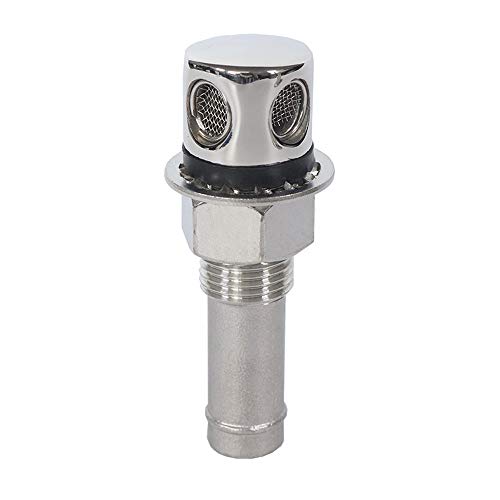
- Material: 316 corrosion-resistant stainless steel; robust and durable.
- Mounting: Requires about a 1 3/8-inch mounting hole; designed for 5/8-inch hose.
- Best for: Premium stainless venting where corrosion resistance and polish are desired.
Better for boats prioritizing premium corrosion resistance and finish. Use this if your installation calls for a high-end stainless solution with precise fabrication.
Limitation: Stainless vents can be more costly and require careful sealing to prevent leaks around mounting.
Keehui 316 Stainless Steel 316Stainless Fuel Vent (Another Style)

- Material: 316 stainless steel; solid and durable for marine use.
- Fit: ~1 3/8-inch hole; supports 5/8-inch hose connections.
- Best for: Long-term stainless venting with robust construction.
Choose this if you want a stainless option with a solid build for challenging marine environments. Best for owners who expect heavy use and exposure to salt air.
Limitation: Ensure color and finish match other deck hardware for a cohesive look.
NRC&XRC 316 Stainless Steel Vent with Mounting Gasket

- Material: 316 stainless steel; corrosion-resistant and bright finish.
- Mounting: Requires approximately a 1 3/8-inch hole; designed for 5/8-inch hose.
- Best for: Universal 90-degree boat vent with a mounting gasket for a clean seal.
Best for owners who want a universal 90-degree vent with a precise finish and gasket mounting for a secure seal. Useful when mounting in flush locations or tight spaces.
Limitation: Polished finishes may require periodic maintenance to preserve shine in sunny, coastal environments.
Buying Guide: Key Considerations for Boat Fuel Tank Vents
- Material durability: Stainless steel (316) offers superior corrosion resistance for saltwater use; chrome-plated options add style but may show wear over time.
- Vent angle: 90-degree vents are useful in tight engine bays; straight vents are simpler and can suit longer hose runs.
- Hose compatibility: Most vents fit 5/8″ I.D. hoses; verify your hose size before purchasing.
- Water ingress prevention: P-trap and flame arrestor features help block water and contaminants while venting air.
- Standards and mounting: Look for ABYC compliance and mounting gasket compatibility for a reliable seal.
- Aesthetics and finish: Choose finishes that match deck hardware and corrosion exposure expectations.
FAQ
- What is the main purpose of a boat fuel tank vent? It allows air to escape and enter the tank to prevent pressure buildup and vapor lock while blocking water ingress.
- Do I need a flame arrestor on my fuel vent? A flame arrestor helps prevent ignition sources from entering the fuel system, which is a safety consideration on many vessels.
- Which vent material lasts longest in saltwater? 316 stainless steel vents typically offer the best corrosion resistance in marine environments.
- Can I install a vent in a tight space? Yes, a 90-degree P-trap vent is often chosen for confined engine bays to route airflow effectively.
- Should I replace vents in older boats with modern designs? Upgrading can improve venting reliability and reduce water ingress, especially in boats exposed to washdowns.
- Is universal sizing important for replacement vents? Yes; confirm hose ID compatibility and mounting hole size (commonly 1 3/8 inches) to ensure a proper fit.