
Looking for a reliable boat fuel tank gauge to keep track of your fuel levels? This guide highlights five solid options that suit different boats, tank depths, and installation needs. Choose this if you want corrosion-resistant sensors, backlit readability, and easy wiring. Choose that if you need adjustable depth compatibility or a compact 6″ sender. This article helps buyers compare features, installation ease, and best-use scenarios so you pick the right gauge for your marine setup.
| Product | Brand | Depth Range | Resistance | Best For | Notes |
|---|---|---|---|---|---|
| Rupse 6″ (150mm) Fuel Sender | RUPSE | 6″ (150mm) | Gasoline/Diesel/Water/More | Compact boats; tight engine rooms | IP67—readable backlight; SAE 5-hole |
| CLLOMAGY Marine Sending Unit | CLLOMAGY | 6-12″ depth | Gas/Water | Flexible tank depth; RVs and boats | Adjustable; cut to fit |
| Rupse 8.8″ (225mm) Fuel Sender | RUPSE | 8.8″ (225mm) | Gasoline/Diesel/Water/More | Larger tanks; deeper senders | Same robust features as 6″ with longer shaft |
| 100TECH 6″ (150mm) Gauge with SUS316 | 100TECH | 6″ (150mm) | 240-33 ohm | Rugged marine use; 316 stainless | High resolution; durable construction |
| Tbest Fuel Tank Level Gauge | Tbest | Universal | Multiple scales | Yachts, cars, trucks, farm vehicles | Sealed design; wide temperature range |
Rupse 6-Inch Fuel Sender and Gauge

Best for compact boats and small-to-mid-size tanks. Features a corrosion-resistant stainless steel exterior and a reed-switch-based sensor for stable output and long life. The gauge offers eight backlight colors and IP67 waterproofing, with an anti-fog curved glass for easy readability (Empty to Full). Installation uses a SAE 5-hole pattern and includes M5 screws and wiring terminals. This unit is ideal for boats and personal watercraft needing a reliable, compact fuel sender with simple wiring.
Who it’s best for: small to medium boats where space is limited and a robust, corrosion-resistant sender is desired. Why selected: combines durable materials, clear backlighting, and straightforward installation to minimize maintenance.
Limitations: installation requires matching the SAE mounting pattern and proper gasket sealing; ensure tank depth aligns with the 6″ shaft length.
CLLOMAGY Marine Fuel Sending Unit

Best for deeper or variable-depth tanks in boats and RVs. This sending unit is designed to be cut to fit depth, with flexible adjustment to accommodate 6–12 inch tanks. It reads fuel and water levels, ensuring you know exact content. Swings and repositions easily by loosening the center screw, allowing precise alignment in tight spaces.
Who it’s best for: boat owners with flexible tank depths or those who need a customizable depth. Why selected: adjustable length and direction aid fitment in irregular tanks and installations.
Limitations: may require precise cut-to-fit and careful sealing to prevent leaks in saltwater environments.
RUPSE 8.8-Inch Fuel Sender
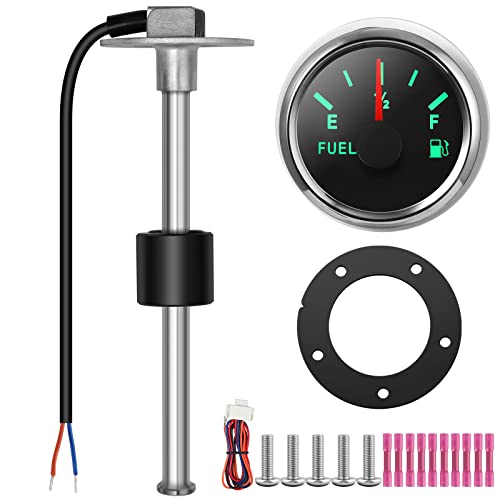
Best for larger tanks or deeper installations. Like the 6″ version, this unit uses a stainless steel exterior with a reed-switch sensor for corrosion resistance, long life, and stable output. It features eight backlight colors and IP67 protection with a clear display. Installation follows SAE 5-hole pattern with supplied screws and wiring terminals.
Who it’s best for: boats with deeper tanks or spaced engine compartments needing a longer sender. Why selected: extends the same reliability and readability of Rupse products to bigger tanks.
Limitations: longer shaft requires adequate tank depth and mounting space; verify compatibility with existing gauge wiring.
100TECH 6-Inch Marine Gauge with SUS316

Best for high-res, precise readings on medium tanks. This model uses a 316 stainless steel body for corrosion resistance and a 240-33 ohm signal range, compatible with most standard senders. It emphasizes a rugged build and smoother readings in rough water due to magnetic reed technology and no moving float arms. It supports multiple gauge systems via selectable resistances, easing compatibility with existing setups.
Who it’s best for: mariners seeking durable construction and stable readings in challenging seas. Why selected: high corrosion resistance coupled with a refined signal range supports reliable monitoring over time.
Limitations: ensure your sender’s resistance matches the gauge’s supported ranges for accurate display.
Tbest Fuel Tank Level Gauge

Best for universal use in various vehicles and vessels. This gauge offers a high-precision display and a sealed design to prevent contamination. It has a wide operating temperature range (40 to 85°C) and a sealed head to prevent leaks and keep readings accurate. It is designed to work with multiple fuel systems and can be used in yachts, cars, trucks, and farming vehicles.
Who it’s best for: multi-vehicle owners or those needing a sealed, temperature-tolerant gauge. Why selected: robust sealing and broad temperature tolerance support reliable readings in diverse conditions.
Limitations: the gauge may require specific sender compatibility; verify the requested resistance range matches your sender unit.
Buying Guide: Key Considerations for Boat Fuel Tank Gauges
- Tank depth compatibility: Match the sender shaft length to your tank’s depth (common options include 6″, 8.8″, and adjustable depths). A too-short sender can read partial levels; a too-long sender may not fit.
- Resistance compatibility: Gauge readings rely on the sender’s resistance range (for example, 240-33 ohms or 33-240 ohms). Confirm your gauge supports your sender’s resistance to prevent inaccurate readings.
- Corrosion resistance: Marine environments demand stainless steel constructions or coated components to resist saltwater corrosion and ensure long life.
- Readability: Backlit displays and anti-fog glass help reading fuel levels in direct sun or low light. Eight-color backlights improve visibility in various conditions.
- Installation and sealing: Look for SAE mounting patterns, gasket materials, and water sealing (IP67 or better) to prevent leaks and ensure durable mounting.
- Depth of installation space: Some senders need room in under-deck compartments; measure available space before selecting a longer unit.
- Single versus universal fit: Some models are designed for specific tank depths or vehicle types; others offer adjustable depth or universal mounting to fit multiple setups.
FAQ
- What is the typical mounting pattern for boat fuel senders?
– Many use a SAE 5-hole mounting pattern, but always verify compatibility with your gauge and tank. - Do all senders work with the same gauge resistance?
– No. Common ranges include 240-33 ohms and 33-240 ohms. Match the sender to the gauge’s accepted range. - Is stainless steel essential for marine fuel senders?
– It is highly recommended for durability and corrosion resistance in saltwater environments. - Can I cut a sending unit to fit my tank depth?
– Some models (like CLLOMAGY units) are designed to be cut to fit, but confirm the product’s instructions before modifying. - Will a sealed gauge prevent fuel leaks?
– Sealed designs help prevent leaks and protect internal electronics, especially in wet conditions.