As an Amazon Associate I earn from qualifying purchases. These links may earn this site a commission when you buy, at no extra cost to you.
Answering the common buyer question: braided nylon dock lines deliver reliable performance for mooring boats of various sizes, absorb shock, resist wear, and stay manageable in tough marine conditions. This guide highlights five top braided nylon dock lines, explaining who each is best for and why. Ideal for boat owners, pontoons, and seasonal mooring, these selections balance strength, stretch, and ease of handling. A quick buying table summarizes the core specs to help you compare at a glance.
| Product | Diameter | Length | Best For |
|---|---|---|---|
| PropelTech Navy 4 Pack | 1/2 inch | 15 ft each | Smaller boats up to 30–31 ft; value-seekers |
| SEACHOICE 1/2″ x 20′ Dock Line | 1/2 inch | 20 ft | General use; easy handling |
| PACTHSD 2 Pack 1/2″ x 20′ | 1/2 inch | 20 ft | Budget-conscious mooring |
| PACTHSD 5/8″ x 25′ | 5/8 inch | 25 ft | Lakes, rivers, longer-term mooring |
| PropelTech Black 4 Pack | 1/2 inch | 15 ft each | Dark-finish boats; multi-line sets |
PropelTech Navy 4 Pack 1/2″ x 15’ Dock Lines

Product features: 1/2 inch diameter, 15 ft length per line, navy blue color, four-line package. Made from marine-grade double braided nylon for flexibility and enough stretch to minimize shock during towing. UV, oil, salt, acid, and corrosion resistant, with a braking force up to 5000 lbs. Best for boats under 31 ft and owners seeking a complete, ready-to-use set.
Who this is best for: boat owners needing a sturdy, affordable four-line kit for small-to-mid sized vessels. Why selected: the four-line bundle reduces guesswork and ensures consistent performance across multiple mooring points. Caution: verify the boat length fits within the recommended range to avoid overloading a single line.
SEACHOICE Double-Braid Nylon Dock Line 1/2″ x 20′ (Gold/White)

Product features: 1/2″ diameter, 20′ length, double-braid nylon construction designed to absorb dynamic shocks, flexible and easy to handle, complete with a 15″ eye splice. Best for: general mooring needs with simple handling and robust shock absorption. Why selected: reputable brand with straightforward dimensions and a ready-to-use eye splice for quick docking. Caution: color options may affect visibility and UV exposure over time; inspect for UV wear if stored in sun-exposed areas.
PACTHSD 2 Pack 1/2″ x 20′ Dock Lines

Product features: 1/2″ x 20′ dock lines with low stretch, double-braided nylon for high strength and abrasion resistance, suitable for all-weather docking with reliable shock-load absorption. Best for: boaters needing tighter handling and a budget-friendly duo. Why selected: balanced strength and cost, good for lakes, rivers, and marina mooring. Caution: ensure proper wear inspection as older fibers can fray after repeated use.
PACTHSD Boat Dock Lines 2 Pack 3/8″ x 25′
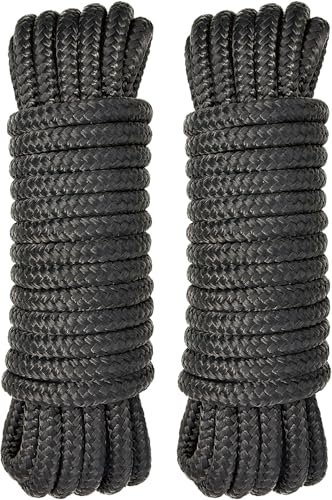
Product features: 3/8″ diameter, 25′ length, double-braided nylon, low stretch. Designed for all-weather docking and mooring in lakes, rivers, and sheltered marinas, with versatility for short-term docking or fender use. Best for: smaller to mid-size craft requiring lighter lines with strong shock absorption. Why selected: a compact option that still delivers robust performance. Caution: smaller diameter may not be ideal for larger vessels or heavy towing.
PropelTech 1/2″ x 15’ Black Dock Lines 4 Pack

Product features: 1/2″ diameter, 15′ length, black color, four-line package. Marine-grade double braided nylon offers flexibility and sufficient stretch to minimize shock and prevent misalignment during sudden tows. UV, oil, salt, and corrosion resistant, with a breaking force up to 7500 lbs. Best for: boats up to about 30 ft where a low-profile, uniform appearance is preferred. Why selected: high breaking strength in a compact set with uniform length and finish. Caution: ensure compatibility with boat cleats and docking hardware for secure tying.
Buying Guide
What size dock line should I choose?
Diameter and length affect strength and handling. A 1/2″ line is common for small-to-mid sized boats, while 5/8″ provides higher load capacity for larger vessels or longer-term mooring. Longer lines give more slack to absorb waves but take more space on the cleat or dock.
What does “double braided nylon” mean for performance?
Double braided nylon combines a tough outer braid with a strong core, offering better shock absorption, abrasion resistance, and flexibility. This helps maintain boat alignment during gusty conditions and reduces kinking.
Should I choose colored lines?
Colored lines improve visibility and aid organization on the dock. UV resistance and salt/oil resistance are important for longevity. Consider dark colors for discreet appearance or high-visibility colors for easier inspection.
Is a pre-spliced eye favorable?
Pre-spliced lines with a loop offer quick docking and reduce the need for extra knots. Ensure the loop size matches cleats or bollards you use and avoid over-tightening to prevent wear at the splice.
What maintenance helps extend line life?
Rinse with fresh water after saltwater use, store out of direct sun when possible, inspect for fraying or worn spots, and replace lines showing significant wear. Proper storage and inspection are key to maintaining performance.
How do I match lines to my boat?
Match the line diameter to your boat’s mooring points and cleats. For boats under 30–31 ft, 1/2″ lines provide good balance of strength and handling. For larger boats or higher load expectations, consider 5/8″ lines with longer lengths.
FAQ
- Q: Can I use any braided nylon dock line for all weather? A: Look for lines described as all-weather or UV-resistant and designed for salt and oil exposure.
- Q: Are pre-spliced lines safer than standard lines? A: They offer faster docking but ensure the loop size fits your hardware.
- Q: How do I know the line length I need? A: Choose length based on typical clearance and dock layout; longer lines provide more slack for wave motion.
- Q: How often should I replace dock lines? A: Inspect regularly for fraying or stiffness and replace lines showing wear or reduced elasticity.
- Q: Do heavier lines hinder performance? A: Heavier lines provide greater strength but require appropriate hardware and handling space.


