
The best deck fittings for boats are marine-grade handrail bases designed to secure rails to your deck with corrosion resistance and reliability in saltwater environments. This guide highlights five durable options ideal for common tubing sizes and offshore use. They’re best for boat owners who want sturdy, long-lasting fittings and easy installation. The top picks span 7/8″, 1″, 1-1/4″ and 1-1/2″ tube sizes to cover a wide range of boats and layouts.
Summary table of chosen products:
| Product | Tube Size | Best For |
|---|---|---|
| Douzime 90 Degree Deck Handrail (1.5″ Tube) | 1.5″ (38 mm) | Sturdy seating on mid-sized boats; long service life in saltwater |
| Douzime 2 Pcs 1” Hand Rail Fittings 60° | 1″ | Compact rail systems; quick installation |
| keehui 90 Degree 1″ Rectangular Base | 1″ | Durable, polished finish for traditional 1″ rails |
| ODYSUNRAL 7/8″ Round Tubing 60° Base | 7/8″ (2.2 cm) | Lightweight rail setups; versatile mounting |
| Douzime 90 Degree 1-1/4″ Deck Fitting | 1-1/4″ | Heavier duty rails; reliable for larger boats |
Douzime 90 Degree Deck Handrail Fitting 1.5″ Tube

Material: Marine Grade 316 stainless steel. Used for 1.5″ (38 mm) pipe. Base diameter and height: 3 x 1 inches (76.67 x 25.6 mm). Best for mid-size boats requiring a strong right-angle connection. Notable limitation: for larger structural rails or non-standard tubing, confirm fit before purchase.
Douzime 1″ Hand Rail Fittings 60° (2 Pcs)
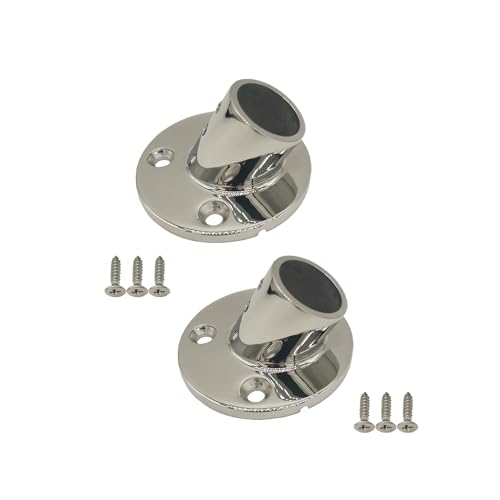
Material: Precision cast 316 marine-grade stainless steel. Used for 1″ tubing. Heavy-duty 60° round base provides stable mounting. Best for compact rail systems on smaller boats. Limitation: larger fastener options may require different tools or mounting space.
keehui 90 Degree 1″ Rectangular Base

Material: Precision casting 316 marine-grade stainless steel. Maximum corrosion resistance in saltwater. Polished mirror-like finish suitable for 1″ O.D. tube. Best for traditional deck rails on medium-sized vessels. Caution: inspect for tightness to avoid movement over time.
ODYSUNRAL 7/8″ Boat Handrail Base
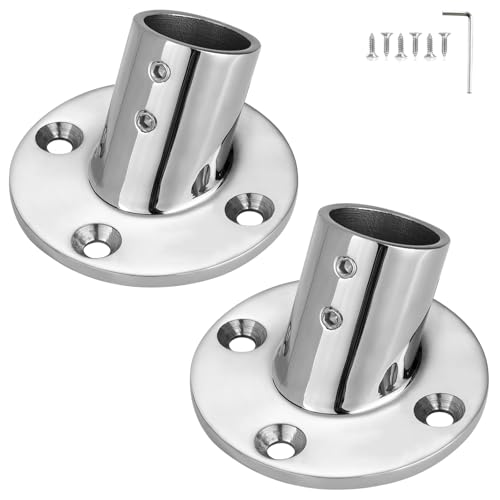
Material: 316 stainless steel. Designed for 7/8″ round tubing with a 60° round base. Double screw reinforcement for added firmness. Best for lightweight or space-limited decks. Limitation: compatible only with 7/8″ rails, not standard 1″ tubing.
Douzime 90 Degree 1-1/4″ Deck Fitting

Material: Marine Grade 316 stainless steel. Used for 1.25″ (32.2 mm) pipe. Base dimensions: 75 x 42 mm (2.95 x 1.65 inches). Best for heavier rails on larger boats. Caution: ensure compatibility with existing rail hardware when upgrading from smaller sizes.
Buying Guide
What tube size do I need?
Identify your rail tubing size (inch or mm) and choose a base that matches. Using a slightly larger base can improve stability, but may require more deck space and different mounting hardware.
What material should I choose for saltwater boats?
Pick marine-grade stainless steel (316) for corrosion resistance, durability, and low maintenance in saltwater environments. Avoid cheaper alloys if you want longevity in harsh conditions.
What mounting considerations are important?
Consider base shape (round vs rectangular), base dimensions, and screw pattern. Ensure there is clearance for mounting tools and that mounting holes align with deck structure or stringers.
Which angle fits my deck layout?
90° fittings are common for straight rails, while 60° fittings suit corner sections or tapered rails. Match the rail orientation to your deck plan for a seamless look and safer handholds.
Are there cautions to watch?
Confirm that tubing and fittings share compatible tolerances. Check for any protruding edges that could snag clothing or hands. Verify hardware includes mounting screws and tools if needed.
How many fittings should I buy?
Plan sections along the rail length with spacing every 2–4 feet, adjusting for boat size and anticipated load. It’s wise to overestimate slightly to accommodate layout changes or replacements.
Maintenance considerations
Rinse fittings after exposure to salt spray, dry thoroughly, and periodically inspect for loosening screws or corrosion. A light coating of marine-grade oil can help protect fasteners in marine settings.
Quick reference comparison
- Best for mid-size boats: Douzime 1.5″ 90°
- Best for compact rail systems: Douzime 1″ 60°
- Best for traditional rails: keeheui 1″ 90°
- Best for lightweight decks: ODYSUNRAL 7/8″ 60°
- Best for heavier rails on larger boats: Douzime 1-1/4″ 90°
Frequently asked questions
- What is the advantage of 316 stainless steel for deck fittings?
316 stainless steel offers superior corrosion resistance in saltwater, helping fittings last longer with less maintenance.
- Can I mix different tube sizes on the same boat?
Yes, you can, but ensure each fitting matches its corresponding tube size for a secure connection and reliable load distribution.
- Should fittings be polished or brushed?
Polished finishes look premium and can be easier to wipe clean, but both finishes withstand marine environments when properly maintained.
- Do I need additional locking hardware?
Some fittings include screws and keys; if not, add appropriate mounting hardware to prevent loosening in rough seas.
- How do I know if a base is suitable for outdoor mounting?
Choose fittings designed for exterior marine use with corrosion resistance and UV-stable coatings or finishes.
- What installation tools are typically required?
Common tools include a drill, screwdriver, sealant, and in some cases an L-shaped hex key wrench or screws provided with the kit.