
The best dinghy boat with a motor combines durability, buoyancy, and a reliable motor mount for versatile on-water use. This guidespotlights five models well-suited for fishing, diving, rescue prep, or casual recreation. Each option targets a different need—compact portability, higher passenger capacity, or enhanced stability—so you can pick the right craft for your typical boating environment and crew size.
Buyer at a glance: the table below summarizes the five selected dinghies, highlighting who they’re best for and their standout features.
| Product | Brand | Best For | |
|---|---|---|---|
| 10ft Inflatable Dinghy Boat for Adult with Drop-Stitch Floor | HEYBOARD | Small crews; quick setup; light transport | Drop-stitch floor; motor mount; HIN/MCO |
| Beyond Marina 10ft Inflatable Boat | BEYOND MARINA | Family outings; stable ride | Longer platform; 1105-lb capacity; strong transom |
| CO-Z 10ft Inflatable Dinghy Boat | CO-Z | Two to four adults; reliable in choppy water | Aluminum floor; 660 lb; three chambers |
| EXOCET 10.8ft Inflatable Dinghy Boat | EXOCET | Mid-size groups; serious paddling and motor use | Four air chambers; aluminum transom; V-hull |
| Newport 12ft 6in Catalina Inflatable Dinghy | Newport Vessels | Coastal or lake cruising with higher horsepower | USCG rated; sail-to-motor readiness; durable PVC |
HEYBOARD 10FT Inflatable Dinghy With Motor Mount
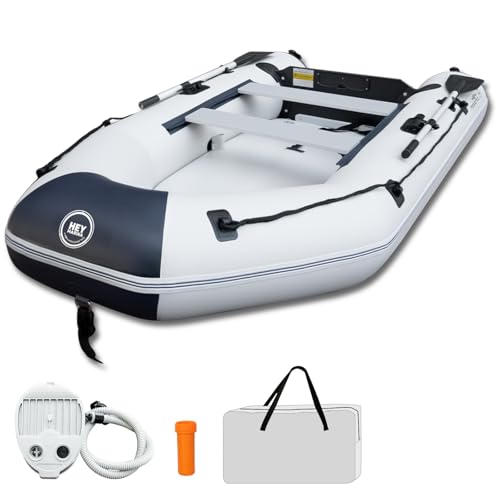
Best for lightweight, easy-to-spot transport. This 10-foot inflatable uses a heavy-duty 1100 denier PVC hull and a drop-stitch floor that inflates to high pressure for rigidity without the bulk of aluminum decks. The vessel features a smart keel design for stable tracking and better maneuverability in lakes or calm coastal waters. The included motor mount enables outboard installation for capable propulsion. It ships with a hull identification number (HIN) and MCO for legal operation and registration. A potential limitation is its lighter frame, which may feel less stable in very rough seas compared with larger boats.
Beyond Marina 10ft Inflatable Dinghy Boat
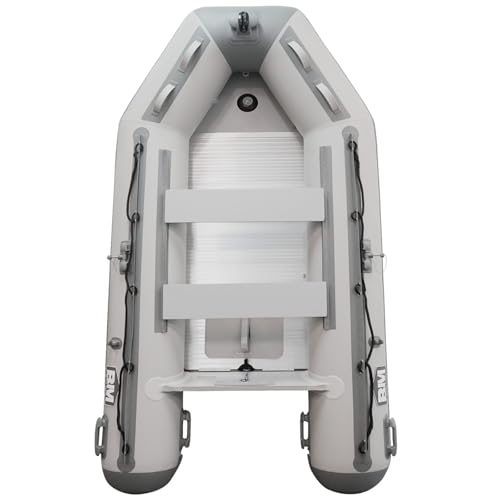
Best for family use and longer trips where comfort matters. This 10-foot dinghy provides a spacious 1105-pound capacity and a roomy layout, with a sturdy transom designed for short-shaft outboard motors. It’s built to handle a mix of recreational paddling and motorized cruising. Safety notes include careful inflation and monitoring of tube pressures as per the included guidelines; the document emphasizes stability but recommends appropriate crew weight distribution to maximize performance.
CO-Z 7.5ft Inflatable Dinghy Boat

Best for compact, two-person outings with motor capability. The CO-Z model uses rugged 1000D PVC and an aluminum floorboard to balance weight and durability. It offers a 660-pound capacity and three independent air chambers for buoyancy safety. It’s a suitable choice for lakes or calm rivers, but its smaller size means a lighter crew and gear load; avoid overloading when planning motor-assisted trips.
CO-Z 10ft Inflatable Dinghy Boat For Four

Best for groups needing more room and stable operation. The 10-foot CO-Z dinghy provides 990 pounds of capacity and an aluminum floor for solid footing when standing or casting. With a V-shaped hull and three air chambers, it aims to deliver stable acceleration and reduced risk of capsizing with gear. The larger size is a better match for casual fishing or family trips, but it requires more storage space when deflated.
EXOCET 10.8ft Inflatable Dinghy Boat

Best for larger groups seeking high capacity and robust construction. This 10.8-foot dinghy offers a four-air-chamber design, a marine-grade aluminum transom, and an aluminum floor, delivering strong buoyancy and stability for motorized use. It’s designed for fishing, cruising, or rescue scenarios. A potential limitation is its size; it’s heavier and bulkier to transport than smaller models, requiring more storage space and effort during setup.
Buying Guide
Key considerations when choosing a motor-ready dinghy:
- Payload and passengers: Match capacity with your typical crew and gear. Higher capacities enable more passengers or equipment but require a larger storage footprint.
- Hull and floor construction: Aluminum floors are sturdy but heavier; drop-stitch floors save weight and simplify setup while still offering rigidity.
- Motors and mounting: Ensure the boat must support the intended motor size and weight. Check transom strength and mounting compatibility for reliable propulsion.
- Chamber design and safety: More air chambers improve buoyancy and floatation safety in case of punctures; look for models with independent chambers for continued stability if one is compromised.
- Portability and storage: Consider deflation volume, carry handles, and optional carry bags to ease transport and storage between uses.
- Build quality and UV resistance: Durable PVC with UV treatment helps extend service life in sun-drenched environments and saltwater.
Frequently Asked Questions
- What is a motor-ready dinghy?
A dinghy designed with a transom or motor mount to attach an outboard motor for propulsion, often including reinforced hulls and buoyant chambers. - What capacity should I choose for weekend trips?
Choose a model that accommodates your typical crew plus gear; for motorized use, ensure the transom and floor can support the motor’s weight. - Are inflatable dinghies safe for open water?
Yes, when equipped with multiple air chambers, proper inflation, and adherence to weight limits; avoid exceeding capacity in rough conditions. - Do these dinghies require registration?
Some regions require a hull ID and related documentation; models provided often ship with HIN/MCO for compliance where applicable. - What maintenance do these boats need?
Regular inspection of seams and valves, proper inflation pressures, cleaning to remove salt and grime, and storage away from direct sunlight when not in use. - Can I use any motor on these boats?
Motors should match the transom strength and weight rating; always follow manufacturer guidelines for mounting and operation.