
Answering the question for dinghy owners and small-boat enthusiasts: these electric outboard motors provide quiet, efficient propulsion with simple maintenance. This guide highlights five top options, explaining who each is best for, and why they stand out for dinghies, kayaks, and lightweight craft. Whether you’re paddling a dinghy to shore, fishing on a calm lake, or cruising in saltwater, these motors balance power, durability, and portability for casual to semi-serious boating needs.
Below is a quick buying table for the five selected models, outlining their core strengths and best-use scenarios.
- Newport NV-Series 36lb Thrust: Best for ultralight dinghies and kayaks where portability matters.
- Newport NT300 Electric Outboard: Best for longer trips and extended range with a compact footprint.
- Newport NV-Series 62lb Thrust: Best for larger dinghies and heavier loads in tougher conditions.
- Newport NV-Series 55lb Thrust: Best balance of thrust and efficiency for mid-sized boats.
- Minn Kota Endura C2 Transom-Mount 40 Lb: Best for freshwater setups with reliable performance.
Newport NV-Series 36lb Thrust Trolling Motor

Best for ultra-light dinghies, kayaks, and small boats where battery life and portability matter. This 36 lb thrust model runs on 12V or 24V, includes a saltwater-rated build, and features a 30″ shaft with a quiet two-blade propeller designed for efficient runtime. The motor is designed for reliable performance in both saltwater and freshwater environments. Limitation: lower thrust may be less suitable for larger vessels or strong currents.
Newport NT300 Electric Outboard Motor

Best for anglers and recreational users who want longer range than a small trolling motor can provide. The NT300 offers 3HP equivalents (1300W) with about 110 lb thrust, designed for quiet, emission-free propulsion. It carries a 66-mile range on a single charge with up to 30 hours of runtime, depending on boat type and conditions. It includes digital throttle with an LCD display and a 24.6″ shaft. Limitation: higher voltage (36V) requires compatible battery setup.
Newport NV-Series 62lb Thrust Trolling Motor
Best for bigger dinghies and heavier loads where stronger thrust is needed to cut through wind and current. This 62 lb thrust trolling motor provides robust push and has a saltwater-rated construction for reliable performance. Its large 3-blade propeller delivers substantial thrust, making it suitable for tougher conditions. Limitation: heavier unit, requiring more battery capacity and mounting space.
Newport NV-Series 55lb Thrust Trolling Motor
Best for mid-sized boats requiring a balance of power and efficiency. This 55 lb thrust model includes a 30″ shaft, a 5-LED battery meter, and a 3-blade propeller. It offers eight speeds (five forward, three reverse) and adjustable mounting to adapt to different dinghy layouts. The motor runs cooler and steadier for all-day trolling. Limitation: top speed varies with boat weight and water conditions.
Minn Kota Endura C2 Transom-Mount Electric Trolling Motor
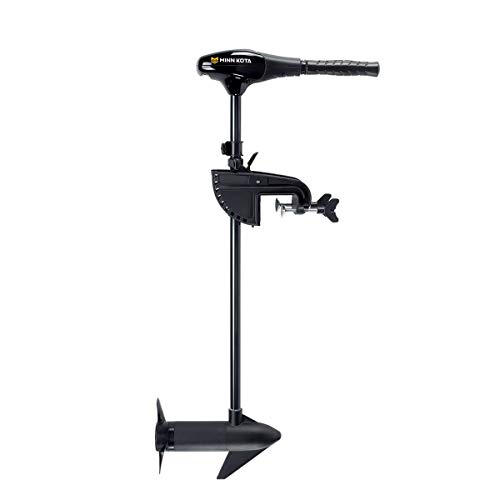
Best for freshwater use and reliability in a compact package. The Endura C2 provides 30 Lb thrust with a 30″ shaft, a telescoping tiller for comfortable control, and a 6-inch adjustable tiller. A push-to-test battery meter and a lever-lock system help with quick setup and adjustment. It’s optimized for maneuvrability through light vegetation and everyday boating. Limitation: lower thrust may not suffice in stronger currents or larger boats.
Buying Guide
What size motor do I need for my dinghy?
Thrust needs depend on boat weight, hull design, and typical water conditions. Lightweight dinghies often perform well with 30–36 lb thrust, while larger or heavier dinghies benefit from 55–62 lb thrust models. Consider your typical load, gear, and wind/current exposure when choosing torque and battery capacity.
Electric vs. gas outboards for dinghies
Electric motors offer quiet operation, no emissions, and straightforward maintenance. They’re ideal for calm lakes, marinas, and short-range use. Gas engines deliver higher top speeds and longer operation between refueling but require regular maintenance, more weight, and produce fumes. For dinghies used primarily for fishing or cruising in calm to moderate conditions, electric motors are typically preferred.
Battery considerations and runtime
Battery capacity and voltage influence runtime. Higher thrust motors often require larger battery packs or multiple batteries. Read manufacturer guidance on run times under typical loads and plan for recharging before longer trips. Digital throttles and battery meters can help manage power efficiently.
Saltwater durability
Saltwater compatibility is crucial if you launch from coastal waters. Look for corrosion-resistant components, sealed electrical housings, and stainless or corrosion-resistant fasteners. Regular rinsing after salt exposure extends motor life.
Ease of installation and mounting
Transom-mount motors are common for dinghies. Check shaft length to ensure proper clearance and propeller depth. Telescoping tillers and adjustable mounts simplify handling for varied hull designs.
Maintenance and warranties
Most electric outboards require minimal maintenance beyond battery upkeep and routine cleaning. Review the warranty terms to understand what is covered for corrosion, motors, and control components over time.
Summary of key features to compare
- Thrust (lb) and intended vessel size
- Voltage and battery compatibility
- Shaft length and propeller type
- Saltwater durability and mounting options
- Digital throttle, display, and ease of use
Frequently Asked Questions
- What is the best electric motor for a small dinghy?
For ultralight dinghies, a 30–36 lb thrust motor is typically sufficient, prioritizing portability and battery efficiency.
- Do electric outboards work well in saltwater?
Yes, when designed for saltwater use with corrosion-resistant materials and sealed housings.
- How long does a typical electric outboard run on a charged battery?
Runtime depends on thrust, battery capacity, boat weight, and conditions; some models offer hours of use per charge under moderate loads.
- Can I use a larger electric motor on a small dinghy?
Only if the hull and transom can support the weight and mounting setup, and you have adequate battery capacity.
- What maintenance does an electric outboard require?
Mostly battery care, regular rinsing after saltwater use, and checking mounting hardware and electrical connections.
- Is electric propulsion quieter than gas engines?
Yes, electric motors generally run much quieter with fewer vibrations and no fuel smells.