
When choosing an electric water pump for a boat, look for reliability, compatibility, and ease of installation. This guide highlights five practical options that cater to different boating needs—from automatic bilge pumps to high-pressure diaphragm setups. Best for anglers, weekend sailors, and small craft operators alike, these picks emphasize durability, simple wiring, and clear operation. Below is a quick summary of the selected pumps to help you compare at a glance.
| Product | Type | Flow (GPH) | Best For | Key Benefit |
|---|---|---|---|---|
| 12V 2000GPH Automatic Bilge Pump | Submersible Bilge Pump | 2000 | Small to mid-size boats needing automatic bilge control | Built-in float switch for automatic operation |
| SEAFLO 110V 1.5 GPM 200 PSI 31-Series | Diaphragm Pump | ~1.5 (approx 9 GPH) | RVs, boats, high-pressure cleaning | Self-priming, built-in pressure switch |
| 1-1/8 Inch 1500GPH Kit | Bilge Pump Kit | 1500 | Yachts and marine applications needing complete kit | Thru-hull fitting and clamps included |
| Sanuke 1-1/8 Inch 1100GPH Kit | Automatic Bilge Kit | 1100 | Automatic bilge pumping on boats | Automatic operation with included fittings |
| Submersible 12V 1100GPH Non-Automatic | Non-Automatic Bilge Pump | 1100 | Ponds, pools, or non-automatic boat applications | Straightforward, silent operation |
12V 2000GPH Automatic Bilge Pump with Built-In Float Switch

Best for small to mid-size boats that require automatic bilge management. This compact, efficient pump includes a built-in float switch, eliminating the need for a separate float assembly. It is designed for silent and vibration-minimized operation, making it suitable for boats where noise and vibration are concerns. The built-in switch helps ensure the bilge remains dry without manual intervention. A potential limitation is that higher water volumes may demand a larger pump in extreme conditions, so size your bilge capacity accordingly.
SEAFLO 110V Diaphragm Pump

Best for high-pressure need on boats and in RV setups. The SEAFLO pump offers self-priming operation and a built-in pressure switch, enabling consistent delivery and simple on-demand pressure control. It is better suited for high-demand cleaning tasks or water transfer where steady pressure is essential. Caution: this model operates on 110V AC, requiring appropriate shore power or a converter battery setup on a boat, which adds installation considerations.
1-1/8 Inch 1500GPH Kit

Best for yachts and marine installations that require a complete kit. This kit includes a thru-hull fitting and two stainless steel clamps, simplifying installation for reliable bilge pumping. Choose this if you want a ready-to-install package. Limitation: the kit’s through-hull components may require careful sealing and compatibility checks with your boat’s hull material.
Sanuke Automatic Bilge Kit
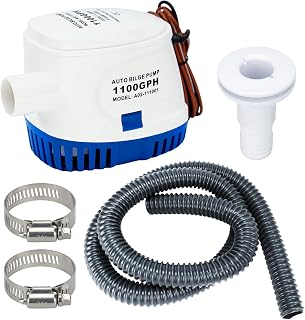
Best for automatic onboard pumping with a concise package of fittings. The Sanuke kit includes an automatic mechanism and relevant hardware to simplify installation on many boats. Choose this when you want a ready-to-deploy automatic bilge solution. Limitation: availability and fit may vary by boat hull design and through-hull compatibility.
MAXZONE Submersible 12V 1100GPH Bilge Pump

Best for ponds, pools, or non-automatic marine uses where a simple 12V pump is sufficient. With a proven 1100 GPH flow and 12V DC operation, this pump is a straightforward choice for non-automatic pumping tasks. Caution: this is a non-automatic model, so bilge control will require manual activation or an external switch.
Buying Guide: Key Considerations For Choosing The Right Boat Pump
- Power source and voltage: Ensure the pump matches your boat’s electrical system. Some pumps operate on 12V DC, others on 110V AC; some kits assume shore power or auxiliary power setups.
- Automatic vs non-automatic: Automatic models include float switches or sensors for bilge pumps, reducing manual intervention. Non-automatic pumps require manual operation.
- Flow rate and head pressure: Match the GPH rating to your bilge volume and expected drainage time. Higher GPH is faster but may require sturdier wiring and pump housing.
- Install kits and fittings: Thru-hull fittings, clamps, and hoses affect installation effort and leak risk. Kits can simplify setup but verify compatibility with hull materials.
- Reliability and noise: Look for vibration-minimized designs and durable components, especially for long boating trips where reliability matters most.
- Safety and wiring: Marine-grade wiring, corrosion resistance, and proper fusing are essential for safe operation in a marine environment.
- Application scope: Bilge pumps are for water removal; high-pressure diaphragm pumps suit cleaning and water transfer tasks on board or dockside.
FAQ
- What is the difference between a bilge pump and a diaphragm pump?
Bilge pumps move water from the bilge area; diaphragm pumps focus on higher-pressure water delivery and are suitable for cleaning and transfer tasks. - Do I need an automatic bilge pump for a small boat?
Automatic bilge pumps with built-in float switches are convenient for unattended operation, especially where water ingress is unpredictable. - How do I choose the right GPH for my boat?
Estimate bilge water volume and typical ingress rate. A higher GPH pump drains more quickly but requires appropriate power and wiring. - Can I install a 110V pump on a 12V boat system?
Yes, but you’ll need an inverter or shore power source that can safely supply the 110V circuit without overloading the boat’s electrical system. - Are complete pump kits better than individual pumps?
Kit versions simplify installation with fittings and clamps. Individual pumps may require separate hardware purchases if you already have compatible fittings. - What maintenance is needed for marine pumps?
Regularly inspect for leaks, check electrical connections, and clear any debris from intake screens or hoses to maintain performance.