
If you’re repairing a boat or reinforcing hull surfaces, fiberglass cloth is your go-to reinforcement. This guide highlights the best options for American boaters, including cloths that are easy to work with, resist moisture, and conform to curves. The top picks are suitable for hobbyists and professionals alike, with different weights and weaves to match resin systems. Read on to find the right cloth for your project, whether you’re patching a small crack, rebuilding a section of decking, or constructing a DIY hull repair.
| Product | Best For | Why It Stands Out |
|---|---|---|
| Fiberglass Woven Mat Cloth | SIMPLYHARDWARE | General marine repair | Common reinforcement with uniform strength in both directions; good for surfboards and small boats |
| Fiberglass Cloth, 6oz | NEZUIBAN | Small to medium repairs | Alkali-free, heat and corrosion resistant; flexible and easy to cut |
| Fiberglass Chopped Strand Mat 50 in x 30 ft | VIKEYTIM | Large area patches | Roll design unfolds flat; high tensile strength |
| Fiberglass Cloth Roll, 50″ x 360″ | ZXQDRE | Marine and auto repairs | Biaxial construction with strong resin compatibility |
| J-B Weld Fiberglass Cloth 8 sq. ft | Small, precise repairs | Good for layered repairs with fiberglass resin |
Fiberglass Mat Cloth | SIMPLYHARDWARE

Best for general marine repairs. This plain weave mat is widely used as a reinforcement in composites and is compatible with resin and epoxy. It provides uniform strength horizontally and vertically, making it suitable for surfaces that require consistent reinforcement. It’s a reliable choice for surfboards, sailboats, and cedar strip canoes. Suitable for buyers seeking a straightforward solution with predictable performance. Caution: ensure proper saturation with resin to avoid dry patches on larger surfaces.
Fiberglass Cloth 6oz, 50 sq ft | NEZUIBAN

Best for small to medium repairs and DIY projects. This 6 oz plain weave cloth is alkali-free and provides flexible, smooth coverage with good heat and corrosion resistance. It’s ideal for patching holes in boats, RC planes, or small surfaces where you want easy handling and precise cuts. Choose this if you need a versatile cloth that cuts cleanly and lays flat. Limitation: larger, curved hull areas may require multiple layers or larger widths for full coverage.
Fiberglass Mat 50 in x 30 ft | VIKEYTIM
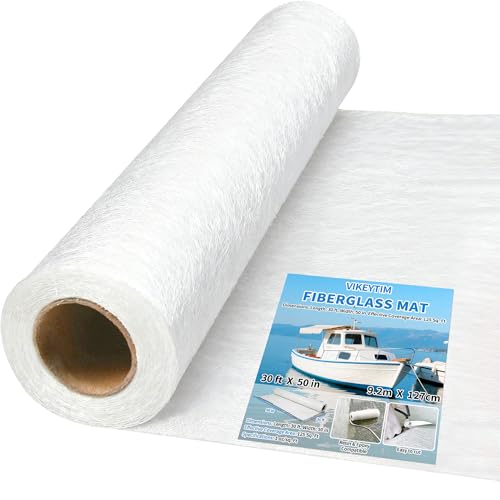
Best for larger area patches and roofs. This chopped strand mat features random dispersion with uniform strength in all directions. It’s designed for easy wet-out with resin, forming a sturdy surface that can handle external forces. It’s especially useful when repairing broad hull sections or roofing areas on boats. Limitation: larger mats can require careful trimming to fit irregular shapes; plan ahead for overlaps.
Fiberglass Cloth Roll 50″ x 360″ | SIMPLYHARDWARE

Best for mold-making and complex shapes. This biaxial roll combines strength in two directions with resin compatibility. It conforms to curves and corners, making it well-suited for molding operations, hull repairs, and tight areas. Choose this when you need a cloth that unfolds cleanly and resists curling at the edges. Caution: ensure the edges are aligned to avoid visible seams in finished surfaces.
J-B Weld Fiberglass Cloth 8 sq. ft

Best for precise, small-scale repairs and reinforcements. This cloth is designed for compatibility with J-B Weld fiberglass resin and provides a high strength per square inch. It’s suitable for patching small holes, cracks, or rust-outs. Use this when you need a compact, easy-to-handle cloth for layered applications. Limitation: not as cost-efficient for large repair areas compared with larger rolls.
UNIFAMILY Fiberglass Cloth 50″ x 12Ft
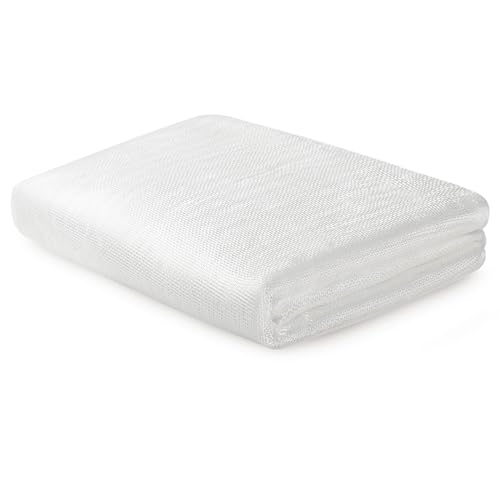
Best for long, continuous patches and larger boat repairs. This 6 oz cloth offers heat resistance, corrosion resistance, and flame retardancy with a lightweight, high-strength profile. It’s ideal for securing longer hull sections or deck repairs that require substantial coverage. Caution: edges can fray if cut poorly; use clean cuts to maintain fabric integrity.
Buying Guide
What should you consider when choosing fiberglass cloth for boats?
- Weight and weave: Lighter weights (6 oz) are easier to handle for small repairs; heavier weights provide stronger reinforcement for structural patches.
- Resin compatibility: Ensure the cloth is compatible with your epoxy, polyester, or vinyl ester resin system.
- Size and shape: Rolls and mats come in various widths and lengths; select based on repair area and curve complexity.
- Alkali resistance: Alkali-free cloths are better for certain resin systems and long-term durability.
- Conformability: Biaxial or chopped strand mat offers different performance in curved regions; plan for the hull’s contours.
- Storage and handling: Folded edges or curled edges can affect lay-down; unfold and dry-fit before applying resin.
Practical Tips For Selection
- For hull patches on small boats, a 6 oz plain weave cloth is often sufficient and easy to work with.
- For large decks or roofing, consider chopped strand mats or biaxial cloth to reduce fiber folds and ensure stronger adhesion.
- When working with epoxy slow-curing resins, choose fabrics with good resin wet-out to prevent dry spots.
FAQ
- What fiberglass cloth is best for boats?
- Can fiberglass cloth be used on fiberglass boats with epoxy?
- Is alkali-free cloth necessary?
- How do I choose between a roll and a mat?
- What safety considerations exist?
The best choice depends on the repair scale and resin system; 6 oz plain weave cloths are versatile for many boat repairs, while biaxial or chopped strand mats are better for larger patches.
Yes. Most fiberglass cloths are compatible with epoxy resins and provide strong reinforcement when properly saturated.
Alkali-free cloths resist degradation in some resin systems and offer better long-term durability in damp marine environments.
Rolls are convenient for large surfaces and straight lines; mats are quick to cut and fit irregular shapes.
Wear protective gear when handling fiberglass to avoid skin irritation and inhalation of dust; work in a well-ventilated area.