As an Amazon Associate I earn from qualifying purchases. These links may earn this site a commission when you buy, at no extra cost to you.
Answering the needs of boaters who require reliable, portable fuel storage and transfer on or near the water. This guide highlights five fuel caddies ideal for boats, ATVs, and dockside refueling. Each option targets different use cases, from lightweight marine tasks to heavy-duty diesel or gasoline transfers. Best for: weekend sailors needing quick top-ups; anglers requiring mobility on a dock; small-boat owners needing reliable siphon or pump modes; and maintenance crews needing durable HDPE tanks.
| Product | Best For | Capacity |
|---|---|---|
| Scepter Duramax Flo ’N Go 14 Gallon Gas Caddy | Light-to-moderate marine and lawn tasks | 14 gallons |
| VEVOR Fuel Caddy, 15 Gallon | Outdoor work, multiple vehicles | 15 gallons |
| PAMBEE 15 Gallon Gas Can | Boat, car, and ATV refueling on the go | 15 gallons |
| FMCNMech 16 Gallon Portable Fuel Caddy | Versatile fuel transfer with electric pump | 16 gallons |
| Garvee 15 Gallon Gas Caddy | Rugged outdoor use with dual valves | 15 gallons |
Note: All product details come from listed features. Choose based on capacity needs, pumping method (gravity vs. manual vs. electric), and the terrain you navigate while refueling.
Scepter Duramax Flo ’N Go 14 Gallon Gas Caddy

The Scepter Flo ‘N Go is a 14-gallon (53 L) portable fuel caddy designed for marine, lawn, farm, and home use. It features heavy-duty wheels and a top handle for mobility over rough terrain. The tank is made from high-density polyethylene to resist corrosion and denting. Two fueling modes provide flexible operation: a Gravity-Flow mode for continuous transfer when elevated, and Manual-Pump/Siphon mode for ground-level refueling. Siphon-mode flow rate is about 2.0 GPM. Best for: boaters needing a reliable mid-capacity caddy with simple gravity or pump refueling. Limitation: heavier when fully loaded; manual pumping may be slower on large transfers.
VEVOR Fuel Caddy, 15 Gallon

VEVOR offers a 15-gallon fuel caddy designed for motorboats, ATVs, and lawn equipment. It includes a 10-foot delivery hose and a manual pump with a flow rate up to 2 GPM at a 1 m lift, about 1.6 GPM on level ground. The HDPE body resists corrosion and sunlight, helping the tank hold its shape and contents over time. Best for: users who may experience power outages or require independence from electricity. Limitation: manual pumping may require effort on larger transfers.
PAMBEE 15 Gallon Gas Can
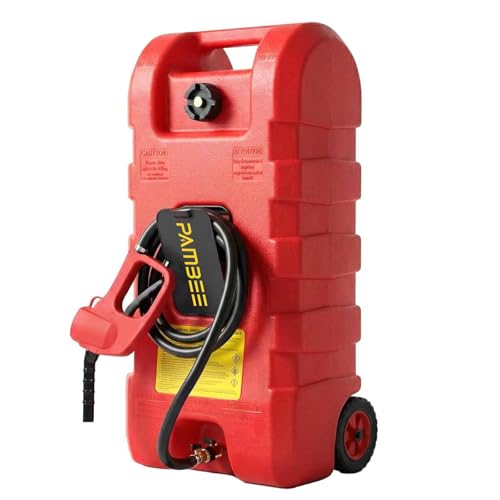
PAMBEE’s 15-gallon caddy includes a LE fluid transfer siphon pump and a 10-foot hose with a rugged build suitable for boats, cars, or ATVs. The container uses high-density polyethylene and a rubber hose rated for automotive use. It supports two operation modes—siphon and gravity—and can achieve up to approximately 3 GPM in siphon mode depending on pumping speed. Best for: refueling multiple vehicles on-location in a dock or yard. Limitation: siphon speed depends on user input, which may vary.
FMCNMech 16 Gallon Portable Fuel Caddy

FMCNMech delivers a 16-gallon portable fuel caddy with a 12V electric pump offering up to 3.7 GPM, plus forward and reverse pumping for efficient transfer. The HDPE tank is UV- and anti-static protected, with a 13-foot hose, a built-in inlet filter, and a manual nozzle. It suits versatile fuel types, including gasoline, diesel, and kerosene. Best for: users who value powered transfer and long hose reach. Limitation: relies on a power source for the electric pump; not ideal where power is unavailable.
Scepter Duramax Flo ’N Go 14 Gallon Gas Caddy (2026 Version)

This is the 2026 version of Scepter’s 14-gallon Flo ’N Go. It retains gravity-flow and siphon/pump modes with a 2.0 GPM siphon flow. The device emphasizes corrosion resistance and ease of movement with a durable, impact-resistant body and 6-inch wheels. Best for: boaters seeking a consistent, familiar design with updated components. Limitation: gasoline-only model; not suitable for diesel without checking compatibility.
Buying Guide
Key purchase considerations to compare when selecting a boat fuel caddy:
- Capacity vs refuel intervals: Choose 14–16 gallons for moderate tasks; 15 gallons is common for dockside use, while 16 gallons supports longer sessions without refills.
- Pumping method: Gravity, manual pump, or electric pump. Gravity is simple but slower; manual pumps offer control; electric pumps improve transfer speed.
- Hose length and accessibility: A longer hose (10 ft or more) is helpful for boats and dockside refueling from a safe distance.
- Tank material: HDPE construction resists corrosion and impact, great for marine environments. Look for UV resistance if stored outdoors.
- Mobility and stability: Wheels with larger diameter and a sturdy handle improve maneuverability on uneven surfaces and docks.
- Safety features: Dual shut-off valves, spill-prevent design, and vapor-tight seals reduce leaks during transfer.
- Fuel compatibility: Most models support gasoline; some handle diesel or kerosene. Verify the correct fuel type for your equipment.
Frequently Asked Questions
- What is the typical capacity range for boating fuel caddies?
– Most models range from 14 to 16 gallons, balancing portability with enough fuel for multiple refuels. - Can I use a diesel fuel caddy for gasoline?
– Only if the model is rated for gasoline; diesel tanks may not be compatible with gasoline additives or materials. - Is an electric pump worth it for marine use?
– Electric pumps are beneficial for frequent, rapid transfers, especially on larger boats or when power is available. - Do all caddies come with hoses?
– Yes, most include a delivery hose, typically 10 feet or longer for flexible reach on decks. - Are dual valves standard for spill prevention?
– Many models include dual shut-off valves to minimize spills during hose disconnection. - What maintenance is needed for HDPE fuel caddies?
– Rinse with clean water after use, store in a shaded area, and inspect hoses for wear or cracks.


