
If you need a galvanized finish for a boat trailer, a cold galvanizing coating is the best choice to restore or protect weathered metal surfaces. These products form a zinc-rich film that guards against rust and corrosion on steel components, fittings, and exposed hardware. This guide highlights five reliable options and who they suit best, helping you decide which is right for your trailer maintenance or restoration project.
| Product | Best For | Notes |
|---|---|---|
| Rust-Oleum 7585838 Cold Gray Professional Galvanizing Compound Spray | Quick touch-ups on wrought iron, spot-welded metal, gutters, and chain-link fences | Dries in 30 minutes; covers up to 12 sq. ft. |
| CRC 05048 Zinc-It Instant Cold Galvanize | On-site rust protection for trailers, fast-drying DIY jobs | Fast-drying; good for threads, fasteners, and welds |
| Cold Galvanizing Compound FLAT 1 QUART | Bulk coating for larger trailer surfaces | Flat finish; reliable zinc film |
| Crown 7008 Brite Galvanize Coating 65% Zinc Rich | Restore galvanized surfaces to a bright, hot-dipped look | 65% zinc dry film; strong rust resistance |
| Seymour 16-1445 Galvanized Coatings Spray Paint | Bare steel protection with zinc-enhanced surface | Crack-resistant coating; suitable for bare metal |
Rust-Oleum 7585838 Cold Gray Galvanizing Spray
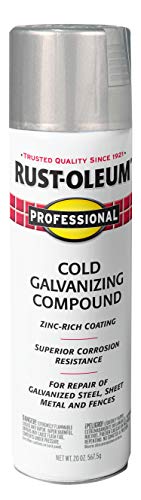
Best for quick, location-limited repairs on wrought iron, spot-welded metal, gutters, and fences. This 93% pure zinc coating renews weathered galvanized surfaces with a galvanized film that dries to the touch in about 30 minutes and covers up to 12 sq. ft. per can. Choose this if you need fast dry times and localized touch-ups on trailer hardware. Caution: not ideal for large surface areas where a bulk coating is required.
CRC 05048 Zinc-It Instant Cold Galvanize
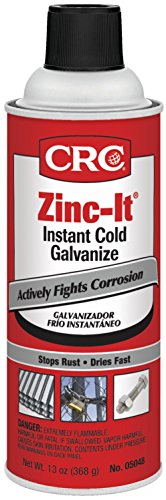
This product offers quick-drying, durable rust protection for a variety of surfaces, including trailer components. It’s well-suited for on-the-spot protection of threads, fasteners, welds, and exposed edges. Best for: DIYers needing fast, on-site galvanizing with strong corrosion resistance. Limitation: the bottle or can finish may differ by project scale; for larger areas, a bulk option may be more economical.
Cold Galvanizing Compound Flat 1 Quart

Best for larger trailer surfaces where a flat zinc finish is acceptable. The quart size provides economical coverage for substantial repairs or full-scale galvanizing projects. The zinc-rich formula forms a protective coating that resists rust and helps restore galvanized surfaces. Caution: finish is flat, not bright; consider if you want a more reflective or branded look.
Crown 7008 Brite Galvanize Coating

Best for restoring galvanized surfaces to a bright, hot-dipped appearance with 65% zinc in the dry film. This coating provides strong rust and corrosion protection and is suitable for trailers that need a visually bright finish. Choose this if you want a look similar to hot-dip galvanizing. Limitation: higher zinc content may require careful application for even coverage on large panels.
Seymour 16-1445 Galvanized Coatings Spray Paint

Best for bare steel and galvanized surfaces needing a smooth, zinc-enhanced coating. It forms a durable, crack-resistant layer and is recommended for best protection on bare steel. This option is good when you need a reliable zinc-rich spray for an even finish across trailer components. Caution: performance depends on proper surface prep and even application.
Buying Guide: Key Considerations For Galvanized Trailer Coatings
- Finish preference: Do you want a bright, hot-dipped look or a flat zinc finish? Crown 7008 offers a bright zinc film, while Rust-Oleum’s flat options provide a matte finish.
- Drying time and coverage: For quick repairs, choose faster-drying sprays with higher coverage per can, like Rust-Oleum 7585838. For larger surfaces, consider a quart or larger.
- Surface preparation: Proper cleaning and removal of rust or old coatings improve adhesion and longevity. Most products advise cleaning and removing loose substrates before application.
- Exposure and environment: For trailer components exposed to salt air or coastal conditions, select a product with robust corrosion resistance and good film integrity.
- Application method: Aerosol sprays are ideal for detail work and edges; quarts or larger cans are better for bulk coverage. Ensure even application to prevent pinholes or thin spots.
- Recoating intervals: Some products dry quickly and allow recoating within an hour; others may require more time. Plan for weather windows when working outdoors.
Frequently Asked Questions
- What is galvanized coating used for on boat trailers?
– It prevents rust and corrosion on exposed steel surfaces, reinvigorating weathered galvanized areas and protecting critical hardware. - Is a bright finish better than a flat zinc coating?
– Bright finishes resemble hot-dip galvanizing and can look more uniform; flat finishes prioritize rust protection and may be less glossy. - Can I use these coatings over existing rust?
– Surface preparation is essential. Remove loose rust and clean the area before applying any galvanizing coating for best adhesion. - Which product is best for large trailer surfaces?
– Cold Galvanizing Compound Flat 1 Quart provides bulk coverage; Crown 7008 offers a bright finish if desired. - How long does it take for coatings to dry before exposure to water?
– Drying times vary by product; some dry to the touch in 30 minutes, while others may take a few hours. Avoid harsh exposure until fully cured per product instructions. - Do these coatings prevent future rust completely?
– They form a protective zinc layer that significantly slows rust progression, but maintenance and reapplication are often required in harsh marine environments.