
Finding the right marine battery terminal connectors helps ensure solid electrical connections in harsh marine environments. This guide highlights five top options, each suited for different needs—from heavy-duty, corrosion-resistant builds to easy-to-install configurations for casual boaters. Whether you’re outfitting a small fishing boat or a full-size RV, these connectors offer durability, clear polarity marking, and compatibility with common post styles.
Summary of chosen products
| Product | Best For | Key Benefit | Notes |
|---|---|---|---|
| XIOGZAXI Battery Terminal Connectors | Everyday marine and automotive use | Pure copper conductivity, 21mm M8 bolts | Good for parallel connections |
| DLronwey Military Spec Terminal Ends | Heavy-duty environments | Alloy construction with anti-corrosion washers | Waterproof covers included |
| Schumacher Zinc-Plated Marine Ends | Replacement parts for marine batteries | Three times more conductive than many ends | Includes positive and negative ends |
| Ampper Brass Battery Terminals | Extended connections and corrosion resistance | Brass construction with clearly marked terminals | Good for extensions and ground connections |
| Moly Magnolia 4-Way 12V/24V Terminals | Multi-cable configurations | 4 ports, clearly labeled polarity | Versatile for multiple circuits |
Battery Terminal Connectors 2 Pair For Marine And Auto Uses

Product: Battery Terminal Connectors 2 Pair, M8 x 21mm bolt, pure copper with anti-corrosion pad. Best for boat or RV enthusiasts who need multiple cable connections without sacrificing conductivity. The 21mm bolt length supports parallel connections, and the copper construction enhances electrical efficiency. Best for projects requiring easy installation and clear positive/negative labeling. A potential limitation is the need to verify bolt compatibility with existing hardware on older systems.
Military-Spec Positive Negative Heavy Duty Terminal Ends
Product: Military spec heavy-duty terminals with anti-corrosion washers. Suitable for cars, trucks, marine and RV applications, with red/black covers adding waterproofing and aesthetics. Best for users needing rugged performance in harsher environments. A limitation is that these are bulkier than standard terminals, which may impact tight engine compartments.
Schumacher Zinc-Plated Marine Terminal Ends

Product: Zinc-plated marine terminal ends with one positive 3/8-inch and one negative 5/16-inch end. Three times more conductive than many other ends, making them a solid replacement choice for marine battery systems. Best for boat owners who need reliable, corrosion-resistant ends. Limitation: only two ends are included per pack, which may require additional purchases for larger setups.
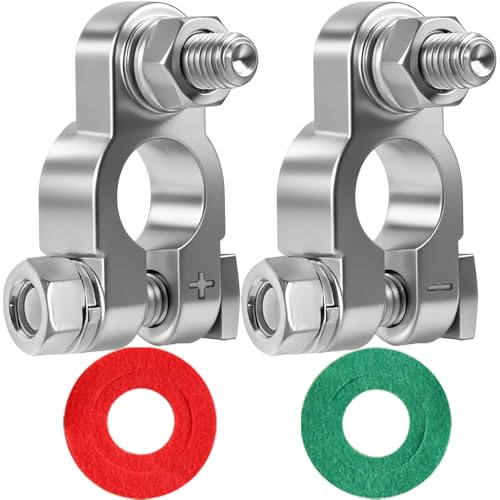
Ampper Brass Battery Terminals Connectors

Product: Brass battery terminals with red/green protect washers, designed for corrosion resistance and direct labeling of + and -. Best for extensions, parallel connections, and grounding. It’s a reliable option where corrosion resistance and clear polarity labeling are priorities. Caution: brass can be more susceptible to overtightening if not careful with fastener torque; use proper tools and torque specs.
Moly Magnolia 4-Way Quick Release Terminal

Product: Car battery terminal connectors, 4-way quick-release design for SAE/JIS Type A posts. Made of brass and steel, corrosion resistant, with clearly labeled positive and negative terminals. Best for vehicles requiring multiple connections with easy removal. A limitation is that compatibility depends on SAE/JIS Type A post sizes, so verify post type before purchase.
Buying Guide
What to consider when selecting marine battery terminal connectors
- Post compatibility: Ensure the connector fits your boat or RV battery posts (top post, side post, SAE/JIS Type A, etc.).
- Material and corrosion resistance: Pure copper and brass offer excellent conductivity, while zinc plating and coated washers help resist corrosion in saltwater environments.
- Number of connections: If you need to run multiple cables, choose multi-port or clamp-style connectors that support several leads.
- Polarity labeling: Clear + and – markings reduce wiring errors and improve safety.
- Ease of installation: Look for simple wing nuts or quick-release designs for faster maintenance and fewer tools.
- Environmental suitability: Marine settings demand watertight or weatherproof features to withstand humidity and splashes.
Practical buyer questions
- What post type do I have on my battery? Check if it’s top post, side post, or a specific SAE/JIS standard.
- Do I need a 2-pack, 4-port, or a large multi-port set? Consider how many cables you plan to connect.
- Is corrosion resistance a priority due to a saltwater or humid environment?
- Are polarity markings clearly visible and color-coded for safety?
- Will the connectors allow quick removal for maintenance or troubleshooting?
- Is space in the battery compartment limited? Choose compact designs if so.
FAQ
- Q: Are marine terminal ends compatible with standard car battery posts? A: Many are designed for common post styles, but always verify post diameter and type before purchasing.
- Q: Do brass terminals conduct electricity as well as copper ones? A: Brass provides good conductivity and corrosion resistance, but copper generally offers the best conductivity; consider depending on your needs.
- Q: Can I use corrosion washers with any terminal? A: Washers help reduce corrosion when used as designed; ensure compatibility with your terminal model.
- Q: How many ports do I need for a multi-cable setup? A: Count the number of cables you plan to run and choose a terminal with at least that many ports, plus a little extra for future expansion.
- Q: Are universal terminals safer to use in marine environments? A: Safety improves with clearly labeled polarity and weatherproof features; always follow manufacturer installation instructions.
- Q: Should I replace both ends at once? A: Replacing both ends can improve overall circuit integrity, especially if one end shows corrosion or wear.