
The best product picks here target common onboard odor and waste challenges for boaters, RV travelers, and anyone managing a marine head holding tank. These selections suit different buyers: cruisers needing long-range odor control, small-boat owners seeking simpler maintenance, and those who prefer enzymatic or deodorizing approaches. The list emphasizes practical odor reduction, easier pump-outs, and compatible formulations for marine sanitation systems. Below is a quick comparison of the five selected products to help you choose quickly.
| Product | Best For | What It Delivers |
|---|---|---|
| West Marine ExterminOdor Head & Holding Tank Treatment | Fresh-smelling solutions with mint scent | Odor control, non-formaldehyde formula, gas buildup prevention |
| Eco Strong Marine Holding Tank Treatment (33 oz) | Heavy-duty enzymatic breakdown and odor elimination | Biological digestion of waste, lavender deodorizer, tank cleaning |
| Walex Citra-Fresh Liquid Holding Tank Deodorizer (32 oz) | Liquid option with rapid waste breakdown | Biocide-free, septic-tank-safe, sensor-friendly deodorization |
| yachtZmarine Holding Tank Vent Filter | Vent odor control for air exhausts | High-quality carbon filtration to reduce vent odors |
| Jabsco Marine Waste Tank Y-Valve | Crucial holding tank hardware | Compact Y-valve for waste routing (note: not a treatment) |
West Marine ExterminOdor Head & Holding Tank Treatment

Best for buyers who want a pleasant scent along with odor control. This product uses a fresh mint fragrance to improve onboard comfort while suppressing odors and gas buildup. It is a formaldehyde-free formula designed to prevent odor and gassing without harsh chemicals. Suitable for boats that desire a cleaner cabin environment without strong chemical smells. Caution: scent may be stronger in small spaces; consider ventilation when first using.
Eco Strong Marine Holding Tank Treatment (17 OZ)

This product is best for boaters who want aggressive enzymatic digestion combined with odor control. It uses a bio-enzymatic formula that breaks down organic waste, including toilet paper and hair, and rapidly liquefies odor-causing waste. It also includes a lavender deodorizer and tank cleaning capability, making pump-outs faster and more complete. Limitation: as a multi-action formula, some users may prefer a dedicated deodorizer rather than a combined solution.
Walex Citra-Fresh Liquid Holding Tank Deodorizer (32 oz)

Choose this if you prefer a liquid deodorizer that quickly breaks down waste and toilet paper while staying septic-tank safe. It is versatile for marine and RV black tanks ranging from 2.5 to 40 gallons, making it a flexible option for various vessel sizes. Best for users who want a straightforward liquid treatment without biocides. Caution: ensure compatibility with your specific tank sensors and pump-out schedule.
yachtZmarine Holding Tank Vent Filter
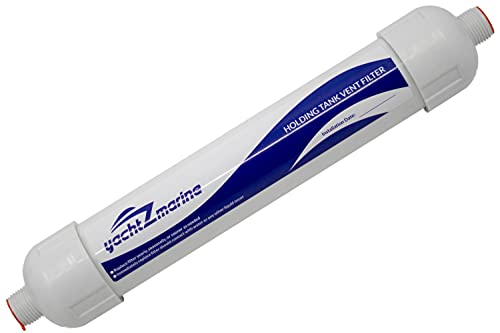
Best for reducing odors vented from the holding tank air stream. This filter uses high-quality catalytic activated carbon with 2 to 3 times the effectiveness of standard activated carbon, helping odors exit less aggressively from the vent. Best for boaters who want a targeted vent odor solution and easy replacement. Limitation: this is a replacement filter only; mounting brackets are not included and must be reused from the existing system.
Eco Strong Marine Holding Tank Treatment (33 oz)

Best for larger tanks or frequent pump-outs, this 33-ounce bottle expands the enzymatic approach with enhanced waste digestion and odor control. It combines bio-enzymatic action with lavender deodorizing properties and tank cleaning capability, aiming for thorough results. Choose this if you need a larger-volume treatment or want a single product that covers digestion, deodorizing, and cleaning. Caution: larger sizes may require dosing adjustments for smaller tanks.
Buying Guide
- Tank size and vessel type: Match product volume and formulation to your holding tank capacity and whether you’re on a small sailboat or a large catamaran.
- Enzymatic vs. chemical approaches: Enzymatic/digestive formulas break down waste; deodorizing additives help with smells. Some users prefer a combination; others want a single-focus product.
- Sensor and pump-out compatibility: Ensure the product won’t interfere with sensors or pump-out schedules. Biocide-free options may be gentler for septic systems.
- Scent and air quality: Mint or lavender scents can improve cabin comfort but may be overpowering in tight spaces. Consider ventilation when first using scented products.
- Vent filtration: If odors escape through the vent, a high-quality carbon vent filter can complement tank treatments for overall odor control.
- Ease of use and storage: Look for products with clear dosing guidelines and convenient container sizes for your voyage length and storage space.
FAQ
- What is the difference between enzymatic and deodorizing products? Enzymatic products digest organic waste to speed pump-outs, while deodorizing products neutralize odors, often with added fragrances or scent-neutralizers.
- Can I use these products with a septic-safe system? Many products are designed to be septic-tank safe, but always check label directions and compatibility with your system before use.
- Is vent filtration necessary if I use a holding tank treatment? Vent filtration reduces sewer odors vented into the cabin area and can complement tank treatments, especially on smaller boats.
- How often should I pump out after treating with enzymatic liquids? Follow the product’s dosing schedule and your tank’s typical fill rate. Frequent use may require adjustments based on tank size and usage.
- Are scented products safe for pets on board? Choose fragrance options with lower intensity and ensure good ventilation to minimize exposure for animals.
- What should I do if odors persist after treatment? Reassess tank venting, pump-out efficiency, and dosing. A combined approach using both enzymatic digestion and deodorizing can improve results.