As an Amazon Associate I earn from qualifying purchases. These links may earn this site a commission when you buy, at no extra cost to you.
Answering the question, these compact jet boat motors deliver reliable thrust for small boats, inflatable rafts, kayaks, and dinghies. The ideal buyer ranges from casual explorers needing easy starts to anglers seeking maneuverability and extended run time. The top picks prioritize 4-stroke efficiency, wind cooling, and CDI ignition for smoother operation in calm to moderately rough water. Below is a quick summary of five well-suited models to compare at a glance.
| Product | Engine Type | Displacement | Approx Power | Best For |
|---|---|---|---|---|
| JDCEREN 4HP 55CC | 4-stroke Jet | 55cc | 4 HP | |
| Pxolerig 4HP 55CC | 4-stroke Jet | 55cc | 4 HP | |
| YIYIBYUS 2.3HP 52CC | 2-stroke | 52cc | 2.3 HP | |
| LARIDEN 7.5 HP | 4-stroke | 200cc | 7.5 HP | |
| Helrgelrn 4HP 55CC | 4-stroke | 55cc | 4 HP |
JDCEREN 4HP 55CC Jet Pump Motor
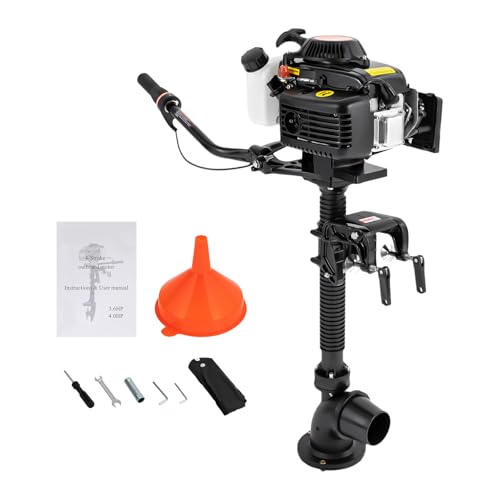
The JDCEREN 4HP 55CC outboard uses a 4-stroke engine with wind cooling and a CDI ignition system. Key features include 4500-5500 rpm and a 360-degree rotation with a reverse capability activated by 180-degree rotation. Best for small rubber or wooden boats that require reliable starts and predictable throttle response. Consider this model if you want a simple, fuel-efficient option for casual lake cruising. Caution: 4-stroke engines still require regular maintenance and fuel mixing per manual guidelines.
Pxolerig 4HP Jet Pump Outboard

This 4-stroke, 55cc motor emphasizes efficiency with a high-quality carburetor and a step-less speed change function. It offers tilt, 360-degree rotation, and a CDI ignition system, making it versatile for rubber boats, wooden boats, and basic fishing craft. Best for buyers who want easy speed control and eco-friendlier operation than typical 2-stroke units. Limitation: performance may vary with fuel quality and maintenance timing.
YIYIBYUS 2.3HP 52CC 2-Stroke Motor

YIYIBYUS combines a 52cc 2-stroke engine with non-contact electronic ignition, delivering 4500-8500 rpm for quick acceleration. It is strong for small dinghies, inflatable boats, and fishing craft that require lighter weight and lower cost per hour of operation. Best for budget-conscious buyers who still need reliable startup. Caution: 2-stroke engines require precise fuel-oil mixing to avoid performance issues.
LARIDEN 7.5 HP Outboard

This 4-stroke motor delivers up to 3.5 kW with a 360° steering system and continuously variable transmission. It suits mid-sized fishing boats and heavier inflatables that require more thrust and robust handling. Selected for buyers who need stronger performance on larger vessels or longer cruising sessions. Limitation: heavier weight means reduced portability compared to smaller 4HP models.
Helrgelrn 4HP 55CC Jet Motor

Helrgelrn’s 4-stroke, 55cc engine combines wind cooling and a CDI ignition system with a tilt feature and 360-degree rotation. It is designed for inflatable boats, rubber boats, and small fishing craft that value ease of use and stable throttle response. Best for beginners or casual users who want straightforward operation. Caution: ensure fuel system components are clean to avoid starting issues.
Buying Guide: Mini Jet Boat Motor Essentials
What should you consider when choosing a mini jet boat motor? Start with power needs. For tiny crafts or inflatables, 2.3–4 HP is typically enough for calm waters, while larger inflatables or small boats may benefit from 5–7.5 HP for better planing and control.
- Engine type: Four-stroke engines are generally more fuel-efficient and cleaner than two-stroke models, but they can be heavier and more expensive.
- Displacement and RPM: Higher rpm and larger displacement normally translate to more thrust. Match this to your boat weight and water conditions.
- Cooling method: Wind cooling helps prevent overheating on longer runs. Check whether the unit has effective cooling vents and materials resistant to heat build-up.
- Ignition system: CDI ignition provides reliable starts and smoother throttle response in varying temperatures.
- Thrust direction and control: 360-degree rotation and reverse capability help in tight anchorage or docking scenarios. Consider tilt features for easier storage and stowage.
- Weight and portability: If you frequently transport or store the motor, prioritize lighter, compact units with convenient mounting options.
- Maintenance and fuel: Four-stroke engines often use regular maintenance schedules. Verify recommended fuel type and mixing ratios if applicable.
Frequently Asked Questions
- Q: What watercraft are these mini jet motors best suited for? A: Rubber boats, small wooden boats, inflatables, dinghies, and other compact craft.
- Q: Is a four-stroke engine better than a two-stroke for coastal use? A: Generally yes, due to better fuel efficiency and cleaner emissions at comparable power levels.
- Q: Do these motors include reverse gear? A: Several models offer 180-degree rotation to enable reverse, which helps in docking and maneuvering.
- Q: What maintenance should I perform after long storage periods? A: Clean fuel system, inspect carburetor and ignition components, and check cooling vents for blockages.
- Q: How do I choose between 4 HP and 7.5 HP? A: Consider the boat size, load, expected speed, and water conditions; go higher if you require more thrust or plan to carry heavier loads.
- Q: Are these motors EPA certified? A: Certification varies by model and region; check local regulations and product documentation for exact details.
Note: This article provides a comparative overview based on listed features. Always consult the manufacturer’s instructions for installation, operation, and safety guidelines before use.


