As an Amazon Associate I earn from qualifying purchases. These links may earn this site a commission when you buy, at no extra cost to you.
The best answer to “motor boat motor boat” is simple: choose a trolling motor that matches your boat size, water conditions, and battery setup. This guide highlights five reliable options ideal for kayaks, inflatables, canoes, and compact fishing boats. It also covers when to pick a saltwater-rated model, what to expect from shaft length, thrust, and propellers, and common trade-offs to consider for everyday use.
Summary comparison of selected products:
- Newport NV-Series 36lb: Lightweight, saltwater-capable transom mount, great for small craft and portability.
- Minn Kota Endura C2 (30lb): Easy control and durable build, best for freshwater beginners or light-duty setups.
- Newport NV-Series 55lb: More power and a longer shaft, suited for bigger small boats in mixed conditions.
- Minn Kota Endura C2 (40lb): Stronger thrust with reliable control for slightly larger inflatables and boats.
- Shoreline Marine Universal Dual Flow Flusher: Not a motor, but essential accessory to protect and extend engine life after use.
Newport NV-Series 36lb Thrust Trolling Motor

Thrust: 36 lb; Voltage: 12V or 24V; Shaft: 30″; Use: Kayaks, canoes, inflatables, small boats; Features: Saltwater and freshwater capable, corrosion-resistant, LED battery indicator, efficient two-blade propeller. Best for lightweight boats where portability and battery life matter most.
Best for: Small craft operators looking for a quiet, compact trolling motor that handles both salt and freshwater. Choose this if you need easy handling and a compact footprint for a lightweight boat.
Limitation: Moderate thrust may be insufficient for larger boats or strong currents; consider higher-thrust models if you frequently run in windy or choppy water.
Minn Kota Endura C2 Transom-Mount Electric Trolling Motor – 30 Lb. Thrust
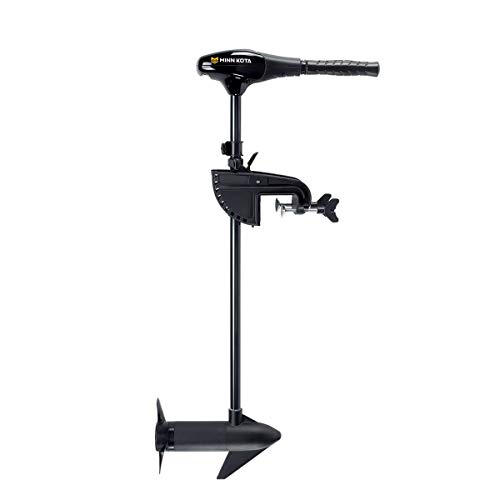
Thrust: 30 lb; Shaft: 30″; Freshwater application; Features: 6-inch telescoping tiller, push-to-test battery meter, 10-position lever lock bracket, reinforced composite construction, power prop designed for thick vegetation. Best for: Beginners or casual freshwater anglers who want easy setup and reliable control on mid-sized boats.
Limitation: Best used in freshwater; saltwater corrosion requires careful maintenance or a saltwater-rated model for longer life.
Newport NV-Series 55lb Thrust Saltwater Transom Mounted Trolling Motor
Thrust: 55 lb; Voltage: 12V; Shaft: 30″; Features: LED battery meter, adjustable mount angle, 6-inch telescoping tiller handle, 3-blade prop for improved low-end torque, eight-speed control (5 forward, 3 reverse). Best for: Small boats needing stronger propulsion and easier maneuvering in wind or current, without overheating.
Limitation: Heavier motor than lower-thrust options—may impact battery life on longer trips; ensure your boat and battery are sized for the pull.
Minn Kota Endura C2 Transom-Mount Electric Trolling Motor – 40 Lb. Thrust
Thrust: 40 lb; Shaft: 36″; Freshwater only; Features: 6-inch telescoping tiller, push-to-test battery meter, 10-position lever lock bracket, reinforced composite construction, power prop for heavy vegetation. Best for: Slightly larger inflatables or small boats that require more thrust to break through light current or wind.
Limitation: Not designed for saltwater use; consider saltwater-rated models if salt exposure is expected.
Shoreline Marine Universal Dual Flow Motor Flusher

Accessory: Dual flow motor flusher with rectangular muffs; Function: Connects to standard garden hose to flush salt, silt, and grime from engines; Benefits: Extends engine life, aids winterization, helps keep motors clean after use. Best for: Any boat owner who uses a motor and wants a simple maintenance routine on the water and on shore.
Limitation: Not a motor itself; requires a hose connection and space aboard for storage.
Buying Guide
What should you consider when choosing a trolling motor for a small boat?
- Thrust vs Boat Weight: Heavier boats need more thrust. If you frequently deal with wind or current, opt for higher thrust (40 lb and above) to maintain control and speed without exhausting the battery.
- Voltage and Battery Compatibility: 12V systems are common for smaller boats; 24V setups offer more power for bigger or heavier small craft. Confirm your boat’s battery capacity and charger compatibility.
- Shaft Length: A 30″ shaft is typical for shallow to mid-sized boats; longer shafts (36″) help avoid propeller strike in deeper water or when mounting on higher transoms.
- Propeller Type: A three-blade prop delivers smoother thrust and better performance in windy or choppy water, while two-blade props prioritize efficiency for longer battery life on calm days.
- Saltwater vs Freshwater: Saltwater motors use corrosion-resistant components. If you fish or boat in saltwater, prioritize saltwater-rated models to improve longevity.
- Tiller Type and Adjustability: A 6-inch telescoping tiller improves control and comfort during long runs. Look for easy tilt control and stable mounting hardware.
- Maintenance and Accessories: A motor flusher or flushing kit can extend engine life by cleaning salt and debris after use. Consider storage space for maintenance tools.
FAQ
- What size trolling motor is best for a kayak?
For most kayaks, 30 lb thrust or less is typical, with a 12V system and a 30″ shaft providing adequate control without excessive weight.
- Is a saltwater trolling motor necessary for coastal use?
Yes, if you boat regularly in saltwater. Saltwater motors use corrosion-resistant parts that last longer in marine environments.
- Should I choose a 12V or 24V trolling motor?
12V is common for small boats and kayaks; 24V offers more power for larger small boats or heavier loads but requires a larger battery bank.
- What is a good throttle control feature to look for?
A push-to-test battery meter and a tilting or telescoping tiller provide clear feedback and comfortable handling during prolonged use.
- How important is the propeller design?
A three-blade propeller generally provides smoother and more powerful thrust, especially in wind and current.
- Do I need a motor flusher?
Using a flusher helps protect engine life by flushing out salt, silt, and grime after use, especially if you operate in saltwater.


