
When choosing an outboard motor gas tank, the top priorities are safety, durability, and compatibility with your engine. This guide highlights five reliable options that fit common Yamaha and other outboard systems, helping boaters pick the right tank for their needs. The best choice depends on boat size, storage space, and how often you refuel away from shore. The following table summarizes the five products to help you compare quickly.
| Product | Brand | Capacity | Key Benefit |
|---|---|---|---|
| AloneGoer 3 Gallon Portable Boat Fuel Gas Tank | AloneGoer | 3 Gal / 12 L | Low-profile, multi-layer durability for salt spray and UV exposure |
| VEVOR Boat Fuel Tank, 3.17-Gallon | VEVOR | 3.17 Gal / 12 L | Long hose and solid construction with corrosion resistance |
| PeakPursuit Portable Boat Tank 3 Gal | PeakPursuit | 3 Gal | Dual venting and universal compatibility |
| LIZHOUMIL Portable Boat Fuel Tank | LIZHOUMIL | 3 Gal / 12 L | Ergonomic handle and visible fuel gauge with built-in filter |
| Scepter 6 Gallon Portable Marine Gas Can | Scepter | 6 Gal | Two-way vented cap and built-in fuel gauge for quick checks |
AloneGoer 3 Gallon Portable Boat Fuel Gas Tank
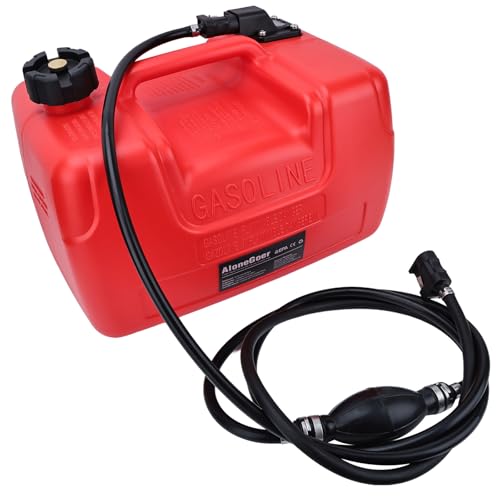
The AloneGoer tank is a 12-liter/3-gallon option designed for outboard motors, inflatable boats, and on-board spare fuel needs. It uses a multi-layer barrier (HDPE-EVOH-HDPE) to minimize fuel permeation and reduce evaporation by about 98% compared with standard tanks. UV stabilization and salt spray resistance extend its lifespan in harsh marine conditions. Best for compact boats or as a portable spare tank for a Yamaha or similar outboard setup; avoid prolonged direct sunlight to prevent material aging.
Who it’s for: boat owners needing a compact, durable spare or primary tank that reduces fuel loss in salt-air environments. Why selected: optimized barrier technology and corrosion resistance improve longevity and reduce fuel loss during refueling on the water.
Limitation: while it’s built to resist salt spray, it’s still best stored out of direct sun when not in use to maximize lifespan.
VEVOR Boat Fuel Tank, 3.17-Gallon

VEVOR’s 3.17-gallon tank features a 9.8-foot hose and a robust HDPE body designed to tolerate aging, impact, and corrosion. It’s a flexible choice for outboard engines and small yachts, with a molded top handle for easy carrying and storage. Best for boaters who value a longer hose for flexible refueling or those who need a compact tank that still delivers a full 3+ gallons. Caution: avoid prolonged direct sunlight to prevent aging and expansion.
Who it’s for: anglers or small- to mid-sized boaters who need a portable, sheath-ready tank with easy transport. Why selected: strong compatibility with Yamaha connectors and durable construction make it a practical on-water refuel solution.
Limitation: direct sun exposure can accelerate material aging; store out of sun when possible.
Portable Boat Tank 3 Gal, Outboard Marine Tank

This 3-gallon tank from PeakPursuit emphasizes a dual-venting system and a long hose with a broad 0.3-inch inner diameter. The HDPE body promises impact resistance and aging protection, which is suitable for deck boats and yachts. Best for those who value a secure venting mechanism to control fuel flow during refueling. Choose this if you want a straightforward, universal tank for varied marine vessels.
Who it’s for: deck boats and small yachts needing a compact, easy-to-handle tank with flexible venting. Why selected: dual venting and long hose enhance safe, controlled refueling on the water.
Limitation: the hose size and vent design are optimized for standard fittings; verify compatibility with your specific fuel line before purchase.
LIZHOUMIL Portable Boat Fuel Tank, 3 Gal
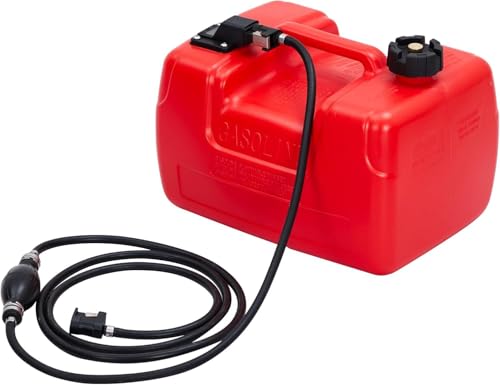
The LIZHOUMIL tank blends durability with user-friendly design, featuring an ergonomic I-shaped handle and a clear fuel gauge with a built-in filter. It provides a transparent way to monitor fuel and maintain fuel cleanliness during refueling on the water. Best for boaters who want easy transport and visible fuel management. Selected for its practical gauge and secure handling.
Who it’s for: skippers who value visibility of fuel level and easy handling for on-board fueling. Why selected: built-in filter helps keep fuel clean for smoother engine performance; the ergonomic handle improves portability.
Caution: ensure the gauge is readable in bright sun and verify the filter’s fit with your fuel type to avoid clogs.
Scepter 6 Gallon Portable Marine Gas Can

The Scepter 6-gallon can offers ample capacity with a two-way vented cap approved by EPA and CARB. It includes a built-in fuel gauge and pick-up for quick checks. Best for boaters who need significant fuel reserves and easy under-seat storage thanks to a slim profile. Selection is based on its established venting and gauge system for rapid fuel assessment.
Who it’s for: larger boats or long-range trips where refueling opportunities are limited. Why selected: the EPA/CARB venting and integrated gauge provide safer, simpler refueling management.
Limitation: larger capacity means heavier handling; consider your boat’s storage and handling limits.
Buying Guide: How To Choose The Right Outboard Gas Tank
- Capacity needs: Evaluate how much fuel you typically carry and your boat’s fuel consumption. Carrying a spare tank may be beneficial for longer trips, but ensure you have space and compliant fittings.
- Material and durability: HDPE with barrier layers offers resistance to aging, salt spray, and impact. UV stabilization helps in bright sun exposure; avoid direct sun when possible during storage.
- Compatibility: Check hose length, inner diameter, and connector compatibility with your outboard motor. Some tanks specify Yamaha connectors; others use universal fittings. Confirm before purchase.
- Ventilation and safety: Look for vented caps to control vapor pressure and prevent leaks. Dual-vent or built-in gauge features can aid in safe refueling.
- Portability and storage: Consider handles, weight, and whether the tank fits under seats or sits on deck. A longer hose provides flexibility but may require secure routing.
- Maintenance: A visible fuel gauge and built-in filter help track levels and keep fuel clean. Ensure easy access for inspection and cleaning.
- Implementation: If you regularly switch between engine types, favor tanks with adaptable connectors and longer hoses to reduce refueling time on the water.
Water-Ready Fueling: Quick FAQs
- Do these tanks fit all outboard engines? Compatibility varies by hose length, connector type, and cap design. Check your engine’s fuel line and inlet dimensions before buying.
- Are vented caps safer for on-water fueling? Yes. Venting reduces vapor buildup and helps prevent pressure-related leaks during refueling.
- Is a built-in fuel gauge necessary? It’s helpful for avoiding unexpected fuel shortages, especially during longer trips or when shore access is limited.
- Can I store these tanks indoors? Yes, store them in a cool, shaded area away from direct sunlight to minimize material aging and deformation.
- What about transporting fuel on board? Use tanks with secure handles and stable bases; ensure the tank is upright and secured during transit to prevent spills.
- Should I choose a larger can or a smaller tank? For longer trips with limited refueling opportunities, a larger can reduces the number of refills; for smaller boats or quick trips, a compact tank is easier to manage.