
Answering the common question, these plastic outboard fuel tanks offer portable, lightweight reliability for boaters who need quick refueling on lakes, bays, and coastal waters. The top picks suit different buyers: anglers needing light-duty, portable tanks; weekend boat owners seeking compact storage; and longer trips requiring higher capacity without bulk. Below is a quick summary of five strong options.
- VEVOR Boat Fuel Tank: 3.17-Gallon/12-L, best for compact, versatile use on small boats and deck setups.
- Scepter Rectangular 12 Gallon Tank: best for longer runs with a low-profile footprint.
- DEF Portable Boat Fuel Tank: 6 gallons, balanced capacity with robust sealing and venting.
- ActiveTrail 6 Gallon Tank: best for clear fuel monitoring and dual venting features.
- Attwood 6-Gallon Portable Tank: EPA/CARB compliant, with automatic vacuum valve for steady flow.
| Product | Capacity | Best For | |
|---|---|---|---|
| VEVOR Boat Fuel Tank | 3.17 gal / 12 L | Small boats, yachts, fishing vessels | Flexible hose and sturdy HDPE construction |
| Scepter 12 Gallon | 12 gal (45 L) | Longer trips, outboard users | Built-in gauge, vented cap |
| DEF 6 Gal | 6.3 gal | Everyday outboard fueling | Dual sealing/venting, built-in filter |
| ActiveTrail 6 Gal | 6 gal | Fuel monitoring, quick refuel | High-density construction, dual venting |
| Attwood 6 Gal | 6 gal | EPA/CARB compliant operations | Automatic vacuum valve, low-permeation |
VEVOR Boat Fuel Tank Review

The VEVOR tank holds 3.17 gallons (12 liters) and arrives with a 9.8-foot hose and a 0.24-inch inner diameter, designed for Yamaha-compatible connectors. It is built from high-density polyethylene, offering resistance to aging, impacts, and corrosion. The molded top handle simplifies transport, and the compact form fits under seating on many boats. A caution: prolonged direct sun exposure can accelerate aging and expansion, so storage shade is advised. This option is best for smaller boats, deck setups, and anglers who need quick, portable fueling that doesn’t add significant weight.
Scepter 12 Gallon Low Profile Tank

The Scepter tank provides a 12-gallon capacity in a low-profile rectangular design, making it easier to store on boats with limited space. It includes a built-in fuel gauge and a vented cap to prevent vapor buildup. It is compatible with diesel and ethanol-blended fuels, and the side connection allows a separate fuel line (sold separately). Best for weekend boaters who need longer running time without frequent refueling; however, its larger size may not suit ultra-compact vessels.
DEF 6-Gallon Portable Fuel Tank

DEF’s 6.3-gallon tank emphasizes dual sealing and venting options to ensure smooth fuel flow with minimal leakage. It includes an oil volume indicator for tracking fuel levels and a built-in inlet filter to help keep fuel clean before it reaches the engine. This makes it a solid choice for boaters who want consistency in fueling and a straightforward maintenance profile. A limitation to consider is the additional parts needed if you’re using it with older gear that requires specific coupling hardware.
ActiveTrail 6 Gallon Tank
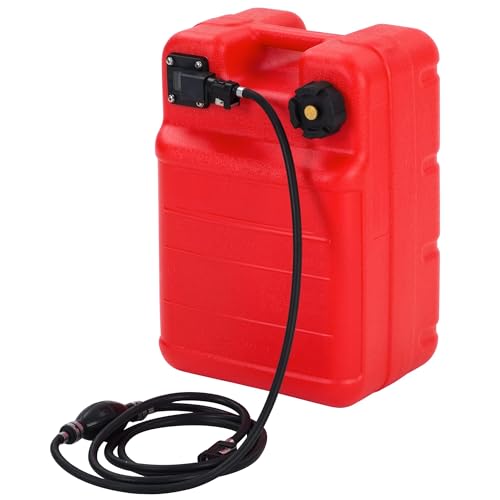
ActiveTrail highlights a 6-gallon tank with a built-in fuel level indicator and dual venting for safer operation at sea. Its HDPE construction resists impact and UV exposure, and the dual venting system helps mitigate pressure changes during refueling. This tank is best for boaters who want visible fuel status and reliable performance in variable marine environments. A caution: some users may find the cap operation less intuitive than models with a single venting mechanism, depending on their venting needs.
Attwood 6-Gallon Portable Tank

Attwood’s model is EPA and CARB certified with a simple 6-gallon capacity and a vacuum valve to regulate fuel flow automatically. This makes it a solid pick for compliant operations and consistent fueling. It is well-suited for traditional outboard setups and users who prioritize safety and regulatory compliance. A limitation is that, like many portable fuel cans, it can be heavier when full and may require careful handling on smaller craft.
Buying Guide: How To Choose The Right Plastic Outboard Fuel Tank
- Capacity needs: For short trips or compact boats, a 3–6 gallon tank may suffice. For longer days on the water, consider 12 gallons or more.
- Ventilation and seals: Look for vented caps or dual sealing systems to prevent vapor buildup and leaks. A built-in pump or gauge helps monitor fuel levels.
- Compatibility: Verify hose length and connector compatibility with your engine’s fittings. Some tanks specify Yamaha or standard marine fittings only.
- Durability: HDPE construction improves resistance to UV exposure, impacts, and corrosion. Consider UV stabilization for sun-prone environments.
- Portability vs. stability: Shorter, lighter tanks are easier to move and store, while larger tanks require sturdier mounting or placement solutions.
- Regulatory compliance: EPA and CARB compliant tanks help ensure safety and environmental standards are met during transport and use.
Frequently Asked Questions
- What capacity should I choose for a single-axle boat? Answer: A 3–6 gallon tank is typically adequate for short trips and small boats, while larger vessels may benefit from 8–12 gallons for extended runs.
- Can I use these tanks with diesel? Answer: Some models are designed to handle diesel blends; check product specs for compatibility before use.
- Are these tanks vented automatically? Answer: Many models feature vented caps or dual sealing, which helps manage vapor and pressure during fueling.
- Is EPA or CARB certification important? Answer: Certification indicates adherence to federal safety and emissions standards, beneficial for compliance and resale value.
- Will these tanks fit under seat storage? Answer: Compact or low-profile designs fit better under seats or confined spaces; always measure your available space first.
- Do I need additional hoses or fittings? Answer: Some tanks include hoses; others require separate purchase of hoses or adapters to match your engine fittings.