
If you’re shopping for gas-powered RC boat motors, you’re looking for durable power, reliable starting, and easy replacement as you upgrade your vessel. This guide highlights five options that suit different boat sizes and user needs—from racing boats to starter kits. The list includes compact 29cc units, larger 52cc engines, and compatible outboard drives, helping you pick the best match for your build and skill level.
| Product | Key Use | Best For |
|---|---|---|
| FLMLF 29cc 2-Stroke Rc Boat Marine Motor | 2-stroke RC boat engine | Racing boats and easy installations |
| YIYIBYUS 52CC Gas Outboard Motor | Gas-powered outboard engine | Mid- to large-sized boats, fishing craft |
| 1 Set Outboard Drive System with Propeller Motor Shaft Hatch | Outboard drive system | DIY builds with compatible hulls |
| Surpass Hobby 3670 2280KV Brushless Motor | Electric brushless motor | High-triction, fast-acceleration RC boats |
| 4092 Rc Boat Brushless Motor Surpass Hobby | Electric brushless motor | Powerful, efficient propulsion for mid-size boats |
FLMLF 29cc 2-Stroke Rc Boat Marine Motor for Racing Boats

Type: 2-stroke RC boat engine. Displacement: 29cc. Engine family: Zenoah Rcmk QJ G290PUM. Features include easy installation and replacement for existing RC boat engines. Best for builders who want a straightforward swap-in for racing boats and modest power needs. Caution: as a 2-stroke, it requires proper fuel mixing and ventilation during operation.
ZYHOBBY 1 Set Outboard Drive System with Propeller Motor Shaft Hatch
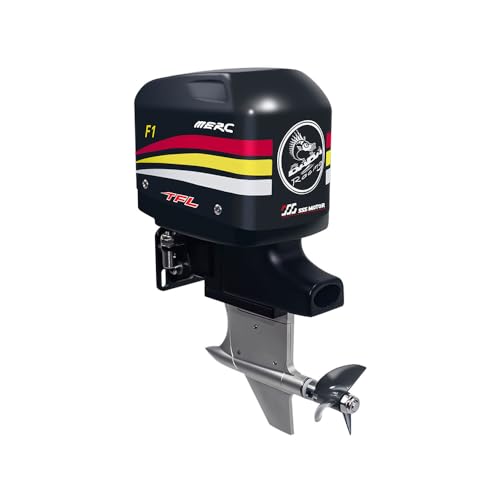
Type: Outboard drive system kit. Material: Metal components; motor type: F450-BKV3000, propeller: 3114310. Best for hobbyists building or upgrading boats with compatible hulls and seeking a robust drive assembly. Choose this if you want a ready-to-install drive unit; consider compatibility with your hull and rudder for steering dynamics.
Caution: May require additional mounts and linkages not listed in the kit description.
YIYIBYUS 2.3HP 52CC Gas Outboard Motor

Power: 1.7 kW / 2.3 HP; Displacement: 52cc; Type: 2-stroke; Idle: 2800–3200 rpm; Operating: 4500–8500 rpm. Fuel mix: 25:1; Tank: 850 ml. Materials: Aluminum and PP for durability and corrosion resistance. Best for mid- to large-sized boats requiring higher torque and sustained speed. Limitation: 2-stroke engines require correct fuel/oil mixture and regular maintenance to prevent fouling and emission concerns.
Surpass Hobby 3670 2280KV Brushless Motor with Cooling

Type: Brushless, 4-pole design for high torque and efficiency; recommended boat length: 650–800 mm boats. Features include a cooling set and materials optimized for heat dissipation. Best for accelerating quickly and maintaining stable power delivery. Limitation: Electric motors require a suitable battery setup and electronic speed control (not included here). Avoid this if you specifically need a gas-powered solution.
Surpass Hobby 4092 RC Boat Brushless Motor

Type: Brushless, designed for 650–800 mm boats. Features include aluminum-copper construction and cooling enhancement for prolonged operation. Best for boaters seeking strong thrust with efficient heat management. Limitation: Again, this is electric, not gas; plan for a compatible LiPo battery and ESC to maximize performance.
Buying Guide
- Gas vs. electric propulsion: Gas engines like the 52cc YIYIBYUS and 29cc FLMLF provide raw torque and longer runtime per refill, suited for longer sessions and larger hulls. Electric brushless motors deliver high efficiency, predictable throttle response, and easier maintenance, ideal for beginners and smaller boats.
- Boat size compatibility: Gas engines are often paired with mid-to-large boats; verify displacement and hull weight to avoid overloading. Electric motors require cooperative battery packs and ESC sizing for the boat’s weight and drag.
- Maintenance needs: Two-stroke gas engines require correct fuel mixing and regular maintenance (spark, carburetor care, compression checks). Brushless systems demand battery care and occasional calibration of the ESC and servo links.
- Installation considerations: Look for kit compatibility with your hull, shaft length, and propeller sizing. Some products include drive systems, others are separate motors plus propellers.
- Durability and cooling: Gas engines rely on air cooling or water cooling via the body design; brushless motors benefit from dedicated cooling solutions like jackets or water cooling blocks for long runs.
Frequently Asked Questions
- What’s the main difference between gas and electric RC boat motors? Gas motors use combustion for power and generally offer longer run times; electric motors rely on battery power, providing smooth throttle and easier maintenance.
- Which motor is best for a beginner’s RC boat? A smaller, electric brushless motor paired with a beginner-friendly battery setup is typically recommended for ease of use and maintenance.
- Do gas engines require special fuel? Yes, gas engines need a correct fuel mix (often oil-to-gas ratio) and high-quality fuel to ensure smooth operation and longevity.
- Is a cooling system important for RC boat motors? Yes, especially for high-power brushless motors and gas engines, to prevent overheating during extended runs.
- Can I upgrade from a gas engine to an electric system? Yes, but you must match the hull size, mounting points, and power needs with the new motor and batteries or fuel system.