As an Amazon Associate I earn from qualifying purchases. These links may earn this site a commission when you buy, at no extra cost to you.
Finding the right wind speed and direction instruments is essential for sailors who want precise readings for cruising or racing. This guide highlights five top options that balance visibility, reliability, and ease of use. Whether you sail small coastal boats or larger cruisers, the selections below help you choose gear that matches your vessel and goals. The buyer’s table summarizes each product’s focus to simplify comparisons.
Product Comparison Summary
| Product | Best For | Key Benefit | Limitations |
|---|---|---|---|
| Windex 15 MK2 Wind Vane | Sailboats 15–40 ft | Bird-proof spike and strong accuracy | Requires proper mounting |
| Davis 3150 WindTrak 15 | Moderate-size vessels | Suspension bearing design | Limited product description |
| Part Synergy Wind Speed Kit | Custom installations | Surface-mount, no display | Requires integration |
| Five Oceans FO2080 | Sails and larger boats | Visible day/night vane | Basic mounting hardware |
| Windex XL Wind Vane | Large boats 40–100 ft | Clear visibility and accuracy | Bulkier install |
Windex 15 MK2 Birdspike Included – Wind Direction Indicator
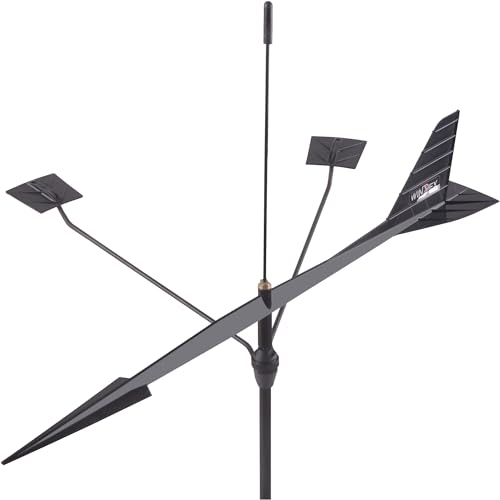
The Windex 15 MK2 is designed for sailboats in the 15–40 feet range. It includes a complete vane assembly, support rod, index arms, a mast socket, and a built-in bird spike to deter perchers. The design emphasizes accuracy and reliability, helping sailors track true wind direction for both cruising legs and competitive sailing. This option is best for smaller to mid-size sailboats where a compact, high-visibility vane is valuable. A key limitation is that proper mounting and alignment are required to maximize accuracy.
Davis Instruments 3150 WindTrak 15

The Davis Instruments 3150 WindTrak 15 uses a suspension bearing design intended to deliver stable wind readings with reduced friction. This model is well-suited for sailors who prefer a low-profile, robust wind-tracking solution on mid-sized boats. The listing provides limited product details beyond general dimensions and weight, so be prepared to verify compatibility with your mast and mounting options. Best for sailors prioritizing a simple mechanical wind-tracking setup with steady performance.
Sailboat Instrument Kit – Wind Speed with gWind Transducer

This Part Synergy kit focuses on wind speed measurements with a gWind transducer, and it uses a surface-mount mounting style without a display. It’s best for boat owners who want to add wind data to a larger navigation system or who plan to pair the sensor with an existing display. The absence of a built-in display means you’ll need a compatible cockpit or chartplotter to view readings. Choose this if you need to customize a broader instrument setup.
Five Oceans 14-1/2-Inch Wind Direction Indicator FO2080
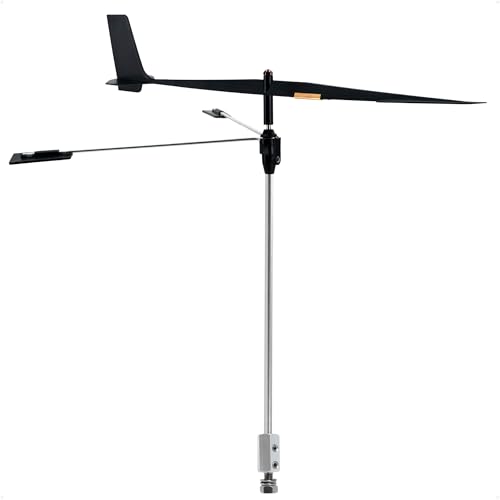
The FO2080 wind vane offers a compact 14-1/4″ blade with a sensitive bearing system, designed for boats 15 feet and larger. Its daylight and night visibility feature uses reflector tape on the vane and tacking tabs, helping sailors maintain awareness in mixed light conditions. This product is a solid choice for sailors who need a reliable indicator that remains readable in varied lighting. A potential limitation is that mounting hardware is not included in every package, requiring a separate purchase for full installation.
Windex XL Wind Direction Indicator

The Windex XL is built for larger sailboats, with a 40–100 feet sizing range. It emphasizes easy visibility through reflector tape and a design that maintains accuracy under racing or cruising conditions. The XL model provides a complete package including the vane, supporting rod, index arms, and a mast socket. Best for cruisers and racers on bigger vessels who require highly legible wind direction data. A caution is that the system can be bulkier to install on smaller rigs.
Buying Guide
What should you consider when choosing wind speed and direction instruments?
- Boat size and mast integration: Match the instrument’s size and mounting hardware to your vessel. Smaller boats benefit from compact vanes, while larger boats may need bigger, more visible indicators.
- Display and data needs: If you already have an onboard display, a wind speed kit that supplies data to that display can reduce clutter. If you want a self-contained unit, look for complete packages with built-in indicators.
- Visibility: Day and night readability is important. Look for devices with reflector tape or high-contrast markings to ensure readings are visible in all lighting conditions.
- Durability and weather exposure: Vane assemblies should withstand marine environments, including salt spray and wind gusts. Bird-proof or splash-resistant features add longevity for cruising.
- Ease of installation: Some products require mast mounting and alignment, while others use surface-mount installations. Consider the time and tools you have for installation.
Installation Versus Usability: Which Should You Prioritize?
For crews prioritizing quick setup and minimal maintenance, select models with complete hardware kits and pre-aligned components. For custom installations, a kit that supports surface mounting with compatibility to third-party displays offers flexibility. In either case, ensure you have the right mounting hardware and that the vane alignment process is straightforward on your mast.
Platform Compatibility and Data Integration
Assess whether your vessel’s existing instruments can receive wind data via standard interfaces. Some wind vanes provide direct display, while others feed data to compatible onboard screens or navigation systems. If you operate with a dedicated display or chartplotter, verify compatibility before purchasing.
Durability and Maintenance Considerations
Marine-grade materials and protective features like bird spikes can extend the life of a wind indicator. Regular checks for mounting tightness and vane alignment help maintain accuracy. Consider future reefing or rigging changes when choosing a model to ensure continued compatibility.
FAQ
- Q: Do wind vanes require regular calibration?
- A: Most mechanical wind vanes are designed to hold alignment, but occasional checks after rough seas or repaints help maintain accuracy.
- Q: Is a display always necessary?
- A: No. Some kits provide data to existing displays or handheld devices, while others include built-in indicators for cockpit visibility.
- Q: Can these be installed on any mast?
- A: Installation depends on mast diameter, mounting points, and available space. Some models are more universal, while others require specific adapters.
- Q: Which product is best for racing?
- A: A model with high visibility, quick alignment, and reliable performance in gusty conditions is preferred, such as the Windex XL family or the MK2 variants.


