
Direct answer: Self-tailing winches from Lewmar and Harken offer robust, maintenance-friendly options ideal for small to mid-sized cruising boats. This guide highlights five top models that balance reliability, ease of use, and durable construction for sailors seeking smoother sail trimming. Best for performance-oriented cruisers, weekend sailors, and DIY boaters who want tool-free service and straightforward maintenance.
Buyer type overview:
– New or casual sailors: simple, tool-free service and intuitive operation.
– Medium cruising vessels: steadier power and multiple size options for versatile lines.
– Experienced skippers: two-speed or higher-power models for heavy loads or advanced sail plans.
Chosen products at a glance:
| Product | Best For | Key Feature |
|---|---|---|
| Lewmar 15ST EVO Self Tailing Alloy Winch in Grey | Casual to mid-range cruisers needing tool-free service | Grey anodized alloy drum; no tools required |
| Lewmar 15ST EVO Self Tailing Alloy Winch in Black | Storm-proof, high-visibility setup for variable conditions | Black anodized alloy drum; no tools required |
| Lewmar Ocean Self Tailing Winch 16CST Aluminum Chrome | Versatile mid-size sailboats with single-speed needs | Chrome bronze drum; smooth feeder arm design |
| Harken Radial Self-Tailing Winch Size 20 | Race-or-cruise with emphasis on grip and line wear reduction | Diagonal ribs for grip; self-tailing mechanism |
| Lewmar Ocean Self Tailing Winch 16CST Chrome | Bronze-drum look with reliability on mid-size boats | Chrome drum; easy top-access service |
Lewmar 15ST EVO Grey Self-Tailing Alloy Winch

Best for: casual cruisers and weekend sailors who want a reliable, tool-free service winch for common mainsheet and jib control. This model inherits Lewmar’s Ocean winch design, ensuring smooth line handling with minimal maintenance. The gray alloy drum and top feeder arm help prevent line traps above the jaws, aiding consistent trimming.
Why selected: High-quality alloys and a simple, tool-free disassembly promote straightforward servicing. The wave-spring jaws accommodate various line diameters, helping taut sails without over-tightening. A caution: ensure correct line diameter is chosen to maximize the self-tailing grip and minimize wear over time.
Lewmar 15ST EVO Black Self-Tailing Alloy Winch

Best for: sailors who prefer a darker finish that blends with modern deck aesthetics and want the same no-tools feature. The black anodized drum provides a visually cohesive appearance on many modern sailboats.
Why selected: Matches the Grey version’s performance with a distinct look. The design remains focused on straightforward maintenance and reliable self-tailing action. Caution: ensure compatible drum color preference aligns with deck hardware for a cohesive setup.
Lewmar Ocean Self Tailing Winch 16CST Aluminum Chrome
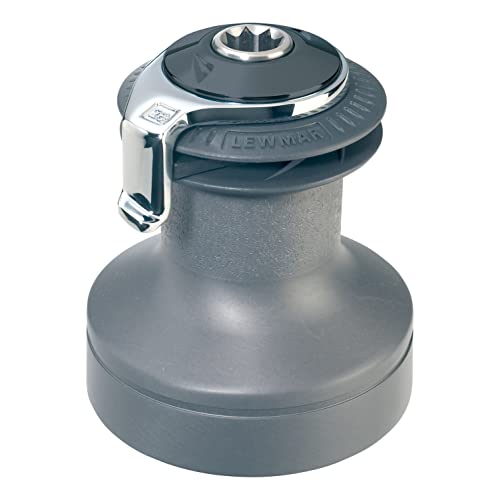
Best for: mid-size sailboats needing a single-speed winch with reliable line management and a premium chrome look. The aluminum gray-to-chrome transition offers versatile compatibility with many deck fittings.
Why selected: Established Lewmar design with a smooth feeder arm and wave-spring self-adjustment. Caution: for boats with extra-large lines, verify torque capacity and drum diameter to avoid overloading.
Lewmar Ocean Self Tailing Winch 30CST Two Speed Aluminum
Best for: larger boats or lines requiring two-speed control and expanded power in heavy trims. This model features a 2-speed setup with a primary 2.1:1 and secondary 4.2:1 gearing, aiding versatility on bigger rigs.
Why selected: The two-speed option provides flexibility for varying sail loads. Caution: heavier drum and gearing may add weight; confirm mounting space and belt alignment on your winch pedestal.
Buying Guide: Self-Tailing Sailboat Winches
What size winch do I need?
Winch size should match your boat length, mainsheet setup, and line diameter. Smaller boats benefit from 15–16 CST sizes, while larger vessels may require 30 CST or two-speed models for heavier loads.
Single-speed vs two-speed
Single-speed winches provide straightforward operation and reliable grip for routine sails. Two-speed winches offer greater torque and efficiency for heavy headsails or winch maneuvers in strong winds.
Materials and finish
Aluminum drums with anodized finishes (gray, black, chrome) resist corrosion and wear. Chrome finishes offer a classic look, while gray or black blends with deck hardware. Consider deck aesthetics and maintenance when choosing color and material.
Tool-free service and maintenance
Models that allow cap removal and drum access without removing the winch reduce maintenance downtime. Look for wave-spring jaws and easily accessible gear trains to simplify servicing.
Line compatibility
Check the winch jaw design and line diameter compatibility. Self-tailing jaws should accommodate your typical line diameter to ensure secure trimming and reduce line wear over time.
Installation considerations
Verify base diameter and height to fit your deck footprint. Ensure mounting studs and pedestal alignment match your boat’s existing hardware to prevent misalignment and uneven load distribution.
FAQ
- What is a self-tailing winch? A self-tailing winch grips the line automatically, allowing one person to trim sails without needing a second crew member.
- Are Lewmar winches easy to service? Yes. Several Lewmar models feature tool-free disassembly, top-access drums, and wave-spring jaws for simple maintenance.
- Which winch finish lasts longer on saltwater boats? Anodized aluminum finishes (gray or black) resist corrosion well, with chrome finishes offering a traditional look but similar durability when properly maintained.
- Do I need two-speed winches? Two-speed winches are beneficial for boats with larger sheets or heavy headsails, providing more torque at lower gear ratios and higher speed when needed.
- How do I decide between 15ST and 16CST? The choice depends on your line diameter, boat size, and how much load you anticipate. 15ST and 16CST are common for mid-size boats, while 30CST suits larger rigs.
- Can I mix brands? It is possible but should be planned to ensure compatible base sizes, drum diameters, and load ratings across all winches on the same boat.