As an Amazon Associate I earn from qualifying purchases. These links may earn this site a commission when you buy, at no extra cost to you.
Shallow water anchor systems help secure your boat in sandy, muddy, or shallow bottoms without relying on wind or current. This guide highlights top picks for American buyers, showing who each product is best for, how they deploy, and key trade-offs. Whether you need a manual pull-rope setup, a wired electric model, or a versatile pole anchor, these selections cover common boat sizes and water conditions. The following table summarizes the featured products for quick comparison.
| Product | Best For | |
|---|---|---|
| Lewmar Vector Manual Shallow Water Anchor (Black, 8 ft.) | Low-maintenance manual operation | No hoses, pumps, or wires; easy installation |
| Minn Kota Talon Shallow Water Anchor (10 Ft.) | Powerful, remote-controlled anchoring on larger boats | Built-in work light; wireless remote option |
| Lewmar Axis Shallow Water Anchor (12V Electric) | Electric deployment for hands-off operation | No hoses or pumps; RF remote included |
| Sailpref 8.63′ Shallow Water Anchor Pole | Hard-bottom or beach environments; portable use | Fiberglass pole with stainless tip; easy screw-in design |
| SuperStick Shallow Water Anchor Pin (3/4″ x 8′) | Simple spike anchor for quick setup | Stainless steel spike tip for durability |
Lewmar Vector Manual Shallow Water Anchor (Black) – 8 ft.

This Lewmar Vector model is designed for simple, maintenance-free operation. Its pull-rope deployment eliminates hoses, pumps, and wires, making installation straightforward. The elastic securing strap allows quick deployment, while the retrieval strap locks the anchor in place. Best for boaters who want a reliable manual option with minimal setup complexity. A potential limitation is dependence on user manual control during deployment and retrieval, which may require careful handling in rough conditions.
Minn Kota Talon Shallow Water Anchor (10 Ft.)

The Minn Kota Talon combines depth reach with modern controls. It includes a built-in work light for aft-area visibility and offers multiple control options—wireless remote, optional foot switch, or a smartphone app. This makes it suitable for anglers on larger boats who want remote anchoring and adjustable lighting. A caution is the higher system complexity and need for compatible mounting space and power setup, which can limit retrofit on smaller craft.
Lewmar Axis Shallow Water Anchor (12V Electric)

The Lewmar Axis employs an electric linear actuator for smooth, hands-free deployment and retraction. It’s built with powder-coated aluminum for durability and includes mount hardware, RF module, control box, auto-resetting fuse, and a waterproof fuse holder. Best for powerboat users seeking reliable, remote-controlled anchoring with a robust, corrosion-resistant build. A limitation to consider is the electrical dependency, which may require battery management and wiring integrity on some vessels.
Sailpref 8.63′ Shallow Water Anchor Pole

The Sailpref anchor pole extends to 8.63 feet, offering extended reach for deeper shallow-water holds. It uses a fiberglass-reinforced design with a 316 stainless steel tip for corrosion resistance, making it suitable for saltwater use. The two-piece, screw-together construction enhances safety in variable bottoms. Choose this if you want a flexible, portable pole anchor with strong bottom grip. A potential drawback is the need for manual screwing and more physical effort in sandy or clay bottoms.
SuperStick Shallow Water Anchor Pin (3/4″ x 8′)
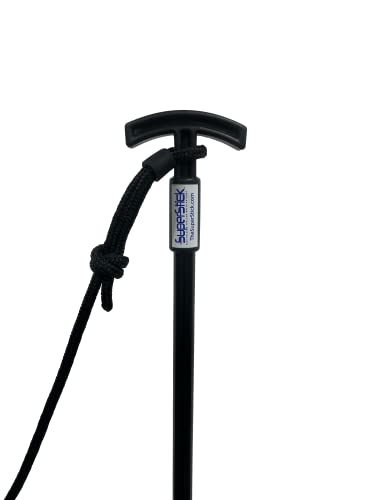
The SuperStick pin uses a stainless steel spike tip designed to resist wear and splintering while providing easier bottom penetration. Best for quick, low-maintenance setups where a simple spike anchor is sufficient. Limitations include less holding power on soft mud bottoms compared with full pole or electric systems, and it may require more frequent repositioning in dynamic currents.
Buying Guide: Key Considerations for Shallow Water Anchors
What water depth and bottom type will you anchor in most often? Manual anchors work well in shallow, firm bottoms, while electric models excel with heavier boats and longer holds. Consider mounting options, weight, and power availability. For saltwater use, corrosion resistance and stainless components are important. If you value remote control and hands-free operation, prioritize models with RF or app-enabled control. For portability, look at pole-style anchors with lightweight, easy assembly versus robust fixed systems.
- Deployment Type: Manual pull-rope, electric, or spike/pole design. Choose based on how much effort you want to invest during anchoring.
- Bottom Compatibility: Sand, mud, rock, or weed. Ensure the anchor design offers sufficient bite for your common bottoms.
- Power and Controls: Battery life, remote control, smartphone app compatibility, and wiring requirements.
- Durability: Materials like powder-coated aluminum, stainless steel, and fiberglass components resist corrosion in saltwater.
- Portability and Installation: Some models require minimal drilling; others need aftermarket mounts or electrical wiring.
FAQ
- What is the best shallow water anchor for manual operation?
Models like the Lewmar Vector Manual offer straightforward, hose-free deployment with a simple pull-rope mechanism.
- Do electric shallow water anchors require a lot of power?
Electric anchors, such as the Lewmar Axis, need a reliable power source, but typically offer convenient remote operation and faster holding.
- Can I use a shallow water anchor on a small boat?
Yes, compact poles and lightweight manual models are suitable for smaller craft if the weight and mounting fit the transom or bow area.
- Are stainless steel anchors better for saltwater?
Stainless steel and corrosion-resistant coatings improve longevity in saltwater environments, especially for bottom-contact parts.
- What bottom conditions affect anchor performance the most?
Soft mud and sandy bottoms reduce grip; firmer sand and gravel improve hold, while weed and rocky bottoms may require different tip designs.


