As an Amazon Associate I earn from qualifying purchases. These links may earn this site a commission when you buy, at no extra cost to you.
Find the right bow thruster to improve control, docking precision, and overall handling on small to mid-size boats. This guide highlights five reliable choices and explains who each is best for, with practical considerations to help you decide.
| Product | Brand | Thrust / Power | Best For | Notes |
|---|---|---|---|---|
| VETUS Bow Thruster – 55 kgf – 12V | Vetus | 55 kgf; 12V | Owners seeking compact, dependable performance | Compact size; suitable for smaller vessels |
| Lewmar 140TT 2.2kw Gen. 2 Bow Thruster -12V | Lewmar | Unknown kW; 12V | Owners needing higher propulsion for modestly larger boats | Gen 2 design; strong thrust potential |
| VETUS Bow Thruster 7512D 75KGF-12V-D185MM | Vetus | 75 kgf; 12V | Boats requiring robust, mid-range thrust | Balanced option for mid-sized vessels |
| VETUS Bow Thruster – 95 kgf – 12V | Vetus | 95 kgf; 12V | Heavier small boats needing strong thruster | High-thrust choice in compact form |
| Lewmar 110TT Boat Thruster Kit | Lewmar | 1.5 kW motor with 5-blade propeller | Docking confidence with complete kit | Includes joystick, fuse block, and all accessories |
VETUS Bow Thruster – 55 kgf – 12V

Best for compact boats where space is limited but reliable bow thrust is still needed. The 55 kgf thrust class in a 12V system balances power with size, making it a good match for smaller sail or powerboats seeking easier docking control. Consider this if you prioritize a straightforward install and proven reliability.
Why it’s selected: It provides solid maneuverability without excessive footprint, ideal for boats that don’t require extreme thrust. Caution: ensure fitment with your hull profile and available installation space.
Lewmar 140TT 2.2kw Gen. 2 Bow Thruster -12V

Better for boats that require stronger docking performance without stepping up to the largest thrusters. The Gen 2 design suggests improved efficiency and reliability in a 12V system, making it suitable for mid-sized vessels and owners who dock frequently in tight spaces.
Why it’s selected: Higher thrust availability helps with crosswind docking and close-quarters control. Caution: ensure electrical system compatibility for the higher power draw.
VETUS Bow Thruster 7512D 75KGF-12V-D185MM

Best for mid-sized boats that need a reliable, significant thrust boost without oversized equipment. The 75 kgf thrust class provides a strong cornering assist for docking and line handling, especially in gusty conditions or tidal flows.
Why it’s selected: It offers a robust balance of thrust and footprint. Caution: verify the D185MM mounting clearance on your hull.
VETUS Bow Thruster – 95 kgf – 12V
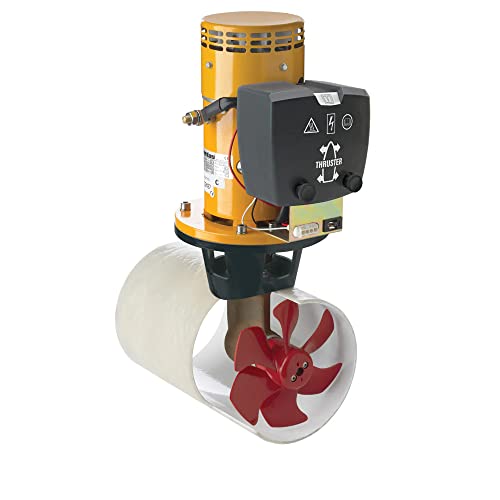
Choose this when maximum thrust is required from a compact bow thruster on a boat that weighs more than small craft but still needs space-efficient propulsion assistance. The 95 kgf capability helps with stronger crosswinds and larger stern interference during docking.
Why it’s selected: High thrust improves precision in challenging conditions. Caution: heavier unit may demand a stronger mounting structure and electrical supply.
Lewmar 110TT Boat Thruster Kit

Best for docking-focused users who want a complete kit. This option includes the thruster, joystick control, blue sea fuse block, and fuse, enabling a smoother installation and immediate docking confidence. Five-blade propellers provide even thrust in both directions for controlled maneuvering.
Why it’s selected: Comprehensive kit reduces setup complexity and supports reliable operation. Caution: confirm cable length and space for installation with your boat’s configuration.
Buying Guide: Key Considerations for Small Boat Bow Thrusters
- Boat size and hull layout: Match thrust class to boat weight and expected docking conditions. Heavier boats need higher thrust; compact boats benefit from smaller units.
- Electrical system compatibility: 12V is common, but verify alternator capacity, battery size, and wiring runs to handle the thruster’s power draw.
- Mounting space and fit: Check tunnel diameter, stern clearance, and interior access for installation and maintenance.
- Control options: Decide between joystick, buttons, or integrated control panels. Some kits include control hardware for ease of use.
- Reliability and serviceability: Consider models with proven track records and accessible spare parts or service networks.
- Installation complexity: Some kits are turnkey, while others require professional installation for optimal alignment and water seal integrity.
- Environmental exposure: For in-harbor or freshwater use, most thrusters perform well; for saltwater, verify corrosion resistance and seals.
Frequently Asked Questions
- What thrust level do I need for a small boat?
– A boat under about 25–30 feet typically benefits from 55–75 kgf thrust, while larger small boats may require 75–95 kgf or more for high-wind days or crowded docks. - Are complete thruster kits better than individual units?
– Kits offer faster installation and included control hardware, making them a practical choice for first-time installations. - Can I install a bow thruster on any boat?
– Most boats can accommodate a bow thruster, but you should confirm hull structure, tunnel diameter, and electrical capacity with a professional installer. - What maintenance is needed for bow thrusters?
– Regular inspection of seals, propeller blades, and electrical connections; ensure cooling and ventilation as specified by the manufacturer. - Is higher thrust always better?
– Not necessarily. Higher thrust increases power consumption and gear load; choose a level appropriate to boat size and docking needs. - Do bow thrusters work in reverse direction?
– Yes, most use reversible propellers or two-counter rotating propellers to push both ways for docking control.


