As an Amazon Associate I earn from qualifying purchases. These links may earn this site a commission when you buy, at no extra cost to you.
When selecting a small outboard fuel tank, prioritize portability, compatibility with your outboard, and a design that minimizes fuel evaporation and spillage. This guide highlights five compact, EPA or CARB-compliant tanks that suit anglers, day cruisers, or boat owners who need a mobile fueling option. Each option is evaluated for best-use scenarios, with practical cautions to consider prior to purchase. The buyer can compare capacity, hose length, venting, and material durability to match their vessel and refueling habits.
| Product | Best For | Capacity | Key Benefit |
|---|---|---|---|
| Attwood 8803LP2 | Saltwater or freshwater boats needing durable construction | 3 gallons | Automotive-grade multi-layer BUILD and automatic vacuum valve |
| VEVOR 3.17 Gal | Versatile transfer on small to mid-size boats | 3.17 gallons | Long hose and sturdy HDPE with corrosion resistance |
| AloneGoer 3 Gallon | Yamaha or similar outboards; spare tank | 3 gallons | Multi-layer barrier reduces fuel evaporation |
| PeakPursuit 3 Gal | Deck boats and yachts needing long hose | 3 gallons | Dual venting and long 9.8 ft hose |
| Scepter 3 Gallon | Under-seat storage and quick checks | 3 gallons | Built-in gauge and vented cap for safe refueling |
Attwood 8803LP2 EPA and CARB Certified 3-Gallon Tank

Best for: boat owners who require an EPA and CARB-certified portable tank with automotive-grade durability. The multi-layer construction is designed to resist pressure in closed fuel systems, and the automatic vacuum valve supports steady fuel flow without manual venting. This makes it suitable for frequent use in harsh marine environments.
Why chosen: It combines certified compliance with a robust build, reducing the risk of vapor or leakage in rough waters. The auto vent feature helps streamline refueling in confined spaces.
Caution: The data does not specify hose length; verify compatibility with your outboard fitting before purchase.
VEVOR Boat Fuel Tank, 3.17 Gal

Best for: boaters needing a compact transfer tank with a long hose ready for Yamaha connectors and diverse vessels. It offers a 3.17 gal capacity and a 9.8 ft hose, which makes filling an outboard easier from a nearby deck or dock.
Why chosen: The high-density polyethylene construction resists aging and corrosion, helping maintain long-term shape and security. The long hose simplifies reach, though exposure to direct sunlight should be limited to prevent aging.
Caution: Avoid prolonged direct sunlight exposure to prevent aging and expansion risk.
AloneGoer 3 Gallon Portable Gas Tank
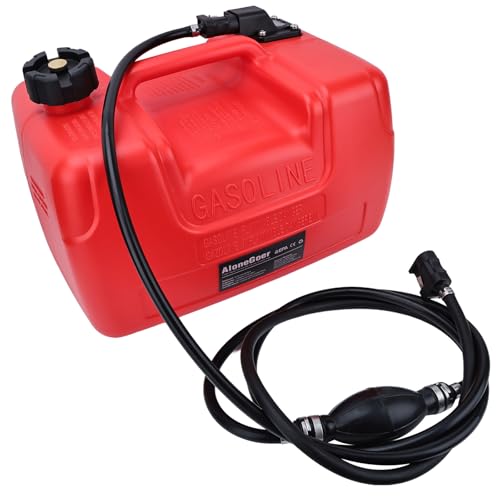
Best for: owners needing a Yamaha-compatible portable tank with enhanced barrier technology. The 12L capacity aligns with typical short trips and spare-fuel needs for mid-sized outboards.
Why chosen: The HDPE-EVOH-HDPE multi-layer barrier reduces fuel evaporation by up to 98%, extending fuel freshness on longer trips. UV stabilization and salt spray resistance improve durability in marine environments.
Caution: The product notes compatibility with Yamaha 6YL-24201-24-00; confirm your model and fittings before buying.
Portable Boat Tank 3 Gal with 9.8ft Hose
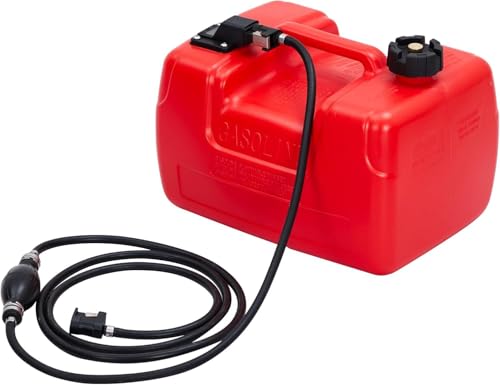
Best for: deck boats or yachts that need a long hose and dependable venting options. The dual venting system allows flexible pressure control during refueling.
Why chosen: The 9.8 ft hose and universal compatibility simplify use across different vessels, while HDPE construction ensures ruggedness. The design supports both sealed and vented operation for varied conditions.
Caution: Ensure the compatible cap type and hose connection match your engine’s fittings to avoid leaks.
Scepter 3 Gallon Portable Marine Gas Can

Best for: boaters who want a built-in gauge and vented cap with under-seat storage convenience. The 3-gallon size fits on many smaller vessels and under seats when not in use.
Why chosen: The 2-way vented cap and built-in gauge enable quick fuel checks and safe refueling. It accepts standard marine tank fittings and supports diesel or ethanol-blended fuels in many setups.
Caution: The can requires a separate fuel line attachment, which is not included in the base unit; plan for compatible fittings on your boat.
Buying Guide: How to Choose the Right Small Outboard Fuel Tank
What capacity do I need?
Choose a capacity that matches your typical trip length and outboard fuel consumption. Most small tanks range from 3 to 3.5 gallons, which is suitable for short hops or as a reserve.
Do I need a vented or non-vented design?
Vented designs allow smoother refueling and pressure equalization, but can release vapors if not vented properly. Dual venting systems offer flexibility for different conditions.
How important is hose length and compatibility?
A longer hose (around 9.8 ft) increases reach from a dock or deck to the outboard. Verify hose inner diameter compatibility with your engine fittings and the fuel line connectors.
What materials provide the best durability?
HDPE and multi-layer barrier tanks reduce fuel permeation and resist UV aging, salt spray, and impact. Look for corrosion resistance and a UV-stabilized exterior for longevity.
What safety features matter?
Automatic vacuum valves, vented caps, and built-in gauges contribute to safer operation by maintaining steady flow, reducing vapor buildup, and enabling quick fuel level checks.
Compatibility and installation considerations
Check your outboard model’s fitting specifications, including connector type (Yamaha or otherwise), and ensure the tank height and dimensions fit your vessel’s storage area.
Frequently Asked Questions
- What is the typical capacity of a small outboard fuel tank? Most common options are around 3 gallons, suitable for short trips or as a reserve fuel source.
- Are these tanks CARB or EPA compliant? Several listed models mention EPA or CARB certification, reflecting regulatory compliance for portable fuel tanks.
- Can I use any gas can with my outboard? Use tanks designed for marine use and compatible with your engine fittings to avoid leaks or vapor risks.
- Is venting important when refueling? Yes; venting helps prevent pressure buildup and ensures smooth fuel flow during transfer.
- Do these tanks come with hoses and fittings? Many include a hose, but some models require separate fittings; verify included components before purchase.
- How should I store a portable tank when not in use? Store upright in a well-ventilated area away from heat sources to minimize vapor buildup and fuel evaporation.


