As an Amazon Associate I earn from qualifying purchases. These links may earn this site a commission when you buy, at no extra cost to you.
Direct answer: for small, lightweight watercraft, compact 4-stroke jet outboards and a few electric options deliver reliable propulsion without taking up much space. This guide highlights five suitable models, outlining who each is best for, key strengths, and potential limits. Ideal buyers include hobbyists with inflatable or small wooden boats, kayak-adjacent vessels, and hobbyists seeking easier starting and efficient fuel use. The table below compares the five selected options at a glance.
| Product | Best For | Power Type | Key Benefit |
|---|---|---|---|
| JDCEREN 4HP 55CC Gas Outboard | Small rubber or wooden boats | Gas 4-stroke | Strong power with forward/reverse control |
| MOCHAG 4HP 55CC Outboard | Budget-friendly compact boats | Gas 4-stroke | Solid build with step-less speed |
| Pxolerig 4HP 55CC Jet Pump | Inflatable and light fishing boats | Gas 4-stroke | Environment-friendly fuel use and control options |
| LTIGOAW 4HP Jet Pump Outboard | Inflatable yachts and small craft | Gas 4-stroke | Wind cooling and manual start for reliability |
| Newport NT300 Electric Outboard | Saltwater or freshwater, quiet operation | Electric brushless | Low noise with long runtime |
JDCEREN 4HP 55CC Gas Outboard
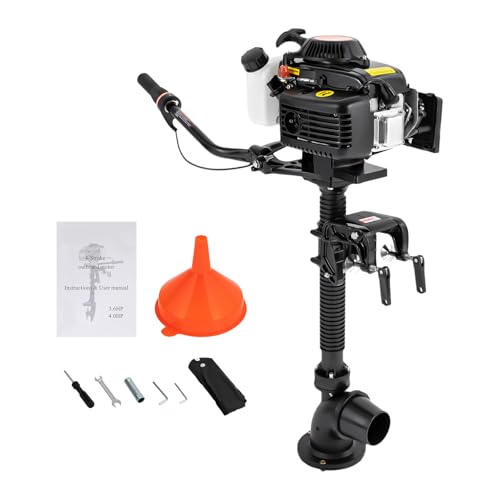
The JDCEREN 4HP 55CC outboard uses a 4-stroke, 55cc engine delivering about 2900W and a 4500–5500 rpm range. Its tilt function and 360-degree rotation offer versatile maneuvering, while CDI ignition supports reliable starts. Optimal for small rubber or wooden boats, it provides sufficient power for light waters. Caution: fuel efficiency benefits depend on operating conditions and load; ensure proper maintenance to sustain engine efficiency.
MOCHAG 4HP 55CC Jet Pump Outboard

MOCHAG builds a 4-stroke, 55cc motor with 2900W power and a 4500–5500 rpm range, designed for smooth operation. Notable is a step-less speed change function and 360-degree rotation, aiding flexible steering. Best for budget-conscious boaters seeking stable performance on small craft. Limitation: build materials emphasize affordability; expect ordinary wear over time with heavy use.
Pxolerig 4HP Jet Pump 55CC Outboard
Pxolerig’s 4HP jet pump offers 55cc displacement with 2900W and 4500–5500 rpm, plus a carburetor designed for efficient combustion. The 180-degree reverse capability helps in tight quarters, while the step-less throttle enables precise speed control. Choose this if you want strong thrust with environmental consideration. Caution: as with most small gas engines, fuel economy can vary with load and sea conditions.
LTIGOAW 4-Stroke Jet Pump Outboard

LTIGOAW presents a 4.0 HP, 55cc engine rated around 2.9 kW with 4500–5500 rpm. It features wind cooling, a CDI ignition system, and a manual start. The tilting and reverse gear via 180-degree rotation provide practical maneuverability for inflatable or compact boats. Best for anglers or light-use boaters who need a reliable, simple start. Limitation: wind cooling helps; ensure sufficient airflow in enclosed locations.
JDCEREN 1000W 48V Electric Jet Pump

This electric option offers a different propulsion path with a 4hp-equivalent level of thrust via brushless design. It includes an adjustable stand and omnidirectional joystick for flexible operation. Best for quiet operation and minimal maintenance, suitable for small inflatables. Limitation: range and thrust are typically less than mid-range gas motors; consider battery life and charging needs for longer trips.
Newport NT300 Electric Outboard

The Newport NT300 provides 3HP-equivalent power (about 1300W) with 110 lb thrust, designed for saltwater and freshwater use. It features a digital throttle, LCD display, and a 24.6″ shaft with a 9.8″ two-blade propeller. It delivers quiet propulsion and long runtimes on a single charge. Best for users prioritizing quiet operation and easy maintenance; not ideal for heavy loads or long-range performance on larger boats.
Buying Guide
What should I consider when choosing a small outboard jet motor?
- Boat type and weight: Match horsepower to your craft’s size to avoid overloading the motor.
- Fuel vs. electric: Gas engines deliver higher peak thrust; electric options excel in quiet operation and ease of maintenance.
- Cooling and protection: Wind cooling helps with heat management; consider corrosion resistance for saltwater use.
- Control and maneuverability: Look for 360-degree rotation, tilt, reverse gear, and CDI ignition for smoother handling.
- Starting method: Manual start vs. electric start—choose based on convenience and typical usage scenario.
- Maintenance needs: Four-stroke engines generally offer better fuel efficiency and longevity; plan for routine care.
How does jet pumping affect performance on small boats?
- Jet propulsion provides direct thrust in shallow water and reduces the risk of propeller strike.
- Jet systems require careful alignment and can be more fuel-efficient at lower speeds, depending on load.
- Some models offer reverse via rotating the nozzle or 180-degree adjustments for easy docking.
Is electric propulsion viable for all small craft?
- Electric motors are best for quiet environments, daily short trips, and maintenance-light use.
- Battery range and weight affect performance; ensure batteries and chargers fit your boating routine.
Frequently Asked Questions
- Are small outboard jet motors safe for inflatable boats?
Yes, when paired with appropriate weight limits and proper installation, jet motors minimize risk to the hull and provide reliable propulsion.
- What maintenance is typical for a 4-stroke outboard?
Regular fuel system checks, oil changes, spark plug inspection, and cooling system maintenance are common for 4-stroke engines.
- Can I use a jet pump motor in saltwater?
Many models are designed for both salt and fresh water, but rinse and maintain to prevent corrosion and buildup.
- Which is quieter, gas or electric outboard motors?
Electric motors are typically quieter and emit no exhaust, though high-powered gas engines can offer more thrust for heavier loads.
- Do I need a special mounting for these small motors?
Most compact outboards use standard transom mounts. Check compatibility with your boat’s transom height and mounting pattern.


