As an Amazon Associate I earn from qualifying purchases. These links may earn this site a commission when you buy, at no extra cost to you.
Answering the main buyer intent: these temperature gauges help monitor engine cooling for outboard motors, boats, and other marine or vehicle deployments. The picks below are selected for reliability, ease of use, and clear readings in varied lighting. Ideal for boaters, frequent travelers, and equipment operators who need real-time coolant temperature data and simple, at-a-glance alerts.
| Product | Best For | Key Feature |
|---|---|---|
| LAGWIUY Universal 2″ 52mm Water Temp Gauge | Boat owners seeking durable 12V gauge with clear LED backlight | 100-250°F range, white LED backlight, 52mm diameter |
| BREADEEP Universal 2″/52mm Water Temp Gauge | Marine or automotive users needing rugged build | ABS & stainless shell, 100-250°F, 12V DC |
| POCREATION 52mm Water Temperature Gauge | Marine environments requiring IP67 protection | IP67, 9-32V operation, -30°C to 75°C range |
| Onrlid 2″/52mm Water Temp Gauge | General automotive and marine installations needing LED visibility | ABS + stainless, 12V with white LED backlight |
| BYYOUIV 2-in-1 Water Temperature & Voltage Gauge | Compact dashboards needing combined temp and voltage readouts | 2-in-1 design, sunshade LCD, alarm for temp |
LAGWIUY 2″ Water Temperature Gauge
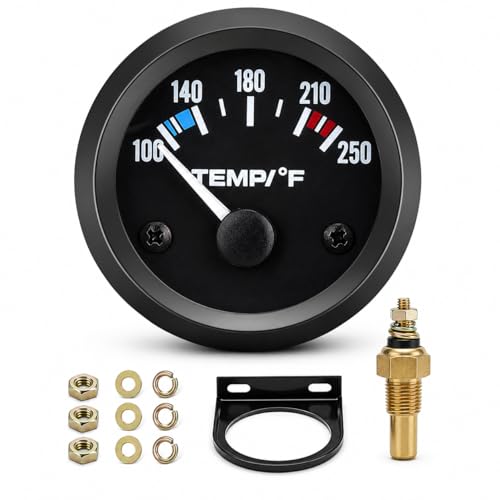
- Features: ABS plastic and stainless steel shell; wear-, scratch-, and corrosion-resistant.
- Power: 12V DC; measurement range 100-250°F; 2-inch diameter (52mm).
- Night readability: White LED backlight for clear viewing from all angles.
Best for: Boat and vehicle dashboards needing a durable, easy-to-read temp readout with night visibility. This gauge is well-suited for harsh marine environments. Caution: Ensure sensor mounting is performed per the 1/8″ NPT thread standard to avoid leaks.
Runleader Digital LCD Engine Temp Gauge

- Displays real-time temperature, maximum temperature, and over-temperature alerts.
- Double-channel option suitable for monitoring two engine temps; supports internal battery or external power (8-30V).
- Measurement range: -20 to 220°C (-4 to 428°F); includes resettable max temp.
Best for: Operators needing multi-channel temperature monitoring and alerting for multiple engines or zones. Caution: Requires correct sensor connection to obtain accurate readings.
BYYOUIV 2-in-1 Water Temp & Voltage Gauge

- 2-in-1 design combines water temperature and voltage meters in one unit.
- LCD digital display with sunshade to read in bright light; alarm for abnormal temperature or voltage.
- Suitable for cars, trucks, boats, and RVs; DC 12V operation.
Best for: Dash layouts that need compact instrumentation with both temp and voltage monitoring. Caution: The integrated alarm should be configured to avoid nuisance alerts.
BREADEEP Universal 2″/52mm Water Temperature Gauge

- Premium ABS and stainless steel construction; durable, wear- and corrosion-resistant shell.
- 12V DC power; 100-250°F measurement range; 2″ (52mm) diameter; sensor with 1/8″ NPT thread.
- Night visibility with backlit display for safe reading in low light.
Best for: Marine and automotive users needing a rugged, straightforward 2″ gauge. Caution: Confirm sensor thread compatibility with your installation port to avoid leaks.
POCREATION 52mm Water Temperature Gauge

- IP67 protection rating for water immersion resistance; robust marine-grade performance.
- Wide voltage compatibility across typical 9-32V systems (up to 36V temporarily).
- Industrial-grade components handling -30°C to 75°C; long-term reliability in harsh environments.
Best for: Boats and RVs exposed to splashing or submersion risk, requiring solid IP67-rated protection. Caution: Verify voltage compatibility with your electrical setup to ensure accurate readings.
Buying Guide
What should you consider when choosing a temperature gauge?
- Voltage compatibility: Most gauges operate on 12V DC; some support wider ranges (e.g., 9-32V). Match to your vehicle or boat electrical system.
- Protection rating: IP or IP67 ratings indicate water resistance. Marine applications benefit from higher protection.
- Display readability: LEDs or backlit LCDs improve night visibility; consider sunshade features for bright daylight.
- Sensor mounting and thread: Many gauges use 1/8″ NPT sensors. Ensure port size and sealing methods align with your setup.
- Dual or single readouts: 2-in-1 designs save space but may limit dedicated sensor placement. Decide if you need voltage alongside temperature.
- Operating range: Ensure the gauge range covers typical engine temperatures. Wider ranges provide more headroom for abnormal conditions.
Installation tips
- Plan sensor location away from heat sources and moving parts to avoid false readings.
- Use proper thread sealant where required to prevent leaks.
- Verify power connections; a fused supply helps protect from short circuits.
- Test readings in a controlled environment before normal operation.
FAQ
- What is a typical engine coolant temperature range for outboard motors? Most engines operate within a specific range around 170-210°F (77-99°C) when running normally; check your engine manual for exact specs.
- Do I need both temperature and voltage gauges? Temperature gauges monitor engine cooling, while voltage gauges help ensure electrical system health. A 2-in-1 gauge can save space if you have limited dashboard real estate.
- Can these gauges be used on boats and cars interchangeably? Yes, most are designed for 12V systems common in boats and automobiles, but always confirm mounting threads and electrical compatibility.
- What is the benefit of a gauge with an IP67 rating? It offers protection against water and dust ingress, improving reliability in wet marine environments.
- Are LED backlights essential? They improve readability in low light and at night, aiding quick temperature assessment during operation.
- How do I choose between analog and digital displays? Digital displays typically offer precise numeric readings and alarms; analog displays provide quick glance readability for some operators.


