
Answering the common need for secure, durable through-hull drain fittings, this guide highlights five reliable options. These fittings are best for boaters seeking corrosion resistance, simple installations, and clear sizing for 3/4″ to 1″ hose connections. Ideal buyers include DIY boat owners, coastal navigators, and those upgrading bilge or overflow drains. The table below compares the featured products at a glance.
| Product | Size | Material | |
|---|---|---|---|
| SEAFLO Thru Hull Fittings (1″) | 1″ | White Polypropylene | General bilge and overflow drains |
| Boltigen Thru Hull Fittings for Boats | 3/4″ | 316 Stainless Steel | Corrosion-resistant, long-term use |
| Seachoice 90-Degree Angled Thru-Hull Connector (0.75″) | 3/4″ | White, Plastic | Angular routing for tight spaces |
| SEAFLO ¾” Thru Hull Fitting | 3/4″ | Polypropylene | Overflow drains and bilge outlets |
| Yuecoom Marine Thru Hull Fitting (3/4″) | 3/4″ | ABS Plastic | Reliable, affordable marine connector |
SEAFLO Thru Hull Fittings (1″)

Best for: Boat owners needing a straightforward, white 1-inch hose connection that’s ready for bilge or overflow uses. Features include a 4-year warranty and a universal 1″ hose fit. Selection favors reliability and ease of replacement in standard hose systems. Caution: Ensure the hull thickness and mounting depth accommodate the 1″ size to prevent leaks.
Boltigen Thru Hull Fittings (3/4″)

Best for: Marine setups requiring stainless steel durability and a straight barb for secure hose connections. The 3/4″ size suits many standard hoses for water intakes, bilge pumps, and livewell plumbing. Caution: Verify the internal diameter matches your hose to prevent leaks; stainless steel handles saltwater environments but must be properly sealed.
Seachoice 90-Degree Angled Thru-Hull Connector (0.75″)
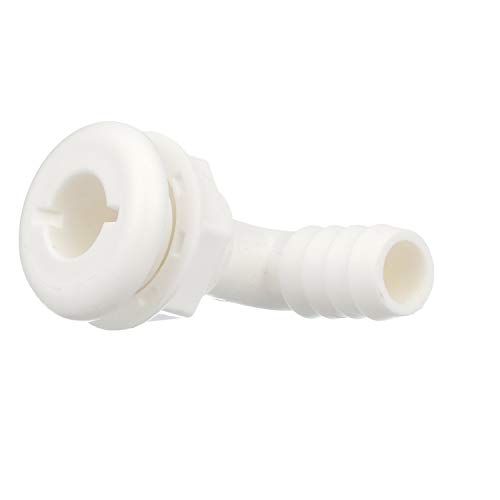
Best for: Installers needing an angled path to navigate tight compartments or stern layouts. The 3/4″ hose fit is common for bilge and accessory plumbing. Caution: The flange size is specific; ensure compatibility with your hull mounting area to avoid clearance issues.
SEAFLO ¾” Thru Hull Fitting

Best for: Marine applications that require a compact 3/4″ fit with a straightforward installation. Engineered for overflow drains, bilge outlets, and livewell plumbing. Caution: Polypropylene construction means exposed metals are not used; ensure chemical compatibility with any fluids in contact with the fitting.
Yuecoom Marine Thru Hull Fitting (3/4″)

Best for: Budget-conscious boaters needing dependable 3/4″ ABS plastic fittings for simple drain paths. The ABS material offers impact resistance and durability in marine environments. Caution: Plastic fittings may be less durable under high-pressure scenarios or direct UV exposure over many years; consider placement to minimize sun exposure.
Buying Guide
Key considerations when selecting a thru-hull drain fitting:
- Hose size compatibility: Common sizes are 1″, 3/4″, and 1/2″ interior diameters. Match the fitting to your hose ID for a secure seal.
- Material choice: Polypropylene and ABS plastics resist saltwater and UV exposure; stainless steel offers superior corrosion resistance but may require seals compatible with metal surfaces.
- Mounting and space: Consider hull thickness, flange size, and available mounting depth. Angled fittings help in tight compartments.
- Intended use: Bilge drains, overflow outlets, and livewell plumbing each have different flow and sealing demands. Choose accordingly.
- Durability vs cost: Higher durability fittings (stainless or heavy-duty plastics) can justify longer lifespans in harsh environments.
- Maintenance: Look for fittings with straightforward disassembly for inspection and cleaning to prevent blockages and leaks.
What size should I choose?
If your hose ID is 3/4″, select 3/4″ fittings. For standard bilge or overflow lines that use 1″ hoses, choose 1″ fittings. When in doubt, verify the hose ID and the hull port size before purchasing.
Where should I install?
Install fittings below the waterline for drainage paths that lead away from the hull, and away from potential impact zones. For overboard discharge, ensure compliance with local regulations and avoid areas prone to debris buildup.
Are plastic fittings durable enough?
High-quality polypropylene or ABS fittings provide robust corrosion resistance for marine use. Stainless steel offers added strength but may require compatible seals and careful installation to prevent galvanic corrosion in mixed-metal setups.
How do I tighten without damage?
Hand-tighten initially, then use a gasket or thread sealant rated for marine use if specified by the manufacturer. Do not overtighten, which can crack hull material or deform fittings.
FAQ
- Q: Do these fittings require marine-grade sealant? A: Many installations benefit from marine-grade sealant on threaded connections; follow manufacturer recommendations.
- Q: Can I reuse these fittings after removal? A: Reuse depends on the condition of threads and seals; inspect for wear or cracks before reinstalling.
- Q: What is the typical lifespan of plastic thru-hull fittings? A: With proper exposure and maintenance, several years is common in non-extreme climates.
- Q: Are there regulatory considerations for overboard discharge? A: Yes, check local maritime regulations regarding discharge locations and methods.
- Q: Which material is best for saltwater environments? A: Stainless steel offers superior corrosion resistance, but ensure compatible seals and installation practices.
- Q: How do I know the hose will seal properly? A: Confirm the hose ID matches the fitting size and use appropriate clamps or caps as needed.